
Lieferung heute & morgen

Qualitätsgarantie

Willkommens-Angebote freischalten: KOSTENLOSE Lieferung | Bis zu 80 % RABATT | Kostenlose 30-Tage-JoyPlus-Testphase
App herunterladen
A 60 cm induction hob fits into many standard kitchens and usually offers four cooking zones. However, choosing one does not automatically mean you will find the right appliance. Different cut-out dimensions, excessive connected loads or overrated convenience features can make installation more difficult and limit the actual benefits.
This buying guide from the Joybuy Product Recommendation Officer explains which details matter before purchasing a built-in induction hob and which models suit different households.
A hob with a width of around 590 or 592 mm will not necessarily require the same worktop cut-out. For many 60 cm models, the required cut-out, for example, is approximately 560 × 490 mm. Other appliances require 565 × 495 mm, while compact 30 cm models need considerably smaller dimensions.
You should therefore compare the following before ordering:
An existing cut-out cannot always be enlarged without additional work. This is particularly important during a kitchen renovation, when the installation diagram for the specific model should be checked in advance.
A 4-zone induction hob with 7.200 or 7.400 W can power several zones. In practice, however, the zones share the available power depending on the appliance and its power management system. A high connected load therefore does not automatically mean that every zone can operate continuously at maximum power.
The following details are more important for everyday use:
An appliance without a plug must be connected by a qualified electrician. This also applies when the installation initially appears straightforward.
An induction hob with touch control, timer or PowerBoost can make operation easier. However, these features do not replace basic safety measures. Important features include child lock, residual heat indicator, pan detection, automatic switch-off and overheating protection.
A child lock also cannot prevent someone from touching a hot surface. The residual heat indicator should have gone out completely before cleaning. When using oil or fat, you should also avoid heating it unattended.
A classic 60 cm hob usually has four zones. Check whether their diameters are suitable for your pots and pans. Large pots benefit from a zone of around 210 or 280 mm. For roasting dishes, griddle plates or long pans, a FlexInduction or CombiZone can be useful, as it combines two adjacent areas into a larger cooking surface.
For smaller households, a 2-zone induction hob may be sufficient. A 30 cm built-in appliance saves worktop space and is suitable, for example, for single-person households, kitchenettes or an additional cooking area.
An induction hob with a timer enables individual zones to switch off automatically. Check whether there is a separate timer for each cooking zone and what adjustment range is specified. Nine power levels are sufficient for many applications, while models with 17 levels allow for finer adjustments.
Touch control should be operated with dry, clean fingers. Moisture or grease on the control panel can affect its response. A digital display for each zone makes it easier to identify the selected power level.
A glass-ceramic induction hob transfers heat through the cookware, although the surface can still become hot from the heat of the pan. Spilled food should be removed with a soft cloth once the hob has cooled. A special glass scraper can be used for burnt-on residue, in accordance with the instructions for use. Abrasive cleaners and hard scouring sponges can damage the surface.
Important: induction only works with magnetic cookware. A magnet placed on the base of the pan provides a simple initial check. Aluminium or ceramic cookware without a magnetic base is generally unsuitable.
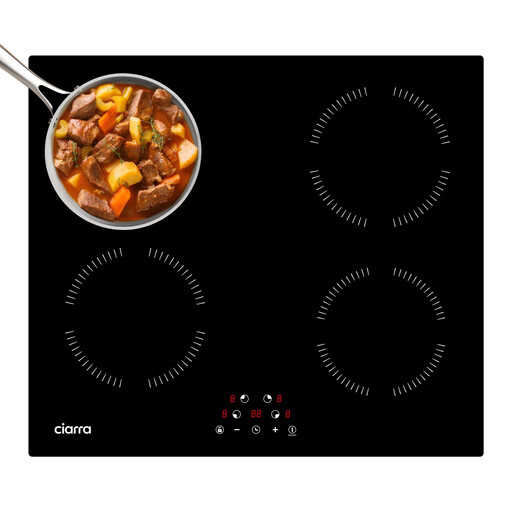
Why this product suits the profile: This 60 cm model offers four zones, nine power levels and an individual timer for everyday cooking.
The specified appliance and cut-out dimensions of 590 × 520 mm and 560 × 490 mm respectively make it easier to compare the hob with a standard worktop.
6.000 W total power, child lock, residual heat indicator, automatic pan detection and overheating protection.
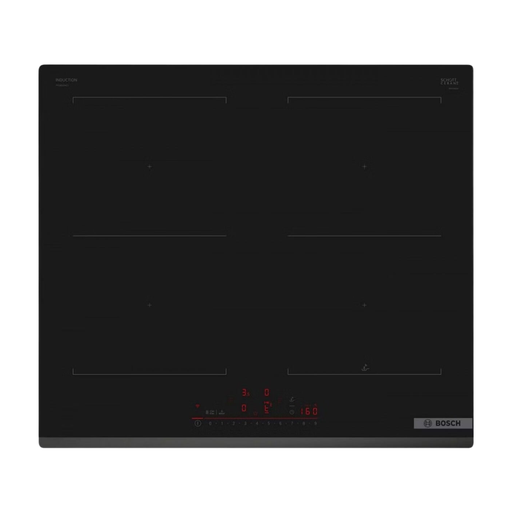
Why this product suits the profile: This model combines four cooking zones with CombiZone and TouchSelect controls for different pot and pan sizes.
The documented installation dimensions of 560 × 490 mm and the power management system help with technical kitchen planning.
7.400 W total power, CombiZone, PowerBoost, individual timers, child lock and residual heat indicator.
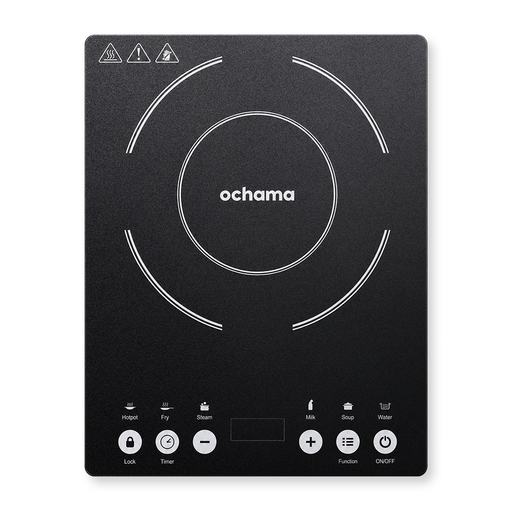
Why this product suits the profile: As a portable induction hob, this compact appliance is suitable for small kitchens, additional cooking capacity or flexible use outside a fitted kitchen.
The portable design eliminates the need for a fixed worktop cut-out. However, ventilation openings and the stated suitability for magnetic cookware must still be taken into account.
2.000 W, ten power levels, six pre-set functions, touch control, child lock and dry-boil protection.
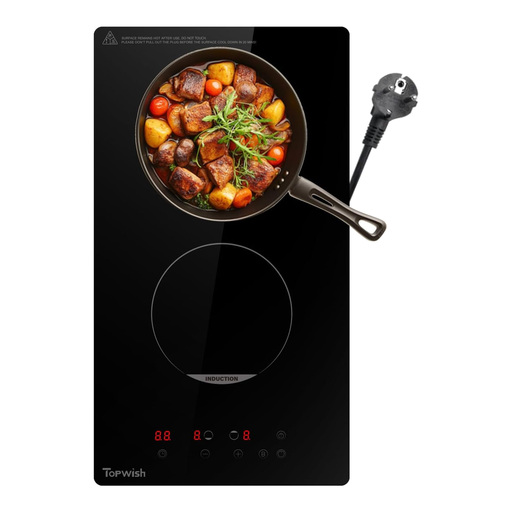
Why this product suits the profile: Two cooking zones across a width of 29 cm are designed for compact kitchens and households with modest cooking needs.
The cut-out size of 265 × 495 mm is clearly different from the 60 cm standard, preventing incorrect worktop planning.
3.500 W, nine power levels, boost function, timer up to 99 minutes, pan detection and child lock.
We have put together a complete, regularly updated list of products that fully meet these strict selection criteria and the safety regulations applicable in the EU.
When installing a built-in induction hob, you should follow the manufacturer’s specifications for ventilation, minimum clearances and connected load. A fixed cable connection, as provided for with some 60 cm models, must be carried out by a qualified electrician.
The following practical rules also help ensure reliable operation:
People with pacemakers or other electronic implants should follow the manufacturer’s safety instructions and seek medical advice before use.
The overall width is often around 590 to 592 mm. However, the worktop cut-out may measure 560 × 490 mm or 565 × 495 mm, for example. The installation specifications for the particular model are always decisive.
Consumption depends on the power output, cooking time, pan size and selected setting. Induction heats the cookware directly, which can reduce heating time compared with some conventional heating systems. It is not possible to state a general saving without identical usage scenarios.
The service life is influenced by material quality, daily use, cleaning and correct installation. Look for undamaged glass ceramic, sufficient ventilation and compliance with the electrical connection requirements. The relevant guarantee or warranty information can be found in the product listing and the manufacturer’s documentation.