
Lieferung heute & morgen

Qualitätsgarantie

Willkommens-Angebote freischalten: KOSTENLOSE Lieferung | Bis zu 80 % RABATT | Kostenlose 30-Tage-JoyPlus-Testphase
App herunterladen
A 60 cm wide vanity unit is a practical solution for concealing unsightly pipes and creating valuable bathroom storage. However, the selection process can be tricky. The wrong measurements or an unsuitable material can quickly lead to frustration and a cluttered bathroom. This guide will help you navigate the most common pitfalls and make an informed decision.
Many buyers focus solely on aesthetics and price, but the real problems lie in the details. Pay attention to these three points to avoid making a bad purchase:
To prevent these problems, you should check three core aspects before buying. These define the longevity and functionality of your new under-sink cabinet.
The material is crucial for the cabinet's lifespan in a damp bathroom climate.
A 60 cm wide vanity unit is a standard size, but a perfect fit depends on other measurements:
Consider what you want to store. The internal layout determines its everyday usability.
Here are some recommendations tailored to different needs and living situations.
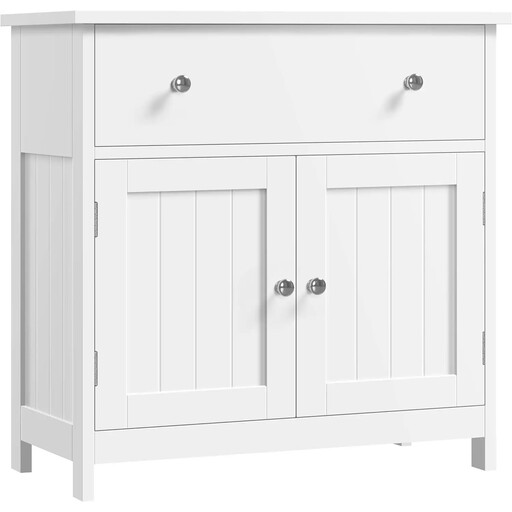
Why it's a great fit: A functional and straightforward solution for a first apartment, guest bathroom, or anyone looking for a solid, basic model. The classic design blends unobtrusively into many bathroom styles.
According to the manufacturer, the model is made from FSC-certified MDF boards with a water-repellent coating. This offers greater resistance to swelling than unsealed particleboard.
The combination of a drawer for small items and a two-door cabinet for larger objects provides a flexible storage layout.
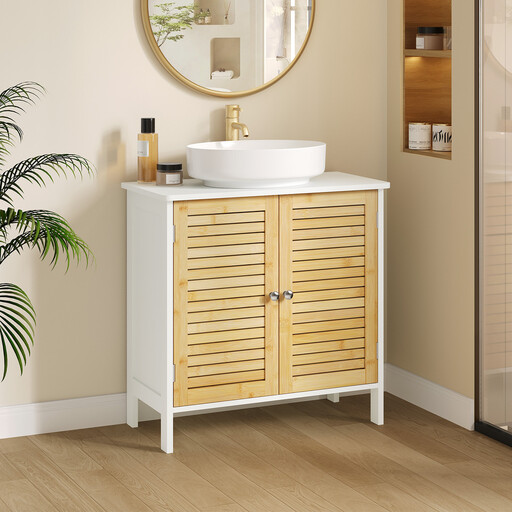
Why it's a great fit: For anyone who wants to create a modern yet warm atmosphere in their bathroom. The combination of a white body and bamboo elements adds a stylish, natural accent.
The manufacturer clearly states the dimensions for the p-trap cutout (10 x 22.5 cm), allowing for verification before purchase. The material combination of bamboo and E1-grade MDF is well-suited for damp environments.
The interior shelf is removable and adjustable. This creates flexibility for storing bottles and containers of different heights.
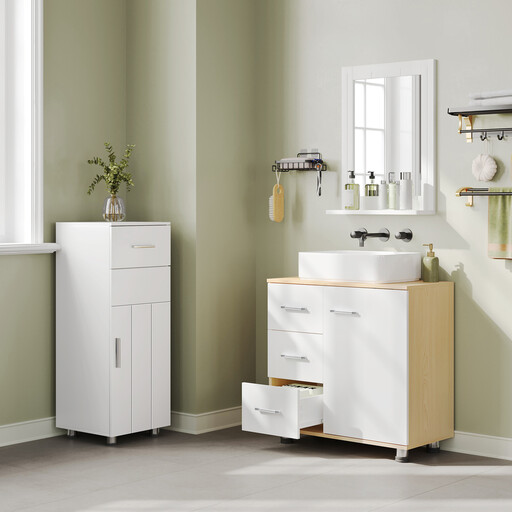
Why it's a great fit: Perfect for families or anyone with a lot of small bathroom items. The three drawers allow for clear separation and organisation, so everything has its place and can be found quickly.
This model offers a structured alternative to simple cabinets where clutter can quickly accumulate. The metal feet ensure a stable construction and protect the body from floor moisture.
The layout of three drawers and a cabinet compartment with an adjustable shelf offers maximum flexibility for organising both large and small items.
We have compiled a complete, up-to-date list of products that fully meet these strict selection criteria and UK safety regulations.
1. How do I measure the p-trap cutout correctly? Measure two things: the diameter of the drain pipe and the distance from the wall to the front edge of the pipe. Most manufacturers provide the dimensions of the cutout (width x depth). Ensure your measurements fall within these specifications, with a little extra room for clearance.
2. Can I use an under-sink cabinet with a pedestal sink? No, the cabinets discussed here are specifically designed for wall-mounted sinks. They have a cutout for the p-trap. A pedestal sink has a column that extends to the floor, leaving no room for such a cabinet. For this type of sink, you will need separate bathroom cabinets or shelves.
3. Which material is the most durable for a bathroom? For the best price-to-performance ratio, MDF boards with a high-quality, water-resistant lacquer or melamine coating are a very reliable choice. They resist moisture well and are easy to clean. Materials like solid wood or bamboo are naturally more robust and durable but are in a different price category. Uncoated particleboard should be avoided in the bathroom.