
Lieferung heute & morgen

Qualitätsgarantie

Willkommens-Angebote freischalten: KOSTENLOSE Lieferung | Bis zu 80 % RABATT | Kostenlose 30-Tage-JoyPlus-Testphase
App herunterladen
A 60-litre bin bag is suitable for many medium to large bins in homes, offices, catering businesses and commercial settings. However, the “60-litre” capacity alone isn’t enough to help you find the right option. The dimensions, film thickness, closure and intended use all affect whether a bin bag fits securely or tears when you remove it.
A 60-litre bin doesn’t automatically fit every bin bag labelled as 60 litres. The shape of the bin is important too. A tall, narrow bin needs different dimensions from a wide one.
So, check the width and height of the bin bag. Examples from our selection include 64 × 71 cm, 68 × 73 cm, 76 × 63 cm and 84 × 61 cm. A bag that’s too short may slip off the rim, while one that’s too narrow won’t fit fully over it.
Even extra-strong bin bags can be damaged by broken glass, sharp tin edges or hard objects. Claims such as tear-resistant, leakproof or with a reinforced base relate to the material and construction, not unlimited strength.
Sharp, hot or chemically aggressive waste shouldn’t go into ordinary bin bags unprotected. Try not to put loose liquids in the bag, as its carrying capacity depends on the film and the strength of the base seam.
A drawstring bin bag makes it easier to close and carry. But it doesn’t replace checking the dimensions and material. Scented options may be useful for kitchen waste, but they’re not suitable for every household. If you’re sensitive to fragrances, check the product information.
Colour can be practical too: clear bin bags make it easier to see what’s inside, while green or black bags keep the contents less visible.
Start by measuring the opening and height of your bin. The bag needs to be wide enough to reach a few centimetres over the rim. For particularly wide or tall bins, extra-wide or extra-long bin bags may be a better choice than standard options.
The stated 60-litre volume is an approximate capacity. The actual fit depends on the combination of the bag’s width, height and base shape.
Many 60-litre bin bags are made from polyethylene, such as LDPE or HDPE. LDPE film is often flexible, while HDPE film can have a relatively firm structure, depending on how it’s made. Always check the specific product description rather than relying on the material abbreviation alone.
Look for details such as:
A reinforced base can reduce the risk of leaks from the base seam. However, it won’t automatically protect the bag from being overfilled or from sharp-edged contents.
A drawstring lets you close the bag quickly without tying a knot. This can make waste disposal easier in offices, family homes and catering businesses. If your bin bags don’t have a drawstring, you’ll need to secure the top or use the designated handles in another way.
Also compare the number of bags per pack. A cheaper pack may be less good value if it contains ten bags, compared with a higher-priced pack of 20 or 30. If you use bin bags regularly, work out the price per bag.
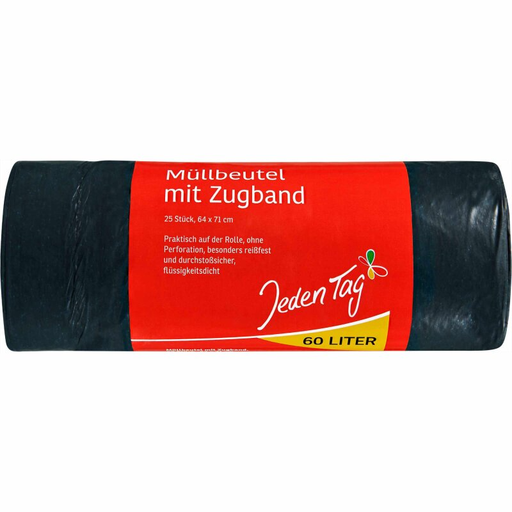
Why this product suits this need: With 30 bags per pack and dimensions of 64 × 71 cm, this option is suitable for regular waste disposal in the kitchen, bathroom or office.
The stated dimensions and pack size help you choose based on more than just the litre capacity. The drawstrings make the bag easier to close.
30 bags per pack; 64 × 71 cm; drawstring for easy disposal.
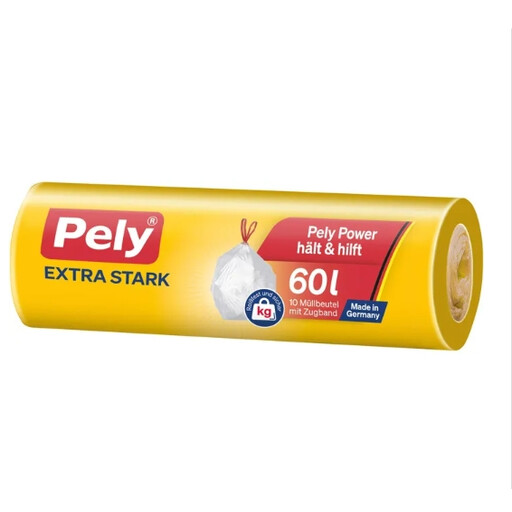
Why this product suits this need: The combination of extra-strong polyethylene film, a drawstring and a reinforced base is designed for heavy household waste.
The product details give more than the capacity: they also specify 68 × 73 cm, the material and the reinforced base. You should still avoid sharp objects and overfilling.
10 bags; 68 × 73 cm; drawstring and reinforced base; made in Germany, according to the product information.
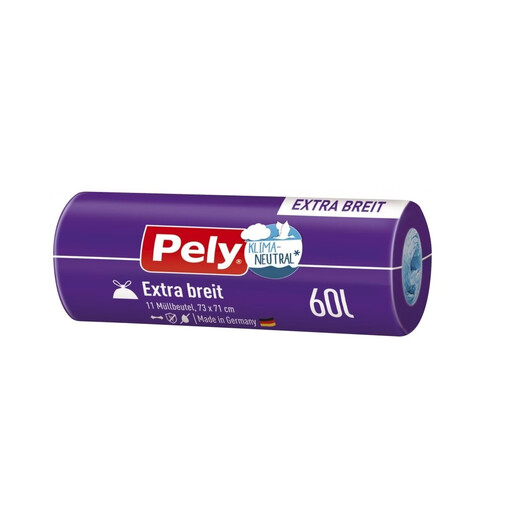
Why this product suits this need: The extra-wide design is intended for wide or tall bins. According to the product description, it also features odour protection.
The extra-wide shape reduces the risk of the bag being too small for a wide bin. Odour protection is no substitute for emptying the bin regularly.
Extra-wide design; drawstring; described as tear-resistant and leakproof; packaging made with 80% recycled material.
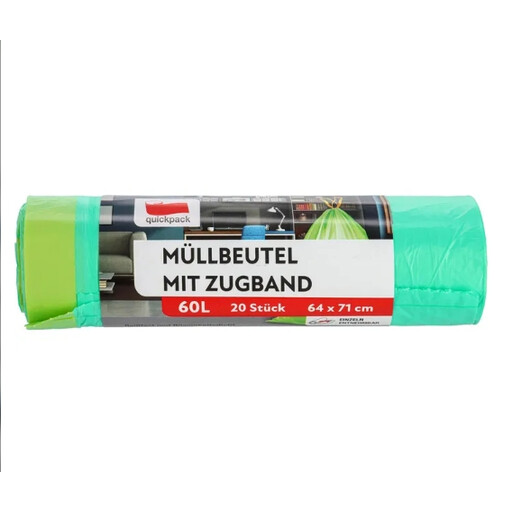
Why this product suits this need: These green 60L bin bags come in packs of 20 and are made from LDPE film with reinforced seams.
The product description specifies the material, dimensions, pack size and reinforced seams. This makes it easier to choose a bag to suit your bin and how often you use it.
20 bags; 64 × 71 cm; drawstring; LDPE film and reinforced seams, according to the product information.
We’ve put together a complete, regularly updated list of products that meet these strict selection criteria and fully comply with the safety regulations in force in the EU.
No. The capacity describes the approximate volume the bag can hold, not how well it fits. Check the width, height and shape of your bin, as well as the bag’s dimensions. Extra-wide bin bags may be more suitable for wide bins.
How long you can use it depends on the type and amount of waste, as well as how it’s stored. Empty the bag before it’s overfilled or starts to leak. Damp kitchen waste calls for more frequent changes than dry office paper.
A drawstring makes the bag easier to close, but it doesn’t guarantee that it won’t leak. The film, base seam, load and contents are the main factors. Look for specific claims such as reinforced base, liquid-resistant or leakproof, and avoid putting sharp or hot waste in the bag.