
Lieferung heute & morgen

Qualitätsgarantie

Willkommens-Angebote freischalten: KOSTENLOSE Lieferung | Bis zu 80 % RABATT | Kostenlose 30-Tage-JoyPlus-Testphase
App herunterladen
A torn trash bag leaving a trail through your home, or a liner that constantly slips into the bin—these household problems are not just annoying, they're also unhygienic. Choosing the right trash bag is crucial for clean and hassle-free waste disposal. However, with so many options on the market, making a decision can be difficult.
This article serves as your guide. As your Joybuy Product Recommendation Officer, I have summarised the key features and differences of 60-litre trash bags. The goal is to provide you with an objective basis to find a product that perfectly matches your household's needs.
While the 60-litre size is standard in many households, the functional differences between products are significant. Three main criteria will help you make your choice.
A trash bag's reliability depends directly on its material composition. A tear-resistant trash bag is essential, especially when disposing of heavy or sharp-edged waste. Most bags are made of polyethylene (PE), which is processed in various densities (LDPE, HDPE) and thicknesses (measured in micrometres, ?m). A thicker film generally offers greater resistance to tears and punctures. For typical kitchen waste, which is often damp and heavy, a heavy-duty design is recommended.
The type of closure significantly impacts convenience and hygiene during disposal. Common types include:
Some large trash bags offer extra features tailored to specific household problems. For example, a scented trash bag can actively mask unpleasant odours from organic waste in the kitchen, creating fresher ambient air. Such features are a matter of personal preference but can make daily life noticeably more pleasant.
Based on the criteria mentioned, we have compiled a selection of products that stand out for their specific features. All Pely trash bags featured here are Made in Germany.

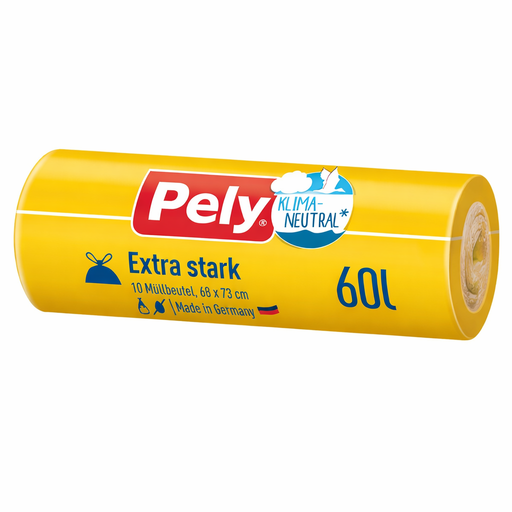
Why it stands out: This model is designed for maximum durability. The extra-strong film provides a high level of security against tears and leaks, even with heavy or bulky trash. The integrated drawstring makes closing and transporting the bag easy.
Benefits:
Who it's for: Households that regularly dispose of heavy waste and value maximum reliability and durability. A great choice for families or for those with a high volume of trash.
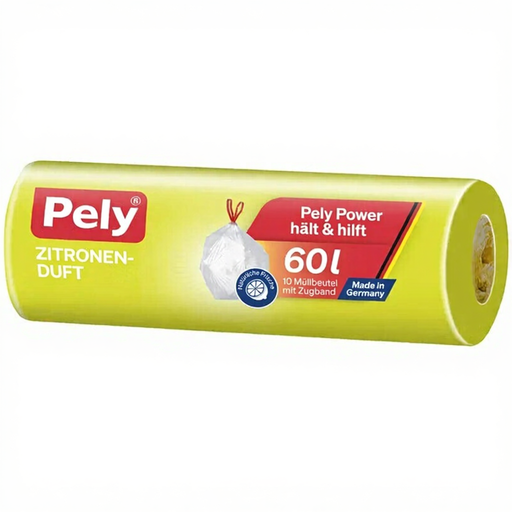
Why it stands out: This 60L trash bag combines the practical functionality of a drawstring bag with a pleasant lemon scent. The fragrance is designed to actively neutralise typical kitchen odours, ensuring more freshness.
Benefits:
Who it's for: Especially suited for use in the kitchen, where organic waste can quickly develop unpleasant odours. Ideal for users who appreciate an odour-free environment.
Why it stands out: The solution to a common problem: The innovative, elastic fixing band holds the bag securely to the rim of the trash bin. This effectively prevents the bag from slipping or falling in.
Benefits:
Who it's for: For anyone annoyed by ill-fitting trash bags who is looking for a permanently clean and hassle-free solution for their waste bin.
The products presented here already cover many common requirements. However, if you are looking for other sizes, materials, or special designs, it's worth taking a look at a wider range.
Discover more waste disposal solutions in our Freestanding Bags category.
The capacity in kilograms depends less on the volume (60 litres) and more on the material's thickness and tear resistance. Many 60L trash bags are designed for a load of up to 12 kg. For particularly heavy waste, you should specifically look for "extra strong" or "tear-resistant" versions and check the manufacturer's specifications on the packaging.
The most effective method is to use a trash bag with an integrated fixing band. This elastic band stretches around the bin's rim and reliably prevents it from slipping. Alternatively, you can ensure the bag size perfectly matches your bin model or use external clips.
A scented trash bag can be very useful for masking unpleasant odours, especially from food scraps in the kitchen. Whether this is perceived as pleasant is a matter of personal preference. Individuals who are sensitive to fragrances should consider their use in small or poorly ventilated rooms.