
Lieferung heute & morgen

Qualitätsgarantie

Willkommens-Angebote freischalten: KOSTENLOSE Lieferung | Bis zu 80 % RABATT | Kostenlose 30-Tage-JoyPlus-Testphase
App herunterladen
The search for a new 65-inch 4K TV can quickly feel like a trek through a dense jungle of marketing terms and technical specs. Manufacturers constantly promote new technologies, but not every feature delivers on its promise. As your Joybuy Product Recommendation Officer, I'll help you separate the crucial facts from exaggerated marketing claims and make an informed decision.
Before we look at specific models, let's highlight three common pitfalls that can lead to disappointment and unnecessary expense.
To make a smart choice, focus on the following three core areas. These technical fundamentals apply not only to 65-inch models but can also be used when choosing a 55-inch TV or a 75-inch TV.
The panel technology is the main factor that determines picture quality. The two most relevant technologies in this price range are QLED and Mini-LED.
For movie and series lovers, a native 60Hz refresh rate is usually sufficient. Gamers, however, should definitely look for a model with a native 120Hz or even 144Hz panel.
A true 120Hz Gaming TV, in combination with an HDMI 2.1 port, offers crucial advantages:
An immersive experience consists of both picture and sound. Dolby Atmos is the de facto standard for 3D audio. While many TVs can decode the format, their integrated speakers often lack the power to do it justice. Look for an HDMI port with eARC (Enhanced Audio Return Channel) to connect a Dolby Atmos-capable soundbar without any loss of quality.
When it comes to the smart platform, Smart TV with Google TV has established itself as particularly flexible and user-friendly, offering a huge selection of apps and an effective voice search. Other systems like VIDAA from Hisense TV or Amazon's FireOS also offer intuitive interfaces.
Here are some models that represent a considered choice for specific user profiles based on their objective technical features.
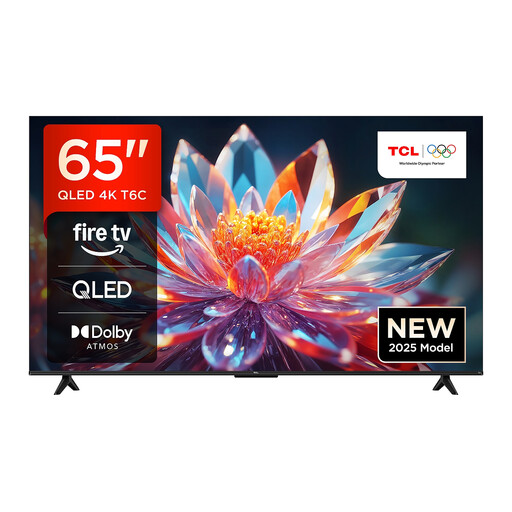
Why This Fits Their Persona: This model focuses on the essentials for a great movie experience: a QLED panel for vibrant colours and support for Dolby Vision and Dolby Atmos. The Fire TV operating system provides access to all major streaming apps.
It sidesteps the "120Hz Trap" by honestly sticking to a 60Hz panel, which is perfectly sufficient for streaming and movies, without making false promises.
QLED technology for wide colour reproduction and support for all major HDR formats at an accessible price point.
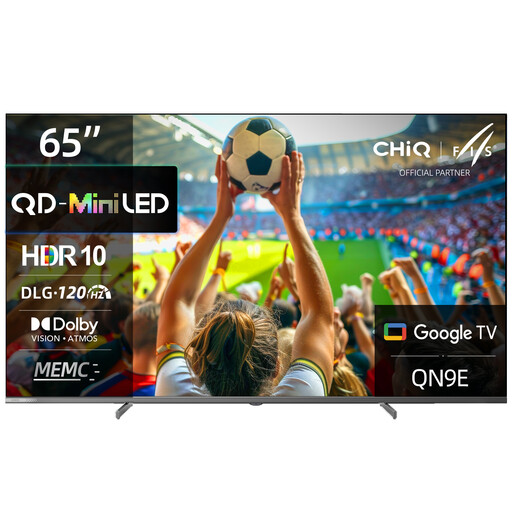
Why This Fits Their Persona: An all-rounder that combines modern picture technology with great usability. The combination of Mini LED and QLED ensures a high-contrast image, while Google TV offers intuitive operation and a huge selection of apps for the whole family.
It avoids the "HDR Impostor" trap because its Mini LED technology allows for more precise brightness control and higher peak brightness than conventional LED TVs, resulting in a visibly better HDR experience.
A combination of Mini LED and QLED for high picture quality. The Google TV operating system is fast, modern, and offers personalised recommendations.
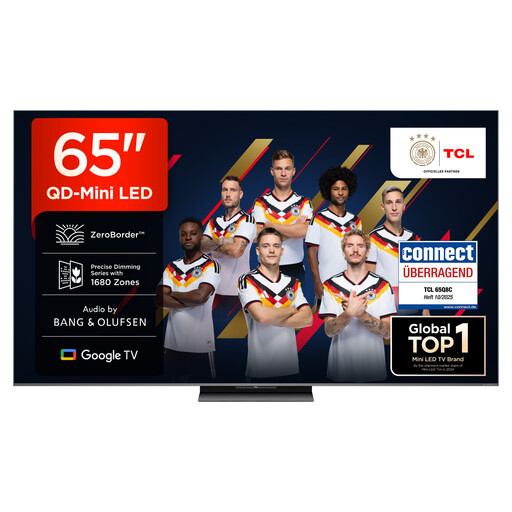
Why This Fits Their Persona: This TCL TV model is designed for maximum performance. The QD-Mini LED technology delivers outstanding brightness and contrast, while the native 144Hz panel, combined with all relevant gaming features, enables a no-compromise gaming experience.
This device doesn't fall into the "120Hz Trap"—it surpasses it with a native 144Hz panel. It delivers the performance it promises, making it a future-proof choice for demanding gaming.
QD-Mini LED for high peak brightness and contrast. Native 144Hz panel with VRR and ALLM for fluid gaming. Dolby Vision IQ adapts the HDR picture to ambient light.
We've compiled a complete, real-time updated list of products that fully meet these strict selection criteria and German safety regulations.
1. What is the ideal viewing distance for a 65-inch 4K TV? With 4K resolution, you can sit closer to the screen without seeing individual pixels. A common recommendation is 1.0 to 1.5 times the screen's diagonal measurement. For a 65-inch TV (approx. 165 cm diagonal), this corresponds to an optimal viewing distance of about 1.65 to 2.5 metres.
2. Is a Mini LED TV worth it compared to a QLED TV? It depends on your use case. A Mini LED TV offers superior contrast and brightness control, which is especially noticeable in dark rooms and with HDR content. For use in bright living rooms and for general TV viewing, a high-quality 65-inch QLED TV can already provide excellent picture quality and great value for money.
3. Do I need an additional soundbar for Dolby Atmos? While many TVs support Dolby Atmos processing, their built-in speakers often lack the necessary power and channels to create a true 3D sound experience. For a noticeably spatial effect, a compatible soundbar or home cinema system is a highly recommended addition.