
Lieferung heute & morgen

Qualitätsgarantie

Willkommens-Angebote freischalten: KOSTENLOSE Lieferung | Bis zu 80 % RABATT | Kostenlose 30-Tage-JoyPlus-Testphase
App herunterladen
A 7-day pill organiser keeps your medicines, vitamins or food supplements neatly organised for the whole week. In practice, unclear labels, compartments that are too small or stiff closures can quickly lead to a disappointing purchase. For older people, carers and frequent travellers, the right layout for their daily routine matters just as much as the price.
The description “large pill box” doesn’t tell you much on its own. What matters is the actual internal dimensions and the shape of the compartments. Fish oil capsules, larger vitamins or several tablets taken at the same time need more room than small tablets. A weekly medicine organiser with narrow compartments may therefore be unsuitable, even if its overall dimensions are compact.
A simple box with seven compartments is enough if you take something once a day. If you organise different products for morning, midday and evening, you’ll need 21 compartments: seven days, each with three time slots. If your schedule differs, a pill organiser with four daily time slots may be more suitable.
A closure should be easy to open and stay shut while you’re on the move. Very stiff lids can be impractical for people with limited hand strength. At the same time, a design described as airtight or moisture-resistant won’t automatically protect every medicine in all conditions. Always follow the storage instructions on the medicine packaging.
First, check how many times a day you need to take your medicines:
Look for clearly marked days and an easy-to-follow order. If several people share a home, colour-coding can help, but it’s no substitute for clear labels.
Don’t just compare the number of compartments; check their usable size too. Claims such as “holds up to twelve fish oil capsules” or “holds up to 13 large vitamins” come from the relevant product descriptions, and capacity may vary depending on the shape of the capsules or tablets. The overall dimensions also matter if you need a large pill box to fit in a handbag, drawer or travel bag.
For plastic boxes, material details such as PP, ABS or BPA-free are worth checking. A BPA-free pill organiser may appeal to buyers who specifically prefer this material. Care is important too:
A medicine organiser helps you keep things organised. It doesn’t change the dosage or advice on how to take your medicines. If you’re unsure how to organise them, ask a pharmacist or your GP surgery.
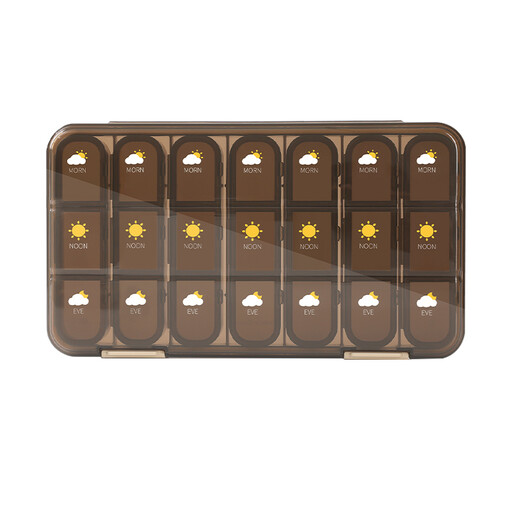
Why this product suits this profile: The 21 compartments separate the seven days of the week and three times of day. It’s a good choice if you want a clear, straightforward layout without having to manage several separate boxes.
The day and time markings reduce the risk of sorting medicines by day of the week alone, instead of by when you need to take them. According to the product description, the compartments are designed to hold several tablets or larger capsules.
21 removable daily compartments, PP plastic and a snap closure with a seal, as described.
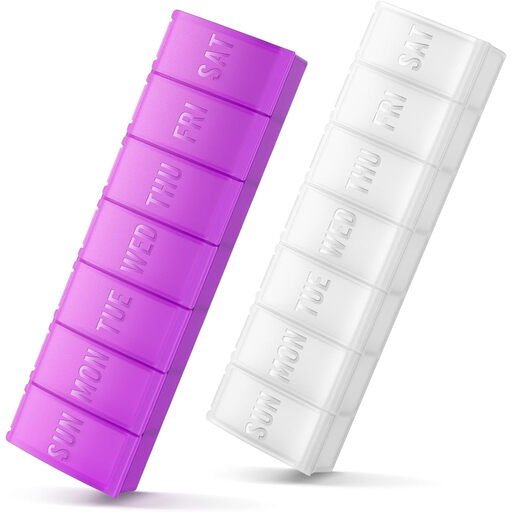
Why this product suits this profile: Two separate weekly organisers can be used for different products, two people or as a spare. The compartments are designed for larger vitamins and fish oil capsules.
According to the description, the days of the week are permanently marked and resistant to wear. This means you’re less reliant on stick-on labels to keep track.
BPA-free plastic, two organisers, lids described as ergonomic and roomy daily compartments.
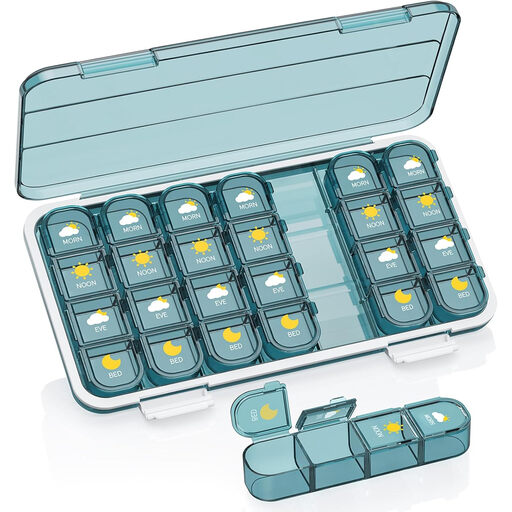
Why this product suits this profile: Four daily time slots give you more flexibility for complex routines. The separate containers can be used when travelling, on workdays or when a carer is preparing medicines.
The four-part layout means you won’t need to combine extra doses in a single compartment. Before buying, check that the compartment size suits your needs.
Seven days, four time slots a day and separate containers for flexible use.
We’ve put together a complete, regularly updated list of products that meet these strict selection criteria and fully comply with the safety regulations in force in the EU.
A travel pill organiser should be compact, close securely and be easy to find in your luggage. Before you set off, check that the contents will remain clearly labelled and whether you should take the original packaging or a patient information leaflet for prescription medicines. A small medicine box is handy for short trips, while a large weekly organiser offers more clarity for longer stays.
A vitamin organiser may be enough for vitamins and food supplements. For medicines, you’ll also need to consider storage temperature, protection from light and moisture guidance. Liquid medicines shouldn’t be put in dry pill compartments.
For three daily doses over seven days, 21 compartments are ideal. A box with seven compartments is only suitable if you can store all the products for each day together and don’t need to keep track of separate dose times.
How long it lasts depends on the plastic, hinges, closures and how often you use it. Check the box regularly and replace it if you find cracks, loose lids or damaged seals. The lifespan stated by the manufacturer shouldn’t be taken as a guarantee under every kind of use.
A reusable pill organiser usually has no ongoing costs, apart from occasional replacement. The main things to consider are the purchase price, cleaning effort and whether you’ll need to replace individual compartments or the whole box if it wears out.