
Lieferung heute & morgen

Qualitätsgarantie

Willkommens-Angebote freischalten: KOSTENLOSE Lieferung | Bis zu 80 % RABATT | Kostenlose 30-Tage-JoyPlus-Testphase
App herunterladen
A chest of drawers with 7 drawers can neatly store clothing, laundry, accessories and everyday items without taking up much floor space. However, it’s not just the number of drawers that matters. Dimensions, load capacity, materials and anti-tip safety determine whether the drawer unit remains practical in the bedroom, dressing room or living room.
Product photos can suggest generous interiors even when the individual compartments are relatively shallow or narrow. Always check the internal dimensions of the drawers and note which are small and which are larger. Smaller drawers are often sufficient for folded T-shirts, underwear or accessories. Bedding and thicker jumpers, on the other hand, need more internal height and width.
A fabric chest is usually lighter and easier to move around the home. Fabric drawers aren’t automatically suitable for heavy items though. Load limits should be stated explicitly per drawer. Heavy books, tools or full lever-arch files generally don’t belong in a chest with fabric drawers unless the manufacturer expressly approves it.
A tall chest can tip forwards when drawers are opened and loaded, especially if several are pulled out at once. A supplied anti-tip kit isn’t optional. Follow the instructions to fix it to a suitable wall. The unit must also stand on a level surface and must not be used as a climbing aid.
Measure not only the available wall width, but also the depth and the movement area in front of the chest. According to the product information, the JOYFURNOS model measures 98 × 28.5 × 85 cm. The shallow depth can be appealing for narrow bedrooms, hallways or dressing rooms. Before buying, check that the drawers can be opened fully without hitting the bed, sofa or door.
A sturdy top matters for decor, baskets or a TV. With fabric drawers, the per-drawer load is particularly important. For the JOYFURNOS model mentioned, the stated maximum static load per drawer is 3 kg, while the top is rated for up to 50 kg. These figures apply only with even loading and proper use. For heavy items, a metal or wooden storage cabinet is often the better choice.
Pay attention to the material mix: a chipboard top, a steel frame and fabric drawer fronts each have different care and load characteristics. Fabric drawers should not be machine-washed unless explicitly specified. For the model mentioned, cleaning with a slightly damp cloth is recommended.
Assembly also deserves attention. Labelled parts, a clear instruction manual and adjustable feet can simplify the build. After assembly, check all connections and secure the unit to the wall with the provided anti-tip safety. Allowing sufficient ventilation before first use can be sensible, especially for furniture with new composite materials.
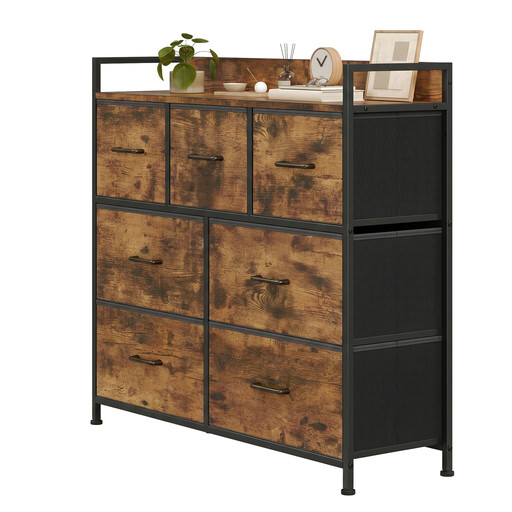
Why this product fits the profile: The seven drawers let you separate clothes, laundry and accessories. At 98 cm wide and 28.5 cm deep, the chest suits rooms with limited floor space.
The product data lists internal dimensions, per-drawer load, adjustable feet and an anti-tip kit. This helps you assess storage and safety requirements before you buy.
Steel frame, seven separate compartments, a stated 50 kg top load, and a brown-and-black colour combination.
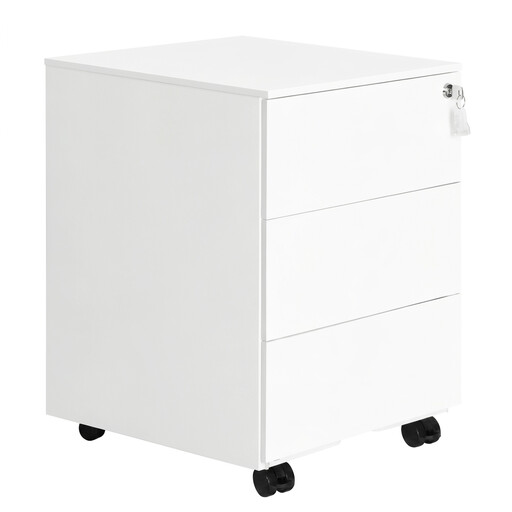
Why this product fits the profile: For documents, small office items or personal papers, the metal cabinet offers a different construction to a fabric chest. It comes pre-assembled and only needs the castors fitted.
The stated load of up to 15 kg per drawer and full-extension runners are clear usage specifications. The lock sets it apart from an open bedroom chest of drawers.
Steel construction, three lockable drawers, four castors with two brakes, and pre-assembled delivery.
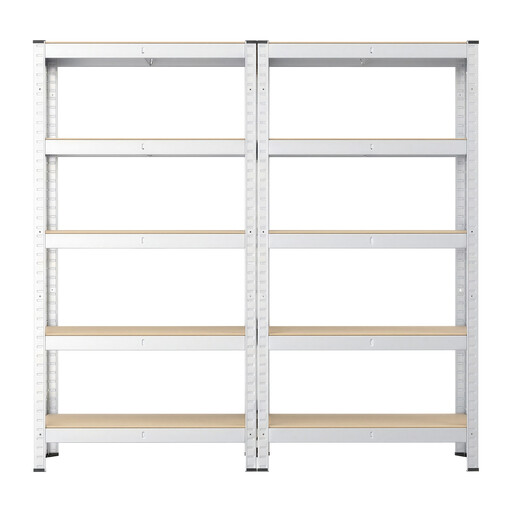
Why this product fits the profile: For the cellar, garage or utility room, an open shelving system is more suitable than a laundry cabinet with fabric compartments. The two units can be set up separately.
The levels are height-adjustable, so storage space isn’t lost due to awkward spacing. The stated total load is 650 kg per unit set according to the product data.
Steel frame, five adjustable levels, split design and supplied anti-tip kits.
We’ve compiled a complete, continuously updated list of products that fully meet these strict selection criteria and comply with EU safety regulations.
For clothing and laundry, a closed chest of drawers is often clearer and tidier than open shelving. Small compartments make it easier to sort socks, underwear and accessories. A chest of drawers in brown and black can blend into rustic or industrial interiors, but should be coordinated in colour with the floor, walls and existing furniture.
If the chest is to be used as a TV cabinet, check the width, top load and cable management. Devices shouldn’t overhang the footprint. Also ensure the ventilation of the TV or source devices isn’t obstructed. For basements and garages, metal shelves with adjustable shelves are more practical.
Allow enough room for the drawers to open fully. There should still be a comfortable walkway. Measure the depth of the drawers when open and factor in protruding handles or side rails.
Service life depends on the frame material, workmanship, daily load and care. A fabric drawer should only be loaded within the stated capacity. Moisture, pulling at misaligned drawers and prolonged overloading can put extra strain on the material and runners.
That depends on the model. Labelled parts and step-by-step instructions make assembly easier. For tall furniture, level the feet after assembly and fit the anti-tip safety. Before use, also check screws, connections and the even alignment of the drawers.