
Lieferung heute & morgen

Qualitätsgarantie

Willkommens-Angebote freischalten: KOSTENLOSE Lieferung | Bis zu 80 % RABATT | Kostenlose 30-Tage-JoyPlus-Testphase
App herunterladen
The search for a new mattress can quickly become overwhelming. Especially with the 7-zone mattress, manufacturers promise an ergonomic solution for restful sleep and relief from back pain. However, not every model lives up to its advertising. Before you make a decision, it's crucial to know the most common pitfalls that can lead to a bad purchase.
This guide will help you understand the key features and find a mattress that truly fits your needs.
Many buyers focus on marketing terms while overlooking fundamental product features. These three points often lead to disappointment:
To make an informed decision, you should focus on objective criteria. The following three parameters are crucial for comfort and durability.
The core determines the fundamental lying characteristics and the sleep climate.
Even though firmness levels are not standardized, they offer guidance when considered in relation to your own body weight. As a rule of thumb:
Some models, as a flippable mattress, offer two firmness levels in one product, with the top and bottom sides having different firmness. This provides flexibility if your preferences change.
A well-designed orthopaedic mattress with a 7-zone structure is engineered to keep the spine in a straight, natural position. The zones have different firmness levels to react correctly to the various body parts:
This targeted support is a decisive factor when choosing a mattress for back pain.
Based on the criteria mentioned, we have identified some models that represent a suitable solution for different user profiles.
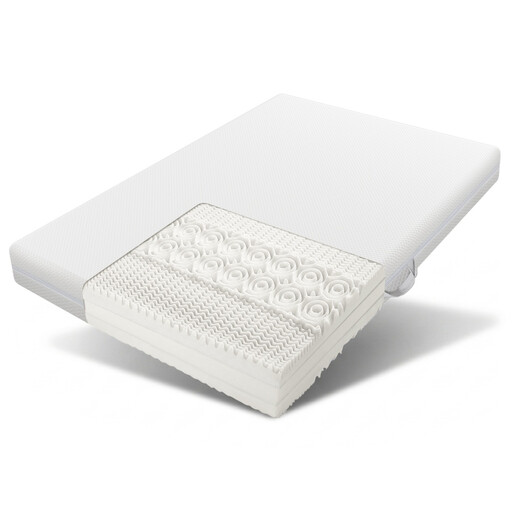
Why This Fits Their Persona: Ideal for indecisive individuals or those whose comfort needs change. The flippable design offers two different feels in one mattress.
Solves the firmness dilemma by offering both a softer (H2) and a firmer (H3) side. You don't have to commit beforehand.
Flippable mattress with two firmness levels; removable and washable cover (60°C) for good hygiene.
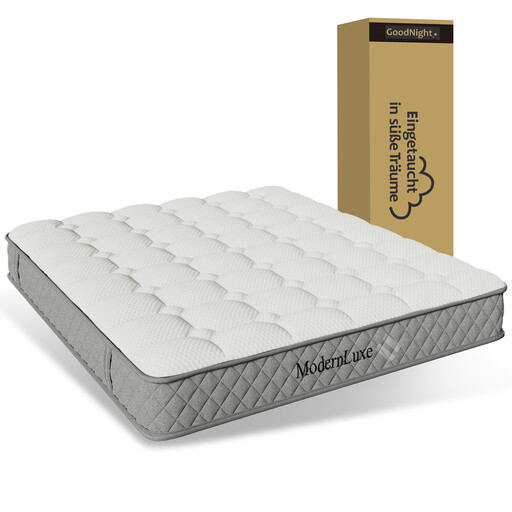
Why This Fits Their Persona: The 180x200 cm size and pocket spring core make it ideal for couples. Motion is barely transferred, ensuring undisturbed sleep. The high weight capacity is suitable for heavier individuals.
Escapes the "one-size-fits-all" trap with point-elastic springs that individually adapt to two different bodies and isolate movement.
Excellent motion isolation; high load capacity up to 280 kg (according to the manufacturer); good ventilation due to the spring core.
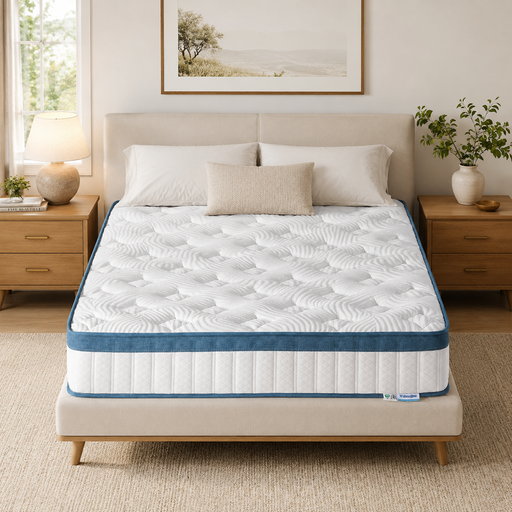
Why This Fits Their Persona: This hybrid mattress combines a spring core with gel foam and a Tencel cover. This is ideal for people who value a dry, hygienic sleep climate and skin-friendly materials.
Addresses the often-overlooked cover: The moisture-regulating Tencel cover actively promotes a better sleep climate and prevents heat buildup.
Breathable and skin-friendly Tencel cover; OEKO-TEX certification; some retailers offer a 100-night sleep trial.
We have compiled a complete, up-to-date list of products that fully meet these strict selection criteria and German safety regulations.
1. How long does a bed-in-a-box mattress need to decompress after unpacking? A bed-in-a-box mattress is vacuum-sealed and rolled for transport. After unpacking, it typically needs 24 to 72 hours to reach its full height and shape. It is recommended not to sleep on the mattress during this time to allow the material to fully expand.
2. What is the difference between an orthopaedic mattress and a 7-zone mattress? The term "orthopaedic mattress" is not legally protected and is often used for marketing purposes. However, a well-constructed 7-zone mattress fulfills the function of an orthopaedic sleep surface: it supports the spine in the right places while relieving pressure on the shoulders and pelvis to promote an ergonomically correct sleeping position.
3. How often should you rotate or flip a 7-zone mattress? This depends on the mattress's construction. Symmetrically built mattresses (where the head and foot ends are identical) should be rotated (from head to foot) every 3 to 6 months and also flipped, if both sides are usable. For asymmetrical mattresses, for example, with a special comfort layer on top, only rotating from head to foot is advisable to ensure even wear. Please refer to the manufacturer's instructions for this.