
Lieferung heute & morgen

Qualitätsgarantie

Willkommens-Angebote freischalten: KOSTENLOSE Lieferung | Bis zu 80 % RABATT | Kostenlose 30-Tage-JoyPlus-Testphase
App herunterladen
The search for a new mattress can quickly become overwhelming. Marketing promises of "orthopaedic comfort" and a vast array of materials and firmness levels make the decision difficult. Often, it's only after a few weeks that you discover whether your investment has led to more restful sleep or if you've simply fallen for a marketing myth. This guide will help you understand the key features of a 7-zone mattress and avoid common purchasing pitfalls.
As your Joybuy Product Recommendation Officer, I'll filter the facts from the marketing noise and show you what truly matters when making your choice.
Before we dive into the technical details, let's highlight the most common issues that can lead to a poor purchase.
To avoid these traps, focus on three verifiable criteria. These are the primary determinants of comfort, durability, and sleep quality.
The core is the heart of any mattress and defines its fundamental support characteristics.
A true 7-zone mattress is designed to strategically support or relieve different parts of the body. The zones are arranged symmetrically, so the mattress can be rotated and flipped:
This targeted support is the foundation for an ergonomically correct sleeping position and can help alleviate back pain.
The firmness level should always be chosen in relation to your body weight. As a rough guide:
Always pay attention to the manufacturer's specific recommendations. In terms of size, the 140x200 cm mattress is a popular standard for single sleepers who like extra space or for couples who prefer a shared sleeping surface.
Here are some models that meet the above criteria in different ways and are suited for specific user profiles.
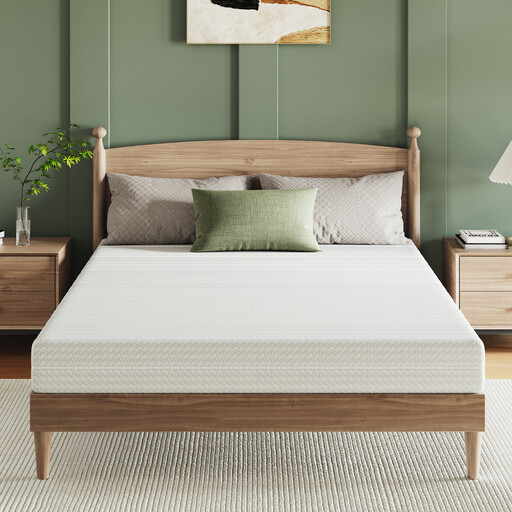
Why This Fits Their Persona: Ideal for a first apartment, a teenager's room, or a guest room. This cold foam mattress offers the fundamental benefits of a 7-zone structure at an accessible price. As a bed-in-a-box mattress, it's also easy to transport.
Counteracts the heat-trap pitfall with an open-pore foam structure and provides genuine ergonomic support thanks to its 7-zone layout, rather than a vague "orthopaedic" promise.
Certified materials (Oeko-Tex & CertiPUR-US) and a cover washable at 60°C ensure hygiene. The ability to flip between H2 and H3 firmness offers flexibility.
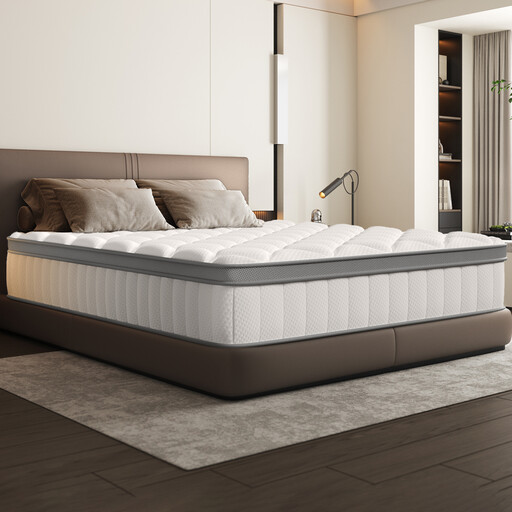
Why This Fits Their Persona: The 140x200 cm mattress size and its pocket spring mattress construction make this model the ideal choice for couples. A partner's movements are barely transferred, promoting undisturbed sleep.
The independent springs provide precise, point-elastic support that goes far beyond a simple foam block. The construction ensures high breathability and prevents heat build-up.
Excellent motion isolation for peaceful sleep with a partner. The 9-layer structure with slow-rebound foam further absorbs noise and vibrations.
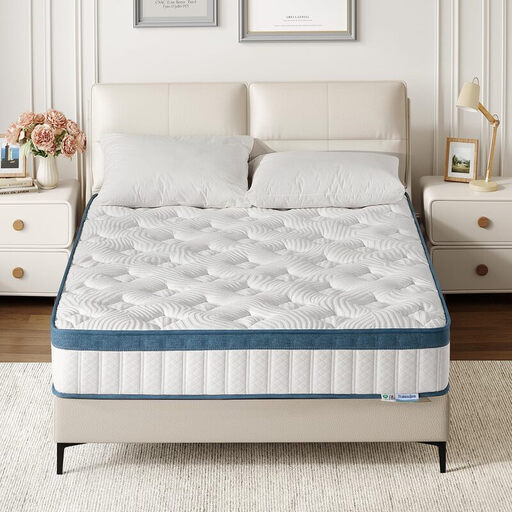
Why This Fits Their Persona: For users who value high-quality materials, a hygienic sleep environment, and durability. The combination of pocket springs and gel foam offers both support and pressure relief.
Sidesteps the firmness trap with a clear classification as an H3 mattress (medium-firm) and the heat trap thanks to its moisture-regulating Tencel cover and breathable spring core.
The skin-friendly Tencel cover is moisture-regulating and suitable for allergy sufferers. The Oeko-Tex certification confirms the materials are free from harmful substances.
We have compiled a complete, real-time list of products that fully satisfy these strict selection criteria and UK safety regulations.
1. How long does it take for a bed-in-a-box mattress to fully expand? After unpacking, a bed-in-a-box mattress typically needs 24 to 72 hours to reach its full height and firmness. It is advisable to let it expand in a well-ventilated room and only use it after this period to ensure optimal performance.
2. Does a 7-zone mattress require a special slatted frame? Yes, to take full advantage of the zones, a matching slatted frame is beneficial. Ideally, use a frame that also has zoning, particularly a more flexible shoulder zone and a firmer pelvic zone. For foam mattresses, the slat spacing should not exceed 4-5 cm to protect the material.
3. How do I find the right firmness level (e.g., H3) for my body weight? The firmness level should be chosen so that the spine forms a straight line when you are lying on your side. As a rule of thumb: lighter individuals (under 80 kg) should lean towards H2, while people between 80 and 110 kg are often well-served by an H3 mattress. However, always consider the manufacturer's specific recommendations, as there is no binding standard.