
Lieferung heute & morgen

Qualitätsgarantie

Willkommens-Angebote freischalten: KOSTENLOSE Lieferung | Bis zu 80 % RABATT | Kostenlose 30-Tage-JoyPlus-Testphase
App herunterladen
A 7-zone mattress is designed to support different areas of the body in different ways. In practice, however, the number of zones alone does not determine whether it will provide the right level of comfort. For adults and couples, body weight, sleeping position, mattress size, materials, ventilation and cover care are also important.
Whether you are looking for a 180x200 cm mattress for a double bed or a 160x200 cm mattress for a more compact bedroom, certain marketing claims can lead to the wrong purchase. The following selection from the Joybuy Product Recommendation Officer provides an objective overview of the most important details.
Seven zones usually mean that different areas are designed for the head, shoulders, lumbar region, hips and legs. This can help provide more targeted pressure distribution. However, the actual effect also depends on the core construction, foam density, spring system and body shape.
A 7-zone mattress is therefore not automatically suitable for everyone. Side, back and front sleepers may require different combinations of flexibility and support.
The firmness ratings H2 mattress and H3 mattress are useful as a guide, but they are not defined entirely consistently. An H3 mattress from one supplier may feel different from an H3 mattress made by another manufacturer.
As well as checking the rating, look at:
A breathable mattress can help wick away moisture, but it does not replace regular airing. For households with dust mite allergies, a washable mattress cover with a zip is practical. The specific care instructions are important, such as whether it can be machine-washed at 60 °C or only washed by hand.
Terms such as “antibacterial” or “allergy-friendly” should also be considered only in conjunction with the specific material and care information provided. They should not be taken as evidence of a medical effect.
With a 7-zone mattress, the zones should be clearly explained. A softer shoulder and hip zone may be appealing to side sleepers, while back and front sleepers often look for sufficient support around the pelvis.
An ergonomic mattress should keep the spine as straight as possible in your preferred sleeping position, without allowing the shoulders or hips to sink uncomfortably far. This is a matter of individual fit, not a universal health or back-care promise.
A cold foam mattress contains no metal springs and can use contoured or cut surfaces to create different comfort zones. Its properties depend, among other things, on its density, foam structure and height.
A pocket-sprung mattress contains individually wrapped springs. These respond independently and can help limit movement across the sleeping surface. In a hybrid model, the spring core is often combined with cold foam or memory foam. If you tend to sweat at night, look for an open-cell structure, an air-permeable cover and adequate ventilation beneath the bed.
The size must be compatible with the slatted base and bed frame. A 180x200 cm mattress gives couples a generous shared sleeping surface, while a 160x200 cm mattress will often fit smaller double bedrooms or teenagers’ rooms. For single beds, sizes such as 90x200 cm or 120x200 cm may be suitable.
Couples should also check the load capacity stated for each product. A shared maximum load does not automatically mean that the same load is recommended per person. Handles, an anti-slip underside and sufficient height make it easier to turn the mattress and position it on the slatted base.
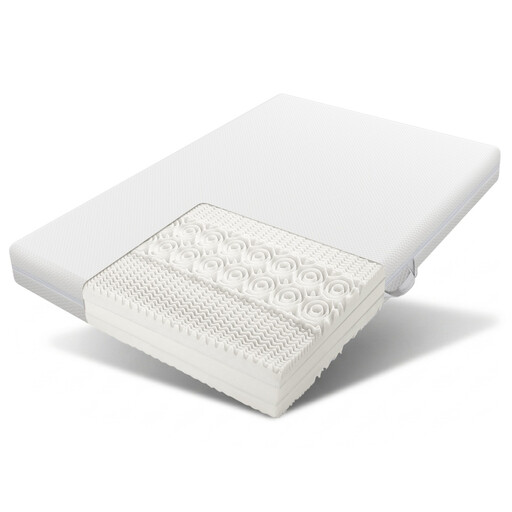
Why this product suits this profile: The 180x200 cm cold foam mattress offers two stated firmness options in one mattress and is suitable for side, back and front sleepers.
You can choose the firmness by turning the mattress over. The cover can be removed using an all-round zip and, according to the product information, washed at up to 60 °C.
20 cm height, 7-zone cold foam, fabric turning handles and a stated load capacity of up to 200 kg.
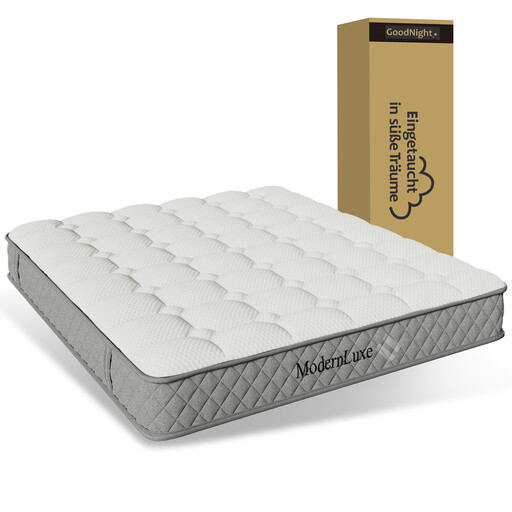
Why this product suits this profile: The combination of cold foam and 868 individually wrapped springs is aimed at couples and users who value a stable sleeping surface with limited movement transfer.
The product details explicitly state the core material, number of springs, H3 firmness rating and load limit. However, the cover is not designed to be washed and should instead be cleaned with a damp cloth.
20 cm height, H3 version, anti-slip underside and four handles for turning the mattress.
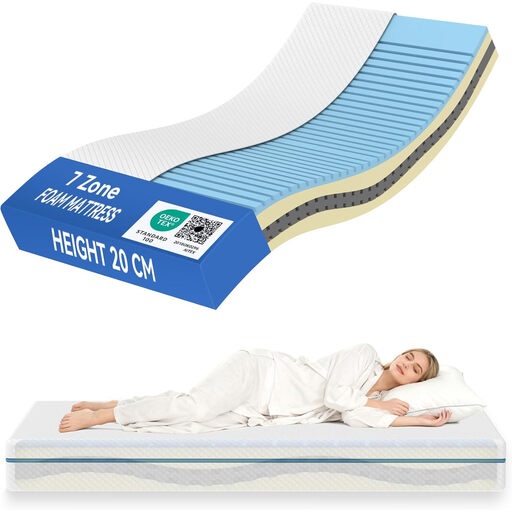
Why this product suits this profile: The 160x200 cm mattress combines 7-zone cold foam with a Lyocell cover and is aimed at side and back sleepers in smaller double beds.
The care instructions are specific: the cover can be removed and, according to the product description, machine-washed at up to 60 °C. This makes it easier to plan hygiene routines than with non-removable covers.
Medium-firm construction, 7-zone S-shaped modules, 20 cm height and removable cover.
We have put together a complete, regularly updated list of products that fully meet these strict selection criteria and the safety regulations applicable in the EU.
Rolled mattresses need sufficient time to expand after opening. Depending on the product, this may be 24 to 72 hours. Before first use, the mattress should have reached its stated height in full and be allowed to air. Do not use sharp objects to open the packaging.
The following measures can help ensure even wear:
A back-supporting mattress is only useful if the slatted base, bed size and body weight are suitable too. If discomfort persists, no product description should be understood as medical advice.
Its lifespan depends on material quality, load, room climate, care and use. There is no single number of years that applies in every case. Visible indentations, reduced resilience or noises from the spring core may indicate that it is time for a replacement. Manufacturer information about guarantees or warranties should be considered separately from the actual service life.
Side sleepers may benefit from more flexible shoulder and hip areas. Back sleepers often look for a supportive central section. A mattress with memory foam may mould more closely to the body, while pocket springs offer a more responsive feel. The decisive factors are your individual comfort preferences, the firmness rating and the stated load capacity.
This depends on the specific materials and care options. A mattress for allergy sufferers should ideally have a removable, washable cover. Some models are described as suitable for people with dust mite allergies; this is a product characteristic, not a medical efficacy claim. You should also check the care instructions and ensure regular ventilation.