
Lieferung heute & morgen

Qualitätsgarantie

Willkommens-Angebote freischalten: KOSTENLOSE Lieferung | Bis zu 80 % RABATT | Kostenlose 30-Tage-JoyPlus-Testphase
App herunterladen
The search for a new mattress is often driven by the desire for better sleep and less back pain. A 7-zone pocket spring mattress is frequently recommended as a solution, but the market is overwhelming. Many buyers invest in a product that fails to deliver on its promises. As your Joybuy Product Recommendation Officer, I'll help you identify the crucial features and avoid common purchasing traps.
Before we dive into the technical details, let's shed light on the most widespread issues that lead to poor buying decisions.
To make an informed decision, you should examine three core parameters. These are the primary determinants of comfort, durability, and suitability for your individual needs.
A true 7-zone mattress is designed to provide targeted support to different parts of the body. The zones are arranged symmetrically, allowing the mattress to be rotated.
A correctly designed zone structure ensures an ergonomically straight alignment of the spine in any sleeping position.
The firmness level indicates how firm a mattress is. An H3 mattress is generally recommended for individuals with a body weight of approximately 80 to 110 kg (176 to 242 lbs). However, this is only a guideline. What's more important is that your spine remains straight.
Pay attention to the manufacturer's weight recommendations and consider your personal preference for a firmer or softer feel.
The core is the heart of the mattress. In a pocket spring mattress, hundreds of steel springs are individually sewn into fabric pockets.
Many models are delivered as a bed-in-a-box mattress, which significantly simplifies transport.
Here are some models that are well-suited for different user profiles based on their objective features.
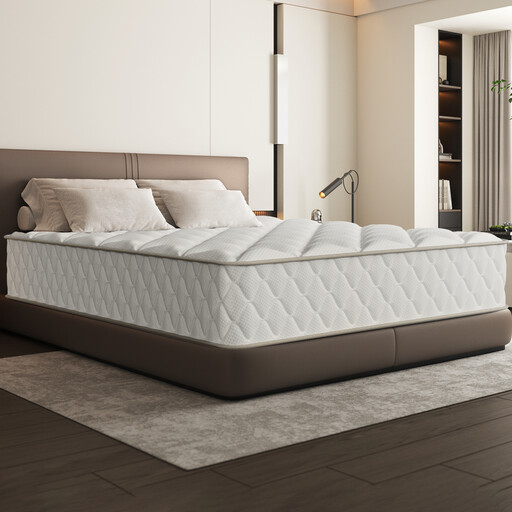
Why This Fits Their Persona: This model, in the standard 90x200 cm mattress size, offers a solid foundation for individuals or for a first bed. It combines essential features like a 7-zone structure and an H3 firmness level at an accessible price point.
Instead of vague promises, it delivers a clear 7-zone structure and a defined H3 firmness level. The 9-layer construction, including various foam layers, goes beyond a simple cover over the spring core.
The 9-layer structure provides a good balance of support and comfort. According to the manufacturer, it is breathable and antibacterial, which promotes hygiene.
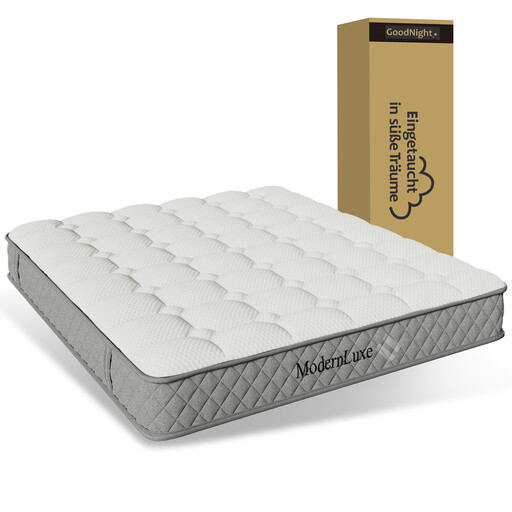
Why This Fits Their Persona: With its 180x200 cm mattress size and a high load capacity of up to 280 kg, this model is designed for couples. The individually wrapped springs minimise motion transfer, so partners are not disturbed by each other's movements.
It avoids the material weakness trap by combining cold foam with 868 pocket springs (for the 180 cm width). This ensures point elasticity and prevents the formation of a "hammock effect" in the middle.
The materials are OEKO-TEX certified, making them skin-friendly and suitable for allergy sufferers. The open-cell cold foam structure promotes breathability and a dry sleeping climate.
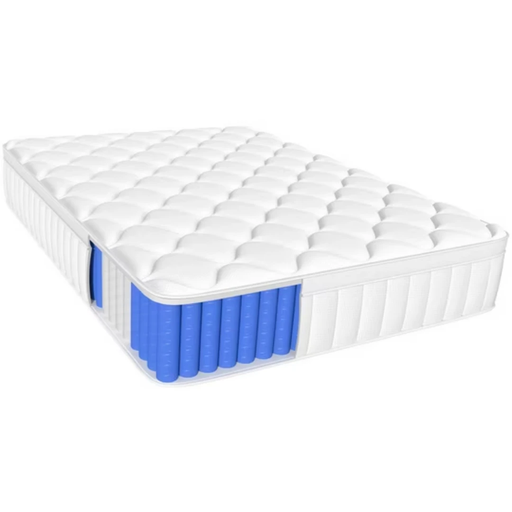
Why This Fits Their Persona: With a height of 25 cm and what the manufacturer describes as a reinforced spring core, this model offers exceptionally stable orthopaedic support. It is designed for individuals seeking targeted relief from back pain or those with a higher body weight.
It substantiates the "orthopaedic" promise with technical details: the manufacturer states it uses 6-turn carbon steel springs that have passed a durability test of 30,000 compressions.
The combination of reinforced springs and a 9-layer structure ensures high dimensional stability and longevity. The use of mulberry silk plant fibres is intended to enhance breathability and moisture balance.
We've compiled a complete, up-to-date list of products that fully meet these strict selection criteria and German safety regulations.
A mattress delivered as a bed-in-a-box needs time to fully expand and reach its final shape and firmness. Most manufacturers recommend a waiting period of 24 to 72 hours. It is essential to follow the manufacturer's specific instructions, as using it too early can compromise the structure.
Regularly rotating the mattress from head to foot (not flipping, unless the underside is also designed for sleeping) is recommended to ensure even wear and extend its lifespan. A good rhythm is every 3 to 6 months. This prevents indentations from forming in the most heavily used areas.
The H3 firmness level is primarily designed for people weighing 80 kg (approx. 176 lbs) or more. Lighter individuals might find an H3 mattress to be too firm. If the mattress is too hard, the shoulders and pelvis cannot sink in deep enough, causing the spine to curve unnaturally. In this case, a model with an H2 firmness level would often be a more suitable choice to ensure an ergonomic sleeping posture.