
Lieferung heute & morgen

Qualitätsgarantie

Willkommens-Angebote freischalten: KOSTENLOSE Lieferung | Bis zu 80 % RABATT | Kostenlose 30-Tage-JoyPlus-Testphase
App herunterladen
A 7-zone pocket-sprung mattress 140x200 cm needs to meet a range of requirements in an adult bedroom, family home or guest room: stable support, pleasant ventilation, low noise levels and the right firmness. However, the product description alone is not always enough. Terms such as ‘orthopaedic’, ‘antibacterial’ or ‘particularly durable’ should be assessed against specific details.
Seven zones may initially sound conclusive. What matters, however, is how the zones are designed, which materials lie above them and whether the mattress suits your sleeping position. A 7-zone mattress can provide different levels of support for side, back and front sleepers. The zoning does not replace checking the firmness, body weight and personal lying comfort.
The H3 designation is not completely standardised across the retail sector. With an H3 pocket-sprung mattress, you should therefore also consider the recommended load capacity, overall height and construction. An H3 mattress can feel noticeably different depending on the foam layer and spring core. Couples with different body weights should also look for good motion isolation and a sufficiently stable edge.
‘Antibacterial mattress’ or ‘mould-resistant’ are not blanket guarantees of a hygienic sleeping environment. More meaningful information includes specific details about the cover, care, ventilation and certifications. Load tests should not be equated with a guaranteed service life either. According to the product information, certain GTIMEX models, for example, underwent 30,000 rolling tests. This describes the stated test value, not automatically the length of time the mattress will last in a household.
In a pocket-sprung mattress, individual springs are housed in textile pockets. They respond independently, which can help limit the transfer of movement. This is useful for couples when one person frequently changes sleeping position during the night. Look out for:
This type of construction may be perceived as a back-friendly mattress when the firmness suits your body shape. It does not, however, indicate any medical effect or treatment for back pain.
For adults and older children, H2/H3 or H3 may be worth considering if you want a medium-firm feel. Check the manufacturer’s stated maximum load per mattress and take the combined weight of two people into account. A mattress with memory foam may distribute pressure during movement differently from a pure spring mattress. At the same time, a thick foam layer can make the mattress feel softer.
An breathable mattress should offer more than a claim about an air-permeable cover; it should have a credible construction behind it. Open-cell foam, spaces between the springs and a removable, washable cover make care easier. If the cover cannot be removed, a washable fitted sheet or separate mattress protector is advisable.
Rolled mattresses need sufficient time to unfold and air after unpacking. Always follow the manufacturer’s instructions. According to the product information, a GTIMEX model in 140x200 cm is said to unfold within around two hours. Other mattresses may require 24 to 72 hours. Open the packaging carefully and keep it away from children.
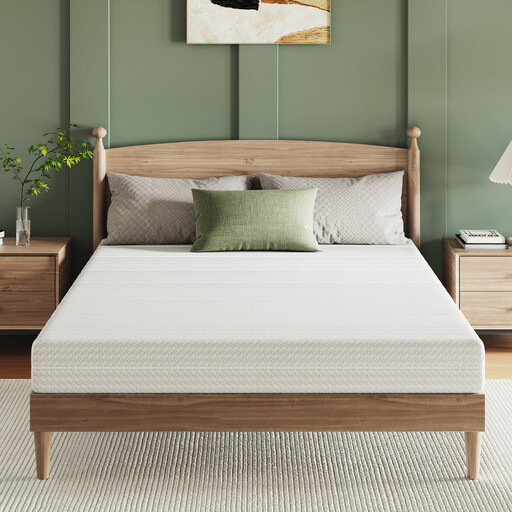
Why this product suits the profile: This alternative to a pocket-sprung mattress offers selectable H2 and H3 firmness levels, a height of 14 cm and a removable cover that can be washed at 60 °C. It is suitable for guest rooms, children's rooms or as a straightforward sleeping solution.
The specific H2/H3 information prevents an unclear firmness level from being judged solely by advertising language. The care information is also unambiguous.
7-zone cold foam, removable cover, and OEKO-TEX and CertiPUR-US details according to the product description.
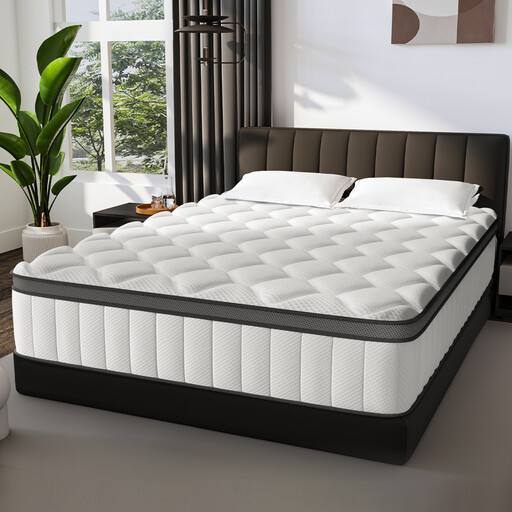
Why this product suits the profile: According to the product description, this model combines 2.1 mm pocket springs, nine material layers, memory foam, a height of 25 cm and an included fitted sheet.
Rather than simply using the term ‘orthopaedic’, the product description specifies the dimensions, firmness, layer construction and load capacity of up to 150 kg.
7-zone pocket spring core, nine layers, rolled delivery and 30,000 rolling tests according to the product information.
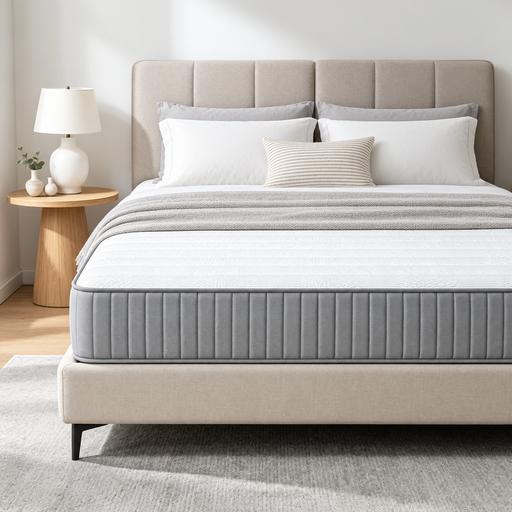
Why this product suits the profile: With five pocket-spring zones, H2/H3 support, reinforced edges and a breathable knitted cover, this hybrid construction is designed for couples, guest rooms and frequently used sleeping spaces.
The product description specifies H2/H3 rather than making an unexplained firmness claim. It also lists edge reinforcement and motion isolation as specific construction features.
24 cm height, five zones, reinforced edges and vacuum-rolled delivery according to the product information.
We have put together a complete, regularly updated list of products that fully meet these strict selection criteria and the safety regulations applicable in the EU.
This depends on the model. Some product information states around two hours, while other mattresses require 24 to 72 hours. The instructions from the relevant manufacturer are decisive. The room should be well ventilated while the mattress unfolds.
H3 is often described as medium-firm, but it is not a standardised measurement. Side, back and front sleepers should also consider body weight, the shoulder and pelvic areas, and the thickness of the foam layer. A returns option can be helpful if you are unsure.
The mattress itself does not incur ongoing energy costs. Expenses are more likely to arise from a mattress protector, fitted sheets and, where necessary, cleaning the cover. Good ventilation and regular care can help delay replacement for hygiene-related or material-related reasons.