
Lieferung heute & morgen

Qualitätsgarantie

Willkommens-Angebote freischalten: KOSTENLOSE Lieferung | Bis zu 80 % RABATT | Kostenlose 30-Tage-JoyPlus-Testphase
App herunterladen
A 7-zone pocket sprung mattress can be a good choice for couples, families and anyone looking for a supportive, breathable sleeping surface. But the number of zones alone is not enough to help you choose. Firmness, body weight, mattress height, materials and bed size all have a significant impact on comfort.
If you focus only on terms such as ‘ergonomic’, ‘orthopaedic’ or ‘particularly quiet’, it’s easy to overlook important details. The following criteria will help you distinguish marketing claims from product features that really matter.
A seven-zone design is intended to support different areas of the body, such as the shoulders, hips and legs, in different ways. However, it doesn’t replace checking the firmness, your height and your sleeping position. A 7-zone mattress may suit side sleepers if the shoulders and hips can sink in sufficiently. Stomach or back sleepers, on the other hand, may find a firmer surface more comfortable.
The term H3 mattress is often associated with a ‘medium-firm’ feel. However, firmness can vary between manufacturers. It’s also important to check the recommended weight limit, spring construction, comfort layers and mattress height. If you weigh more, make sure the product details clearly state the mattress’s weight capacity.
Pocket springs help air circulate through the mattress core. Foam, the cover and the underside also affect how the mattress feels to sleep on. For a breathable mattress, look for a cover that allows air to pass through, and use a suitable slatted bed base. A dense mattress protector can reduce the benefits of the mattress design.
A 140x200 cm pocket sprung mattress is a popular choice for a double bed where space is limited. Before ordering, check the internal dimensions of the bed frame and how deeply you want the mattress to sit in it. A mattress that’s 20 to 25 cm high can make it easier to get in and out of bed, but you’ll need to make sure there’s enough room in the frame.
Common sizes for single beds include 80x200, 90x200 and 100x200 cm. Depending on the room and bed frame, couples often choose 140x200, 160x200 or 180x200 cm. If you have a split sleeping surface, two single mattresses can reduce the transfer of movement and make turning them easier.
A medium-firm mattress, or an H3 mattress, is often marketed to people with a medium to higher body weight. However, this is a guide, not a guarantee of how the mattress will feel to you. Check:
A back-friendly mattress is not a medical term and does not guarantee any particular effect. For the models mentioned here, the term ‘orthopaedic mattress’ describes the construction or marketing, not a therapeutic benefit.
A hybrid mattress combines individually wrapped springs with layers of foam. The springs can help with ventilation, while memory foam or cold foam affects how the surface feels. A mattress with memory foam moulds more closely to your body under pressure, but depending on the material, it may feel warmer.
Individually wrapped springs typically transfer movement less directly than a continuous spring core. However, whether a mattress actually feels quiet can also depend on the bed frame, slatted base and your body weight.
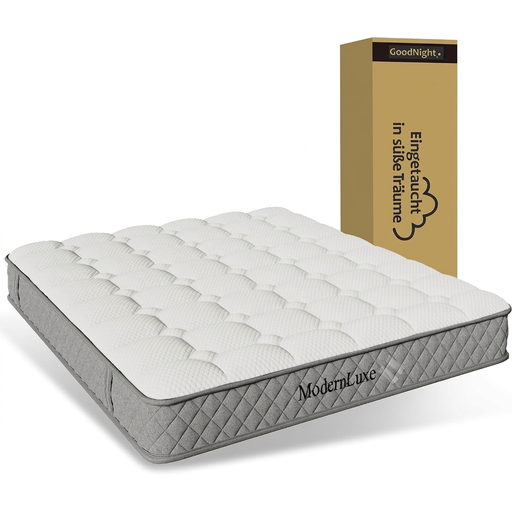
Why it suits this profile: The 140 x 200 cm size, H3 firmness and 20 cm height cover the key requirements for a double bed in a smaller room.
The product details clearly state the size, height, firmness and 7-zone design, rather than relying on vague comfort claims.
140 x 200 cm, H3 firmness, 20 cm height and pocket springs in a hybrid design.
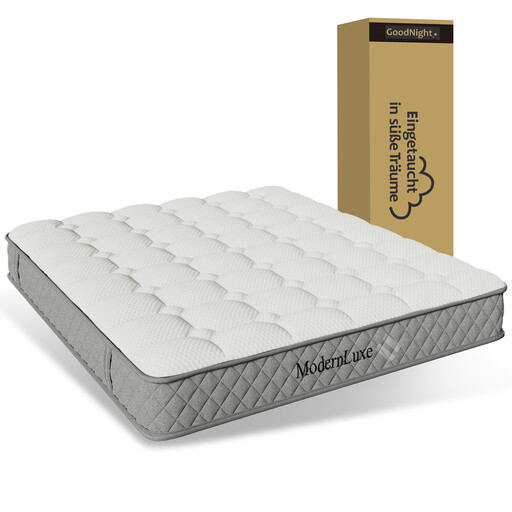
Why it suits this profile: The design combines 868 individually wrapped springs with cold foam, a height of 20 cm and four side handles.
The technical details include the number of springs, maximum weight capacity and delivery format. This makes it easier to compare the mattress with products that rely on vague marketing claims.
180 x 200 cm, H3, 868 pocket springs, four handles and materials described as OEKO-TEX certified.
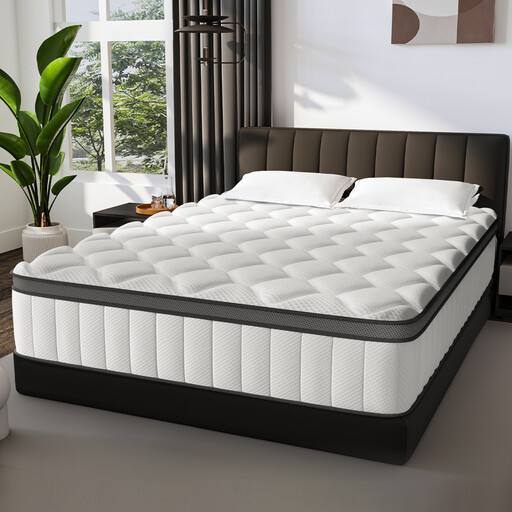
Why it suits this profile: At 25 cm high, this mattress is designed for a bedroom, guest room or family bed in regular use. It’s delivered rolled.
The product description lists nine material layers, H3 firmness, a maximum weight capacity of 150 kg and the time needed for the mattress to expand.
25 cm height, 7-zone design, H3 firmness, fitted sheet included and a rolled mattress for easier transport.
Many models arrive rolled and vacuum-packed. Once opened, the mattress should be left on a flat surface to expand fully. Depending on the model, the manufacturer’s recommended waiting time may be between two and 72 hours. Always check the product description before you buy.
A suitable slatted bed base helps with ventilation and prevents uneven pressure on the mattress. Don’t use sharp objects when opening the packaging. A mattress protector helps guard the cover against moisture and stains. Turn the mattress regularly if the manufacturer recommends it.
Its lifespan depends on the spring core, foam quality, load, slatted base and care. There’s no reliable one-size-fits-all figure for how many years it will last. Look for clear information about the materials, weight capacity and guarantee terms. Turning the mattress regularly can help reduce wear on one side.
It may suit side sleepers if the shoulders and hips can sink in enough while keeping the spine as straight as possible. Firmness, body weight and personal preference all matter. A 7-zone design alone doesn’t guarantee the right level of support.
Individually wrapped pocket springs are separated by design and may transfer movement less directly. However, noise can still come from the slatted base, bed frame or mattress cover. So, as well as checking the mattress, make sure the whole bed is stable.