
Lieferung heute & morgen

Qualitätsgarantie

Willkommens-Angebote freischalten: KOSTENLOSE Lieferung | Bis zu 80 % RABATT | Kostenlose 30-Tage-JoyPlus-Testphase
App herunterladen
A 75% mechanical gaming keyboard strikes the perfect balance: it's compact enough to save valuable desk space, yet functional enough to retain essential arrow keys and the F-row. However, the market is flooded with models whose marketing promises are often more style than substance. Before you invest, it's crucial to understand the common pitfalls that frequently lead to disappointment and a bad purchase.
As your Joybuy Product Recommendation Officer, I'm here to help you navigate the jungle of technical specs and make an informed decision.
Many users invest in a keyboard that looks good on paper but fails to deliver in practice. Pay close attention to these three points to avoid making a mistake:
To make the right choice, focus on these three core parameters that define your keyboard's performance and longevity.
The way the PCB is mounted in the case has the biggest impact on the typing experience and acoustics.
The ability to tailor a keyboard to your personal preferences is a key advantage of mechanical models.
Modern setups demand flexibility, whether for gaming, work, or use with multiple devices.
Here are a few models that represent a smart choice for different needs, based on the criteria above.
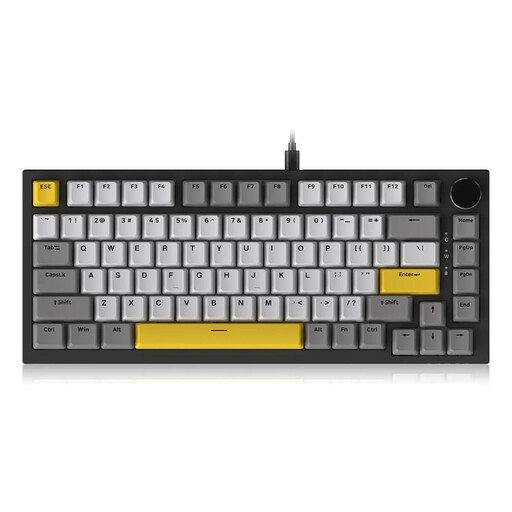
Why it's a great fit: It offers features like a gasket-mount structure, a CNC-machined rotary knob, and hot-swap capability at a very accessible price point. Ideal for anyone looking to enter the world of customisable keyboards without a large investment.
This model delivers a true gasket structure with multiple damping layers that noticeably improve the typing feel, rather than just being a marketing buzzword.
The combination of a gasket mount, a hot-swap PCB (3/5-pin), and a metal rotary knob is a powerful feature set in this price bracket.
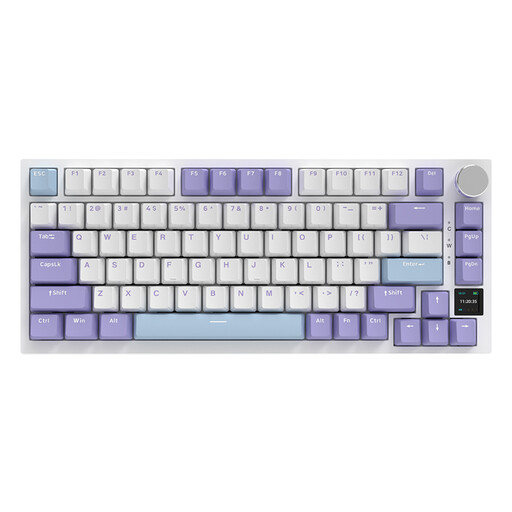
Why it's a great fit: Perfect for users who seamlessly switch between a gaming PC, work laptop, and tablet. Its tri-mode connectivity and 4000mAh battery provide the flexibility and endurance needed for a dynamic workflow.
It avoids the latency trap by including a dedicated 2.4 GHz connection for demanding games, while Bluetooth remains available for less critical applications. The TFT screen clearly displays the connection mode.
True tri-mode connectivity, an informative TFT colour screen, and a high-quality gasket-mount structure with a flex-cut PCB for an outstanding typing experience.
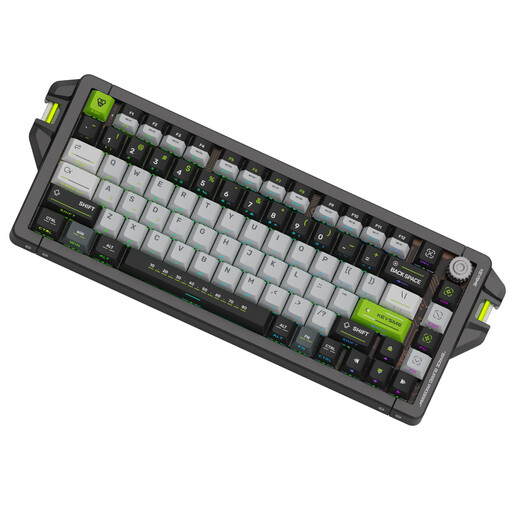
Why it's a great fit: Engineered for esports-grade performance. The 8KHz polling rate and adjustable magnetic switches enable a near-instantaneous response that can provide a decisive edge in competitive games.
This model goes far beyond standard hot-swap. With magnetic switches, it offers precisely adjustable actuation (Rapid Trigger), providing a level of control not found in traditional mechanical switches.
A true 8KHz polling rate for minimal latency, an adjustable actuation point from 0.1–4.0 mm, and a robust CNC aluminum case for maximum stability.
We have compiled a complete, up-to-date list of products that fully meet these strict selection criteria and all relevant safety standards.
Yes, as long as it uses a 2.4 GHz wireless connection. This technology offers very low latency, comparable to a wired connection, making it excellent for demanding games. Purely Bluetooth keyboards can be too slow for competitive play but are sufficient for everyday tasks and more casual games. Models with Tri-Mode Connectivity offer the most versatile user experience.
Many specialised mechanical keyboards are manufactured with a US QWERTY key layout. This means the keycap legends correspond to the American standard (e.g., Y and Z are swapped compared to a QWERTZ layout, and there are no dedicated keys for characters like ?, ?, ?). However, you can simply set your operating system (Windows or macOS) to your local keyboard layout. The keyboard will then behave as you expect: pressing the key in the "Z" position will produce a "Z". Special characters are accessible through the usual key combinations. The only difference is that the labels on the keycaps will not match what you type.
The lifespan of a mechanical keyboard is primarily determined by its switches. Most mechanical switches are rated for 50 million or more keystrokes, which translates to many years of durability under normal use. Another factor is the keycaps. Models with PBT Keycaps have an advantage here, as they are more resistant to wear and will retain their finish longer than ABS keycaps. Furthermore, on a hot-swap keyboard, faulty switches can be easily replaced individually, which can extend the device's lifespan even further.