
Lieferung heute & morgen

Qualitätsgarantie

Willkommens-Angebote freischalten: KOSTENLOSE Lieferung | Bis zu 80 % RABATT | Kostenlose 30-Tage-JoyPlus-Testphase
App herunterladen
Investing in a new television with a 75-inch (approx. 189 cm) screen is a decision for an immersive home cinema experience. Given the variety of technologies like Mini LED, OLED, and QLED, as well as specific features for gaming and movie playback, the selection can be complex. This guide aims to provide clarity by explaining the crucial buying criteria and presenting a selection of models for different user profiles. The goal is to offer you a solid foundation for making an informed decision.
Before you decide on a model, it's helpful to understand the fundamental technologies and features that significantly influence picture quality, sound, and the overall user experience.
The choice of display technology is fundamental to picture quality. Each technology offers specific advantages:
For a first-class experience, other specifications beyond the display technology are relevant:
Based on the criteria mentioned, we have compiled a selection of models that focus on different priorities.
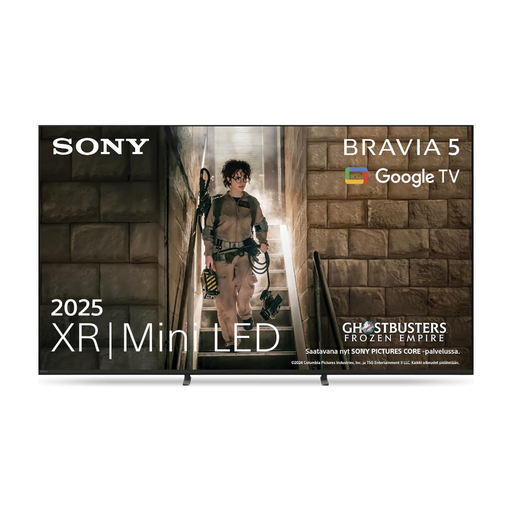
Why it stands out: The Sony K-75XR55 uses Mini LED technology in combination with XR Backlight Master Drive control to achieve precise control over contrast and brightness, according to the manufacturer. A special feature is the Acoustic Multi-Audio system, where the sound appears to come directly from the screen, which enhances immersion.
Pros:
Who is it for? This model is aimed at home cinema enthusiasts who value a harmonious union of picture and sound quality and are looking for an integrated, immersive audio experience without an external soundbar.

Why it stands out: The Hisense 75E77Q PRO is a QLED 4K TV that stands out with a high refresh rate of up to 144 Hz. It supports a wide range of HDR formats, including Dolby Vision IQ, and offers a fast and user-friendly smart TV interface with the VIDAA operating system.
Pros:
Who is it for? This device is an interesting option for ambitious gamers looking for a gaming TV with a high refresh rate, as well as for price-conscious buyers who want a comprehensive feature set and broad HDR support.
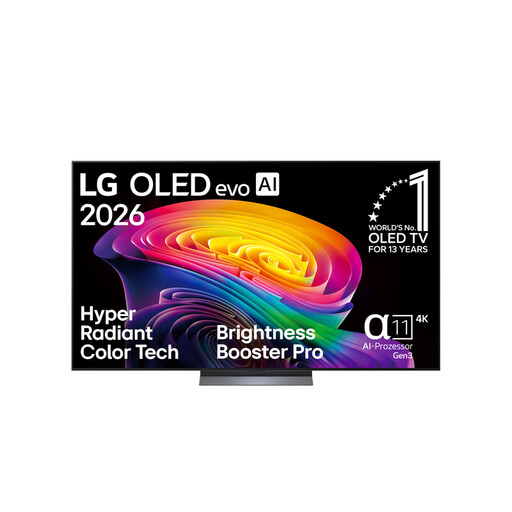
Why it stands out: As a 77-inch OLED TV, the LG OLED77C67LA offers the characteristic advantages of this technology: perfect blacks, infinite contrast, and lifelike colours. Powered by the α11 AI Processor and equipped with comprehensive gaming features like VRR up to 165 Hz, NVIDIA G-Sync, and AMD FreeSync Premium, it positions itself in the premium segment.
Pros:
Who is it for? This model is designed for demanding users who are looking for the ultimate home cinema TV experience and also expect uncompromising performance for next-gen gaming.
The models presented already cover a broad spectrum. However, if the right model for your specific requirements is not yet among them, there are numerous other alternatives on the market.
Discover our entire selection of Black Televisions to find the perfect model for your living room.
QLED and Mini LED are not competing but complementary technologies. QLED refers to a Quantum Dot film placed in front of the backlight to improve colour accuracy and colour volume. Mini LED is an advanced type of backlight consisting of thousands of small LEDs, enabling more precise local dimming. Many premium TVs combine both technologies to achieve both brilliant colours (QLED) and deep blacks (Mini LED).
Most cinema films are produced at 24 frames per second (fps). A 120Hz panel can reproduce this frequency without judder, as 120 is an integer multiple of 24. While the advantage for movies can be subtle, it is clearly visible in sports broadcasts and video games running at 60 or 120 fps, leading to clearer and smoother motion.
For a 4K TV, a viewing distance of 1.0 to 1.5 times the screen diagonal is often recommended. For a 75-inch TV (approx. 190 cm diagonal), that would be a distance of about 1.9 to 2.85 metres (approx. 6.2 to 9.3 feet). Within this range, the image comfortably fills your field of view without individual pixels becoming visible, which promotes an immersive viewing experience.