
Lieferung heute & morgen

Qualitätsgarantie

Willkommens-Angebote freischalten: KOSTENLOSE Lieferung | Bis zu 80 % RABATT | Kostenlose 30-Tage-JoyPlus-Testphase
App herunterladen
Investing in a new 75-inch TV is a decision that will redefine your home entertainment experience. However, with a wide array of technical specifications like QLED, 144Hz, and HDMI 2.1, making the right choice can be complex. This guide provides objective information to help you select the perfect model, whether for high-end gaming or an immersive home cinema.
Before we dive into specific models, it's helpful to understand a few key technologies. These features are crucial in determining the performance and future-readiness of your new TV.
The refresh rate, measured in Hertz (Hz), indicates how many frames are displayed on the screen per second.
The HDMI 2.1 connection standard is crucial for modern entertainment electronics. It offers higher bandwidth than its predecessors and enables features that are essential for gamers and home cinema enthusiasts:
For a complete home cinema TV experience, advanced picture and sound formats are essential.
Here is a selection of models that cater to different needs—from high-performance gaming TVs to versatile family all-rounders.
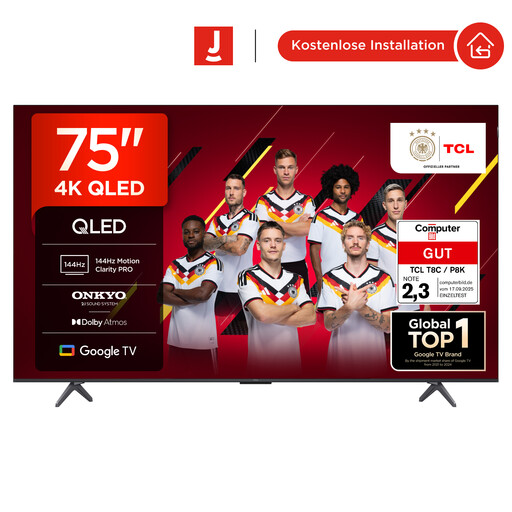
Why It Stands Out: The TCL 75T8C is engineered for performance. Its native 144Hz QLED display and full HDMI 2.1 support make it an excellent choice for gamers. Features like VRR and ALLM are complemented by the "Game Master" mode, which optimises settings for minimal latency. The integrated Onkyo 2.1 sound system with a subwoofer also provides a solid audio foundation without additional hardware.
Pros:
Who It's For: This model is aimed at tech enthusiasts looking for an uncompromising 144Hz gaming TV who also value maximum motion clarity for fast-paced movies or sports.
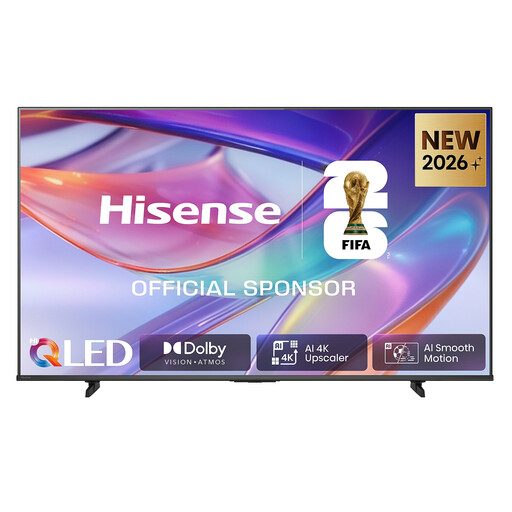
Why It Stands Out: The Hisense 75E7S focuses on optimised picture quality for films and series. Its QLED technology ensures vibrant colours, while Dolby Vision IQ intelligently adapts the picture to the room's ambient lighting. The AI 4K Upscaler also enhances the quality of lower-resolution content. With its HomeOS operating system and AirPlay 2 support, it integrates well into various smart home ecosystems.
Pros:
Who It's For: Ideal for film and series lovers who want a large 4K Smart TV with excellent picture adaptation and primarily use streaming services. The 60Hz refresh rate is perfectly sufficient for this use case.
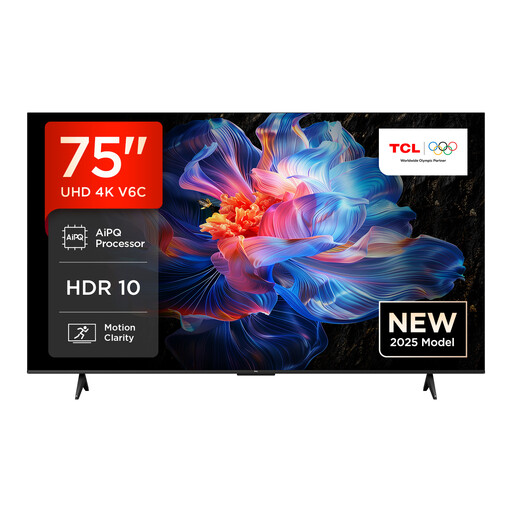
Why It Stands Out: The TCL 75V6C presents itself as a well-rounded package. It combines key modern technologies like Dolby Vision, HDMI 2.1 (with ALLM and VRR), and the user-friendly Google TV operating system. Although the panel has a native 60Hz rate, the manufacturer claims it offers a "120Hz Game Accelerator" mode for smoother gaming. This makes it an attractive option for users looking for a future-ready TV for mixed use.
Pros:
Who It's For: A great choice for families and budget-conscious buyers who need a large, versatile 4K Smart TV for streaming, watching TV, and casual gaming on current-gen consoles.
The models featured here provide a good overview of the current market. If you are considering other sizes, technologies, or brands, you can find a wider selection in our category.
? Explore our full range of Ultra 4K Smart TVs
1. What is the advantage of a QLED TV over a standard LED TV? QLED TVs use an additional layer of "Quantum Dots" in front of the LED backlight. These nanoparticles enable the display of a wider and more precise colour spectrum, as well as higher peak brightness compared to conventional LED TVs. The result is more vibrant and realistic colours.
2. Do I really need a 144Hz TV for gaming? That depends on your standards and your hardware. For casual gamers, a 60Hz panel with gaming features like ALLM is often sufficient. However, if you play competitively, own a current-gen console or a powerful PC, and value maximum fluidity and minimal response times, a native 144Hz gaming TV offers a noticeably better experience.
3. Is Google TV a good smart TV platform?Google TV is the evolution of Android TV and is considered a very user-friendly and comprehensive platform. It aggregates content from various streaming apps onto a central home screen and provides personalised recommendations. The integration of Google Assistant allows for convenient voice control of the TV and compatible smart home devices. The vast selection of apps in the Google Play Store is another major advantage.