
Lieferung heute & morgen

Qualitätsgarantie

Willkommens-Angebote freischalten: KOSTENLOSE Lieferung | Bis zu 80 % RABATT | Kostenlose 30-Tage-JoyPlus-Testphase
App herunterladen
The search for a high-quality 75% mechanical keyboard with a German ISO-DE layout is a niche endeavor. Users seeking this form factor typically know what they want: a compact yet functional companion for programming, gaming, or creative writing. However, the market is saturated with products whose marketing claims don't always match reality. This guide will help you identify the crucial features and avoid common purchasing pitfalls.
As a Joybuy Product Recommendation Officer, my role is to provide objective information so you can make an informed decision based on facts, not hype.
Before we dive into the important specifications, let's highlight three common issues that can lead to disappointment:
To make a future-proof choice, you should pay attention to the following technical parameters. They define the typing feel, longevity, and functionality of your keyboard.
The centrepiece for German users is the correct ISO-DE keyboard layout. Look for the characteristic tall Enter key and the correct placement of keys like <>| next to the left Shift key. For maximum control, a VIA-compatible keyboard is a smart choice. VIA is a powerful software that allows you to remap any key without complex programming or proprietary drivers. This is particularly useful for programmers and power users who want to customise their environment precisely.
The way the circuit board (PCB) is mounted in the case has an enormous impact on the typing feel and sound. Premium keyboards often use a leaf-spring mount. This suspends the PCB on flexible leaf springs, creating a softer, bouncier typing experience and dampening harsh impacts. This contrasts with the simpler "tray mount" method, where the PCB is screwed directly to the case, resulting in a stiffer feel. A solid aluminium case further contributes to a rich sound profile and high stability.
Modern workspaces demand flexibility. A tri-mode keyboard offers three connection options: via USB-C cable, a low-latency 2.4 GHz wireless dongle, and Bluetooth. This allows you to seamlessly switch between a desktop PC, laptop, and tablet. Another must-have for enthusiasts is a hot-swap keyboard. This feature allows you to change mechanical switches without soldering. This way, you can try out different switch types (linear, tactile, clicky) and adapt the typing feel of your keyboard to your preferences at any time or easily replace faulty switches.
Here are some recommendations tailored to different user profiles that incorporate the quality features mentioned above.
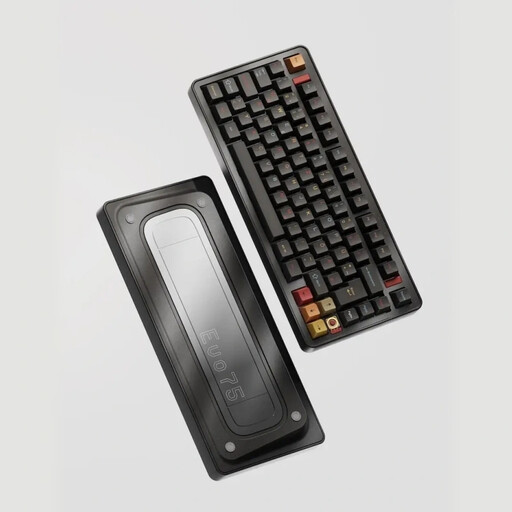
Why This Fits Their Persona: This model is designed for users who refuse to compromise. It combines all the features of a high-end custom keyboard in a pre-built package: true ISO-DE, a solid aluminium case, a leaf-spring mount, a hot-swap PCB, and VIA compatibility.
This is a complete package, not a barebone cost trap. The case is made of solid aluminium, not just a top plate.
The combination of a leaf-spring mount and aluminium case delivers a superior typing feel and premium acoustics.
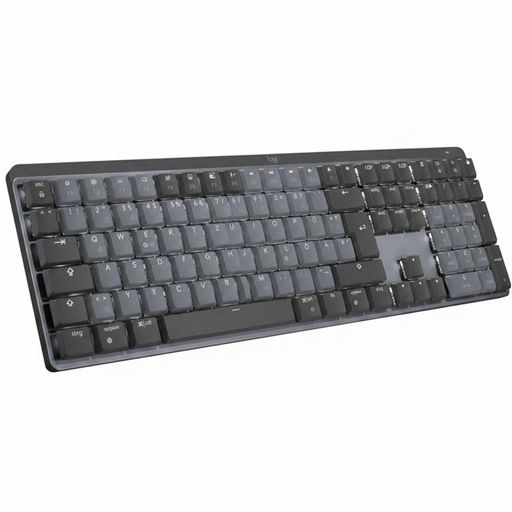
Why This Fits Their Persona: Ideal for professional users seeking a reliable, quiet, and high-quality keyboard for daily office use. The focus is on productivity and seamless connectivity between multiple devices (PC, Mac, tablet) rather than maximum customisability.
This is an established out-of-the-box solution that requires no deep dive into the custom keyboard scene. The QWERTZ layout is standard-compliant.
The quiet, tactile low-profile switches and smart backlighting are optimised for a professional environment.
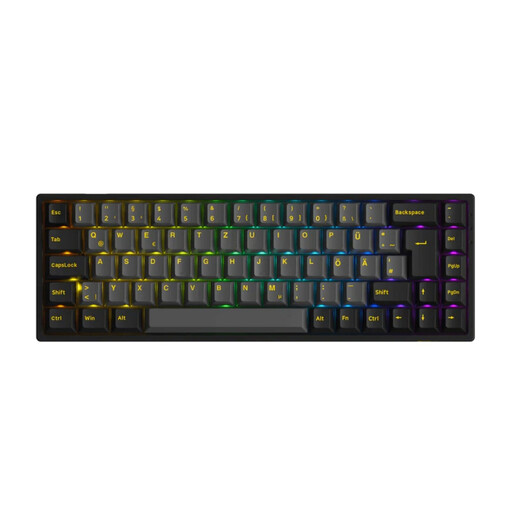
Why This Fits Their Persona: For users who prefer an even smaller form factor than 75% but don't want to give up a German layout and custom features. The 65% layout saves maximum desk space while retaining the arrow keys.
Despite its attractive price point, it offers a true ISO-DE layout and key enthusiast features like tri-mode connectivity and hot-swap capability.
An excellent price-to-performance ratio for a fully-featured, wireless, and customisable mechanical keyboard in a compact form factor.
We have compiled a complete, real-time updated list of products that fully meet these strict selection criteria and German regulations.
The main difference is the physical layout. ISO-DE has a large, two-row Enter key and an extra key to the left of the Z key. The American ANSI layout uses a wide, single-row Enter key and has a longer left Shift key. For users in Germany familiar with the standard keyboard layout, ISO-DE is essential for an efficient workflow.
The lifespan is specified by the switch manufacturer and is typically between 50 and 100 million keystrokes per key. The advantage of a hot-swap keyboard is that you don't have to replace the entire keyboard if a single switch fails. You can simply pull it out with a switch puller and replace it with a new one.
That depends on your personal priorities. A full aluminium case offers a noticeably higher stability, more weight (which prevents it from sliding), and significantly influences the keyboard's sound—often described as deeper and less hollow. For enthusiasts who value feel, acoustics, and durability, it's a worthwhile investment. For general daily use, a keyboard with a plastic case and an aluminium top plate can be sufficient.