
Lieferung heute & morgen

Qualitätsgarantie

Willkommens-Angebote freischalten: KOSTENLOSE Lieferung | Bis zu 80 % RABATT | Kostenlose 30-Tage-JoyPlus-Testphase
App herunterladen
A 750 ml glass food storage container is suitable for many everyday situations: portioned lunches, leftover soup, side dishes or prepared ingredients. Its capacity sits between a small lunch box and a larger storage container, so it will often fit in the fridge, freezer or work bag.
Despite their similar product images, glass storage boxes can differ considerably in terms of material, lid mechanism and temperature resistance. If you only focus on capacity, you may overlook important details. Three common purchasing misconceptions are particularly relevant:
A borosilicate glass food storage container is designed for use with changing temperatures. Borosilicate glass has comparatively low thermal expansion, which is why it is often used for heat-resistant glass containers. However, this does not mean it can be used without restrictions.
Look out for specific manufacturer information such as:
When using a glass container in the oven, it should always be placed inside with the lid open or removed completely. Hot containers should also not be placed directly on cold stone surfaces or put into cold water.
For soups, sauces and dressings, “airtight and leakproof” is particularly important. Check whether the lid has a continuous silicone seal and how many fastening clips it has. A glass container with a lid and a four-sided closure system usually distributes the pressure more evenly than a simple push-fit lid.
The seal should be removable or at least easily accessible. This makes it easier to remove food residue and odours during cleaning. Before transporting the container, a quick function test is recommended: do not fill it completely, close the lid correctly and carefully tilt the container.
750 ml refers to the nominal capacity. For everyday use, the external dimensions and shape are also important. A square container measuring approximately 16.1 × 16.1 × 7.2 cm can be stacked efficiently, while an elongated shape may fit better in some fridge compartments or bags.
For meal prep, leave a little space beneath the lid. Liquid foods expand when frozen and need additional room. Also check whether the containers are stackable and whether the lids sit securely when several boxes are placed on top of one another.
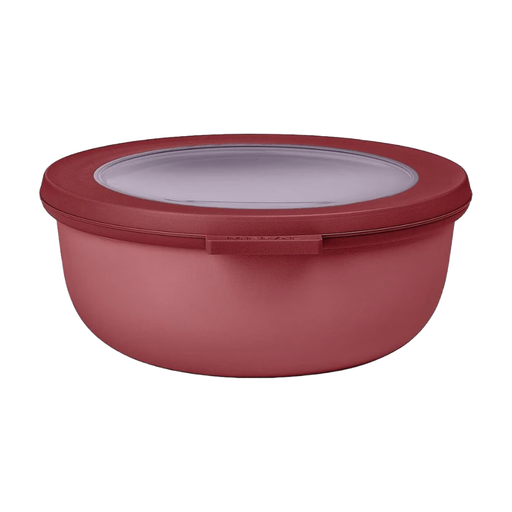
Why this product suits the profile: The 750 ml bowl, made from PP and TPE, is suitable for the fridge, freezer, microwave without the lid and dishwasher. It is a practical alternative if a glass container is not essential.
The usage instructions clearly state the maximum temperature of 110 °C and that the lid must be removed during heating.
750 ml capacity, stackable and nestable design, airtight lid, dishwasher and freezer suitability.
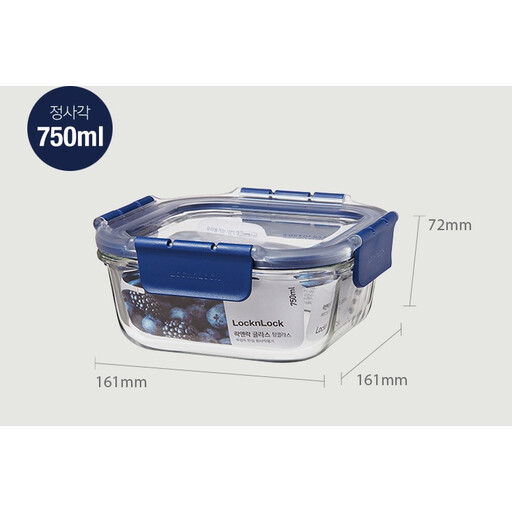
Why this product suits the profile: According to the product information, the square container is made from heat-resistant glass and features a four-sided closure with a silicone seal. It is designed for storage, heating and portioned preparation.
The usage limits are clearly specified: oven use up to 400 °C, microwave and air fryer use without the lid, and freezer use down to −20 °C.
Borosilicate glass, 750 ml capacity, stackable design, BPA-free lid and dishwasher suitability.
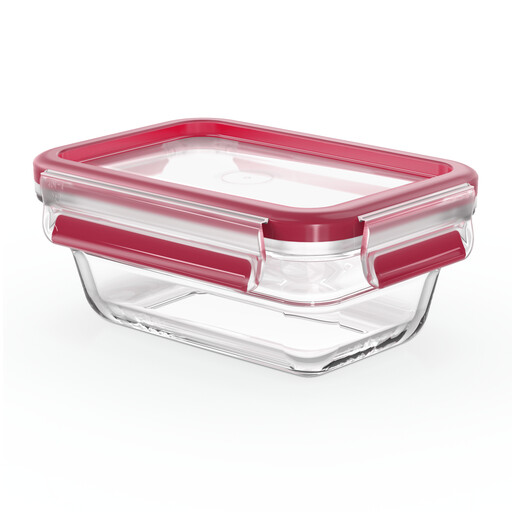
Why this product suits the profile: The smaller format is aimed at users who want to organise several individual portions or store ingredients separately. According to the product description, the glass container can be used in the oven, microwave, freezer and dishwasher.
The labelling expressly states that the lid must be removed during heating and that the container is suitable for freezer use down to −40 °C.
Compact 0.45 l capacity, clip closure, stacking rim, oven suitability up to 420 °C without the lid and dishwasher suitability.
Before first use, clean the glass, lid and seal with warm water and mild washing-up liquid. Before every use, check the rim of the glass and the lid for cracks, chips or deformation.
Follow these rules for everyday use:
A transparent glass container is practical for meal prep because you can see the contents and portion size at a glance. At the same time, you should take its additional weight compared with plastic into account. When transporting food in a bag, a reliable seal is more important than an especially high temperature rating.
We have put together a complete, regularly updated list of products that fully meet these strict selection criteria and the safety regulations applicable in the EU.
That depends on the model. Many containers are microwave-safe, but only without the lid. Closures and seals can warp or cause pressure to build up. The manufacturer’s information on the product page and packaging is decisive.
A model approved for this purpose can be used in the freezer. Leave enough room when filling it to allow liquids to expand, and avoid moving it directly from extreme cold to intense heat. A specific temperature range, such as −20 °C or −40 °C, should be stated in the product information.
There is no universal answer regarding its service life. Glass can be used for a long time if handled carefully, but it is susceptible to impacts, cracks and chips. Lids and silicone seals can wear more quickly through frequent cleaning or incorrect storage. Damaged parts should no longer be used.