
Lieferung heute & morgen

Qualitätsgarantie

Willkommens-Angebote freischalten: KOSTENLOSE Lieferung | Bis zu 80 % RABATT | Kostenlose 30-Tage-JoyPlus-Testphase
App herunterladen
Purchasing an electric car is a major step, but finding the right home charging solution often raises questions. A dedicated home charging station makes the process not only more convenient but also safer and more efficient than a standard household socket. A 7kW wallbox, in particular, represents a balanced solution for many households.
This article serves as your guide. We will explain the crucial criteria for selecting a 7kW wallbox and present a selection of models that stand out for their technical features and functionality. Our goal is to provide you with an objective foundation for your purchasing decision.
Choosing the right wallbox depends on your individual needs, your home's electrical infrastructure, and your desired convenience features. Here are three key aspects to consider.
A wallbox with 7kW of charging power typically uses a single-phase connection fused at 32A (1-phase). This configuration allows you to charge an electric car significantly faster than with a standard household socket. For many plug-in hybrids and all-electric vehicles, this power level is perfectly adequate for overnight charging. A vehicle with a 50 kWh battery can be fully charged overnight. Before purchasing, verify compatibility with your home's electrical system and ensure the installation is performed by a qualified electrician.
Modern charging stations are more than just power sources. A smart wallbox offers features that can optimise the charging process and help you save money.
Safety is the top priority. Look for integrated safety mechanisms like DC fault current protection, which can make expensive external components redundant. A high IP rating (e.g., IP66) ensures the wallbox can be operated safely outdoors.
Another crucial feature is load management. A wallbox with load management (especially dynamic load management) monitors the total power consumption in your home and automatically adjusts the vehicle's charging power. This prevents overloading your home's main connection, even when other high-consumption appliances like a heat pump or an electric water heater are active. The Type 2 charger has also become the European standard, compatible with nearly all electric vehicles sold in Europe.
Based on the criteria mentioned, we have compiled a selection of models that excel in functionality and technical specifications.
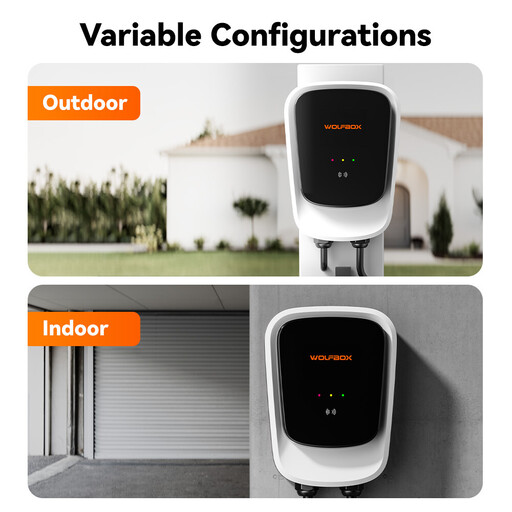
Why it stands out: The WOLFBOX AE07 combines essential smart features in a robust housing. The ability to control it via both an app and an RFID card offers excellent flexibility for access control and use.
Advantages:
Who is it for? This model is an excellent choice for users looking for a reliable and straightforward 7kW EV charging station for their home, who also value simple yet secure access control.
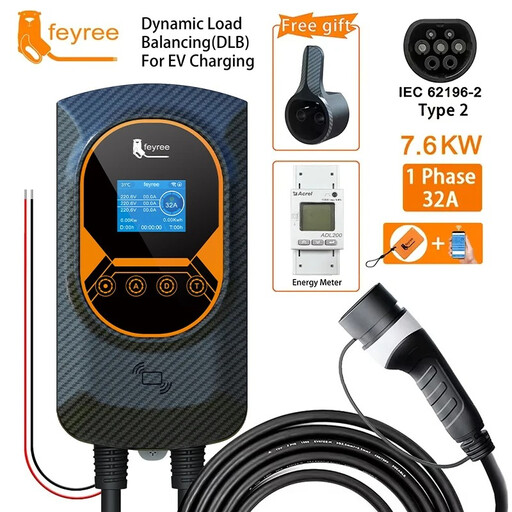
Why it stands out: The standout feature of this feyree model is its dynamic load balancing (DLB). This function makes it a particularly smart wallbox that optimises energy flow within the household and actively prevents grid overload.
Advantages:
Who is it for? Ideal for households with other major electricity consumers (e.g., a heat pump, sauna, or electric water heating). The DLB ensures worry-free operation and maximum charging efficiency without requiring manual intervention.

Why it stands out: This feyree model is distinguished by its large 4.3-inch display, which allows for detailed monitoring and control directly at the wallbox. A key highlight is the integrated Type B fault current protection (AC 30mA + DC 6mA), which provides a high level of safety.
Advantages:
Who is it for? Perfect for data-driven users who want precise control and detailed records of their charging sessions. The large screen and advanced safety features offer added convenience and peace of mind.
The models presented here are just a sample from the growing market of 7kW wallboxes. Every home and every user has different requirements. If you want to compare more models with different specifications or learn about other power classes, you can find a wider selection in our EV Wall Chargers category.
The main difference lies in the connection and the charging power. A 7kW wallbox is typically connected to a single-phase supply (230V, 32A). An 11kW wallbox requires a three-phase connection (400V, 3x16A) and charges correspondingly faster, provided the vehicle supports it. The choice depends on your available electrical installation and your desired charging speed.
Regulations for installing EV charging stations vary by region. In many areas, including Germany, installations up to 11 kW are subject to notification. This means you must inform your local utility provider about the installation before you begin using it. A formal permit is not usually required for a 7kW wallbox, but it is crucial that the installation is carried out by a qualified electrician.
Dynamic load management is a smart feature that monitors a building's total electricity consumption in real-time. If many appliances are running simultaneously and the home's connection is nearing its load limit, the wallbox automatically reduces the EV's charging power. As soon as more capacity becomes available, the charging power is increased. This prevents power outages and ensures optimal use of the available energy.