
Lieferung heute & morgen

Qualitätsgarantie

Willkommens-Angebote freischalten: KOSTENLOSE Lieferung | Bis zu 80 % RABATT | Kostenlose 30-Tage-JoyPlus-Testphase
App herunterladen
Anyone serious about their fitness goals knows that body weight is only part of the story. For detailed management of training and nutrition, precise data on body composition is crucial. Conventional bathroom scales or simple 4-electrode body fat scales often only provide estimates for the entire body. An 8-electrode body fat scale, by contrast, offers a segmental analysis through additional measurements via the hands, providing a significantly more detailed dataset.
This article is for users seeking this level of precision. We will explain how these scales work, outline important purchasing criteria, and present a selection of models suited for various needs.
Choosing the right model depends on your individual goals. Three criteria are particularly relevant when deciding on a smart scale with handles.
Most smart scales use Bioelectrical Impedance Analysis (BIA). This process sends a weak, imperceptible electrical current through the body. Because fat, muscle, and water have different levels of resistance, the scale can calculate body composition from this data.
A modern body composition scale with an app is standard today. The key differences lie in the type of connection and the software's feature set.
The accompanying app should provide clear progress charts, easy management of multiple users, and ideally, the option to export data.
Beyond standard values like body fat, muscle mass, and water percentage, some models offer other useful features. For example, a scale with heart rate measurement can capture your resting heart rate during weigh-ins, providing an additional indicator of cardiovascular fitness. Other metrics such as visceral fat, bone mass, or the Body Mass Index (BMI) are standard on most devices.
Based on the criteria mentioned, we have compiled a selection of models that are well-suited for different user groups due to their specific features.
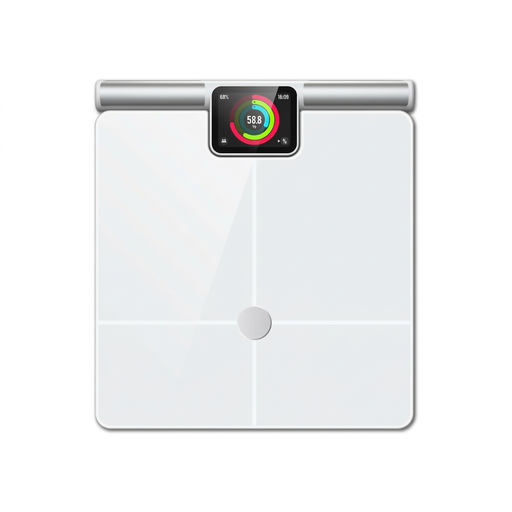
Why It Stands Out This model is a professional body fat scale designed specifically for users with high demands on data quality. The combination of 8-electrode technology and dual-frequency BIA enables a precise 5-compartment body analysis. With 56 different body metrics, it delivers an exceptionally comprehensive dataset. The 3.36-inch TFT color display shows key values directly, while dual connectivity via Wi-Fi and Bluetooth ensures seamless and automatic synchronization.
Pros
Who Is It For? Ideal for fitness enthusiasts, athletes, and bodybuilders who need detailed, segmental analysis to optimize their training and nutrition. It is also suitable for health-conscious individuals and families who want a comprehensive and accurate dataset for their health management.
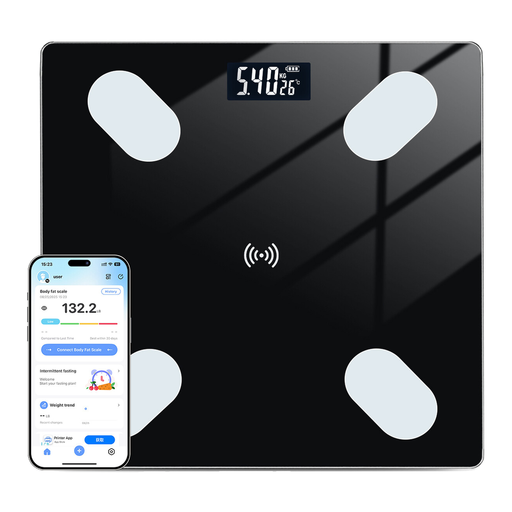
Why It Stands Out The Sparoma ADL-26Black focuses on the essential functions of a smart scale. It measures 13 fundamental health indicators, including weight, BMI, body fat, and muscle mass. The connection to the OKOK app via Bluetooth is straightforward and allows for tracking long-term trends. The multi-user mode with automatic recognition makes it a practical solution for the whole family.
Pros
Who Is It For? Perfect for beginners in smart body analysis and for families looking for a reliable and easy-to-use scale for daily use, without being overwhelmed by too much data.
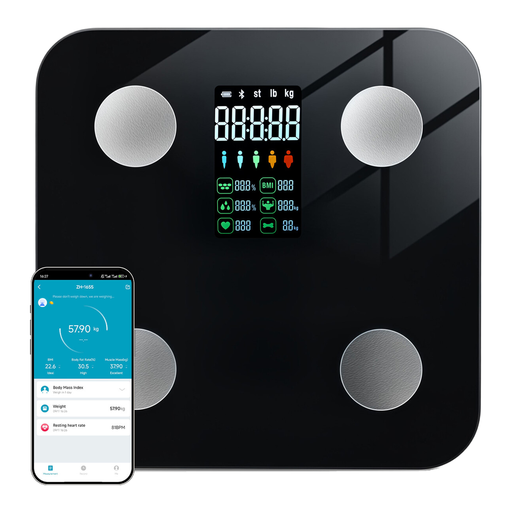
Why It Stands Out The Sparoma ZJ08 distinguishes itself with its bright color LCD display. It not only shows weight but also body fat percentage and heart rate directly on the scale. Color indicators provide an at-a-glance assessment of whether your values are within a healthy range. With over 15 metrics synced via Bluetooth to the app, it offers a comprehensive analysis and an engaging user experience right on the device.
Pros
Who Is It For? For users who appreciate immediate, visual feedback directly on the scale and want to keep an eye on their heart rate in addition to their body composition. It's a great choice for anyone seeking a balance between extensive features and ease of use.
The models presented here cover specific use cases. However, the market offers a wide variety of other scales with different focuses—from minimalist digital scales to other specialized analysis devices.
If you want to compare more models or are looking for a simpler bathroom scale, you might find the right product in our broader selection.
Explore Our Entire Range of Body Scales
1. What is the difference between a 4- and an 8-electrode body fat scale? A 4-electrode scale measures electrical resistance only in the lower body (from one leg to the other) and extrapolates the results for the upper body. An 8-electrode body fat scale uses additional hand electrodes to measure the upper body separately. This allows for a segmental analysis of the arms, legs, and torso, leading to more accurate and detailed results.
2. How accurate is a BIA scale for home use? The accuracy of a BIA scale depends on the quality of the sensors, the technology used (e.g., dual-frequency), and correct usage. For consistent results, measurements should always be taken under the same conditions (e.g., in the morning after waking up, before breakfast). While home devices cannot replace medical diagnostic tools like a DEXA scan, they provide reliable trend data for monitoring personal progress in body fat and muscle mass.
3. Do I need a scale with Wi-Fi functionality? A body fat scale with Wi-Fi primarily offers convenience. The data is automatically synced with the cloud and the app after each measurement, without needing your smartphone to be nearby or the app to be open. For users who want seamless and effortless data collection, this feature is a clear advantage. However, a Bluetooth-only connection is sufficient for most users.