
Lieferung heute & morgen

Qualitätsgarantie

Willkommens-Angebote freischalten: KOSTENLOSE Lieferung | Bis zu 80 % RABATT | Kostenlose 30-Tage-JoyPlus-Testphase
App herunterladen
Choosing a PC power supply often seems like a mere formality, but this is where costly mistakes are made. An unsuitable or outdated power supply unit (PSU) can throttle the performance of modern components, compromise system stability, or create an undesirable noise profile. Especially when searching for a 850W ATX 3.1 power supply for a high-performance PC, there are several pitfalls that can be avoided with the right knowledge. This guide will help you objectively evaluate technical specifications and make an informed decision.
Before we dive into the technical details, let's look at three typical pitfalls that often lead to disappointment when selecting a PSU for a modern gaming PC:
To avoid the problems mentioned above, you should prioritise three core features. These define the performance, compatibility, and user-friendliness of a modern PSU.
The ATX 3.1 standard is the direct response to the demands of modern hardware. Power supplies that meet this standard are designed to handle very high power spikes—which can be two to three times the nominal power of the graphics card—for milliseconds. This is essential for the stability of systems with high-end graphics cards. Closely related is the PCIe 5.1 standard, which specifies the 12V-2x6 cable connector. This connector is designed for the safe and stable power delivery to the latest generations of graphics cards and represents an evolution of the 12VHPWR connector. A PCIe 5.1 power supply is therefore a fundamental requirement for future-proof PC builds.
The efficiency of a power supply indicates how much power from the wall outlet actually reaches the components. A high efficiency rating means less energy is lost as heat. This not only saves on your electricity bill but also ensures cooler and quieter operation, as the fan needs to run less frequently and at lower speeds. While "80 Plus Gold" is a good benchmark, the Cybenetics Gold certification goes further. It evaluates not only efficiency but also noise levels across the entire operating range. A power supply with a Cybenetics certification and a Zero RPM Fan Mode remains completely silent at low to medium loads, as the fan only starts spinning when energy demand increases.
A fully modular 850W power supply offers maximum flexibility. You only connect the cables you actually need for your components. The result is a tidy case with optimised airflow, which improves the cooling performance of all components. Installation is significantly simplified, and the system looks more professional—a clear advantage, especially in cases with a side window.
Based on the criteria above, we have identified a few models that are suitable for specific user profiles.
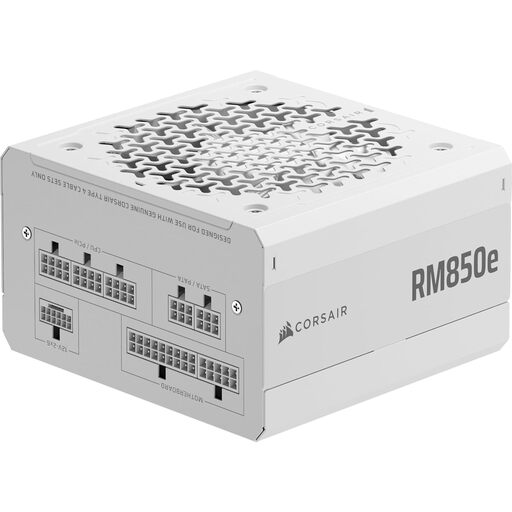
Why This Fits Their Persona: Ideal for users aiming for a pristine, white-themed PC build. The white casing and matching white, fully modular cables enable extremely clean cable management that shines in cases with a glass panel.
The fully modular design prevents cable clutter and improves airflow. ATX 3.1/PCIe 5.1 compliance ensures compatibility with current hardware.
Meets the ATX 3.1 standard and has a Cybenetics Gold certification. The Zero RPM mode ensures silent operation at low loads.
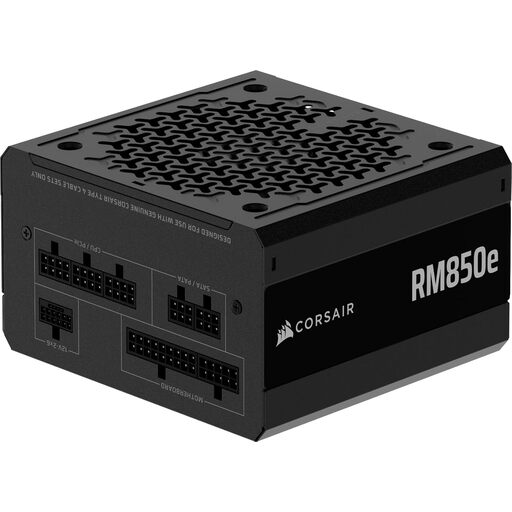
Why This Fits Their Persona: For gamers and content creators who prioritise stable performance and reliability. The 850W output and ATX 3.1 compliance provide ample headroom for demanding GPUs and CPUs.
Thanks to ATX 3.1 and the included 12V-2x6 cable, power spikes from modern graphics cards are safely handled, preventing system crashes. The Cybenetics certification also guarantees quiet operation.
Delivers a stable 850W of continuous power and is ready for PCIe 5.1. The Zero RPM mode ensures silence at idle, while the fully modular design simplifies PC building.
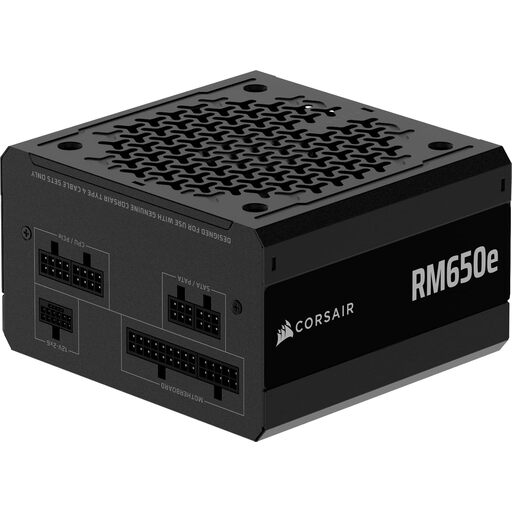
Why This Fits Their Persona: A great choice for mid-range gaming PCs that don't require 850W but where future-proofing and quality are still priorities. It offers many features of the larger models at a more accessible price point.
This model is also ATX 3.1 compliant and PCIe 5.1 ready. It makes no compromises on the important standards, simply adjusting the wattage for less demanding systems.
Also features Cybenetics Gold efficiency, a Zero RPM mode, and a fully modular cable design. A solid foundation for reliable and quiet PC systems.
We've compiled a complete, up-to-date list of products that fully meet these strict selection criteria and all relevant safety regulations.
1. What is the difference between ATX 3.0 and ATX 3.1 power supplies? The main difference lies in the evolution of the 12-volt power connector for graphics cards. ATX 3.1 specifies the improved 12V-2x6 connector, which ensures a more robust and secure connection than the previous 12VHPWR connector from the ATX 3.0 standard. This increases reliability and safety when powering high-performance graphics cards.
2. How important is a fully modular power supply, really? For the pure function of the PC, it is not strictly necessary. However, the practical advantages are significant: installation is easier, the case interior remains tidy, and airflow is not obstructed by unnecessary cable bundles. This can lead to better cooling and potentially quieter systems. For cases with a side window, the aesthetic benefit is a decisive factor.
3. Is an 850W power supply sufficient for my gaming PC? For most high-end gaming systems with a single graphics card (e.g., NVIDIA RTX 4080/4090 or comparable AMD models) and a modern CPU, a high-quality 850W power supply is a solid and future-proof choice. It provides enough power headroom for overclocking and future upgrades. However, it is always advisable to check the recommendations of the graphics card and CPU manufacturers and to plan for a buffer of about 20-30%.