
Lieferung heute & morgen

Qualitätsgarantie

Willkommens-Angebote freischalten: KOSTENLOSE Lieferung | Bis zu 80 % RABATT | Kostenlose 30-Tage-JoyPlus-Testphase
App herunterladen
For content creators, extreme sports athletes, and adventure travellers, choosing the right camera is crucial. The demands are high: the device must not only be robust and reliable but also deliver image quality that meets professional standards. An 8K action camera provides the necessary resolution and depth of detail for this purpose. This guide provides an objective overview of the key features and presents a selection of current models to help simplify your purchasing decision.
Selecting a suitable action camera is based on objective technical parameters. Three areas are of particular importance.
Video resolution alone doesn't tell the whole story. The quality of your footage depends heavily on the size of the image sensor and the quality of the lens. A larger sensor, such as a 1/1.3-inch sensor, can capture more light. This results in a higher dynamic range and better low-light performance. Models that integrate a camera with a Leica lens benefit from the optical expertise of a renowned manufacturer, which typically translates to greater sharpness and more precise colour reproduction.
Action cameras are used under demanding conditions. A waterproof action cam that doesn't require an additional housing offers more flexibility and simpler handling, for instance, when diving or shooting in the rain. Cold resistance is equally important for winter sports. Advanced action cam image stabilisation, like FlowState technology, digitally compensates for vibrations, enabling smooth footage without the need for an external gimbal. This is a key factor, especially during fast-paced activities like mountain biking or skiing.
An 8K resolution not only offers a high level of detail but also provides significant advantages in post-production. It allows you to crop or reframe the shot later without losing quality. For example, a horizontal recording can be turned into a vertical video for social media. At the same time, it's wise to pay attention to the available frame rates at lower resolutions. A 4K 60fps vlogging camera, for instance, allows for recording very smooth motion or creating high-quality slow-motion shots, expanding your creative options.
Based on the criteria mentioned, we have compiled a selection of models suitable for demanding users.
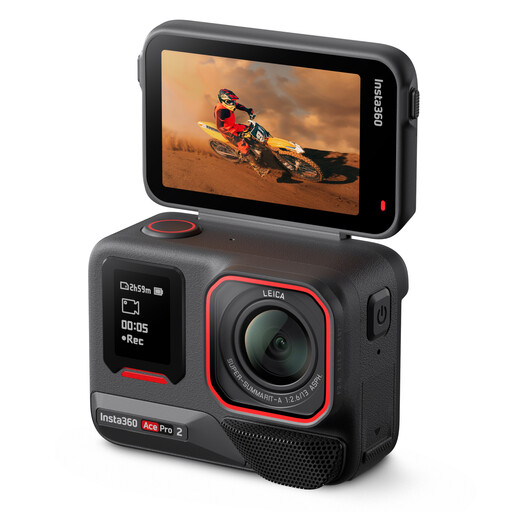
The Insta360 Ace Pro 2 is an action camera with a classic form factor, designed for high image and audio quality.
Why It Stands Out The model combines a large 1/1.3-inch sensor with a SUMMARIT lens co-engineered with Leica. According to the manufacturer, this combination delivers 13.5 stops of dynamic range and a pixel size of 2.4 μm. A dual-chip system, consisting of an image processing chip and a 5nm AI chip, supports noise reduction in PureVideo mode, which is especially relevant for low-light shooting.
Pros
Who Is It For? The Insta360 Ace Pro 2 is aimed at content creators and athletes looking for a powerful and robust action camera for vlogging, motorcycle tours, diving, or winter sports, who also value high image quality in a traditional camera design.
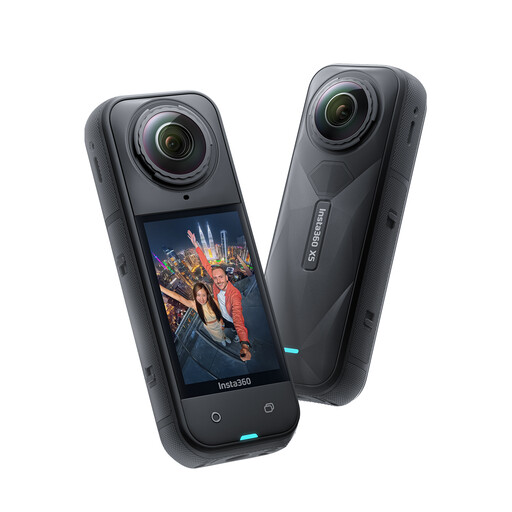
The Insta360 X5 takes a different approach: it captures the entire environment in 360 degrees, offering maximum flexibility in post-production.
Why It Stands Out With two 1/1.28-inch sensors, the X5 records spherical videos in 8K at 30 fps. The key advantage is "reframing": you shoot first and choose your frame later in the software. This ensures you never miss a moment. The "Invisible Selfie Stick" effect, where the stick is removed from the footage, enables stunning third-person perspectives. A triple AI chip supports image processing, particularly in poor lighting conditions.
Pros
Who Is It For? This model is ideal for creators seeking maximum creative freedom. Anyone who wants to capture unconventional perspectives and prefers not to commit to a specific frame while filming will find the X5 to be a versatile tool for action-packed scenes and storytelling.
If the models presented here don't exactly meet your requirements, or if you'd like a broader overview of different camera types, you can find more alternatives in our Movie Camera category.
An 8K resolution is worthwhile if you value maximum detail and flexibility in post-production. It allows you to zoom into the image or create crops (e.g., for vertical videos) without a noticeable loss in quality. Furthermore, your footage will be future-proof for higher-resolution playback devices.
A partnership with a renowned optics manufacturer like Leica indicates a high-quality lens. This typically manifests as better edge sharpness, precise colour reproduction, and less optical distortion. The result is clearer and more true-to-life footage.
Modern electronic image stabilisation (EIS) systems like FlowState use gyroscopic sensors to detect the camera's movements in real time. An algorithm analyses this data and digitally corrects the video image by slightly adjusting the frame. This effectively smooths out shakes and vibrations, resulting in a stable and fluid video, even during intense motion.