
Lieferung heute & morgen

Qualitätsgarantie

Willkommens-Angebote freischalten: KOSTENLOSE Lieferung | Bis zu 80 % RABATT | Kostenlose 30-Tage-JoyPlus-Testphase
App herunterladen
As a Joybuy Product Recommendation Officer, I see gamers fighting their way through a jungle of marketing promises every day. The confusion is particularly great when it comes to esports peripherals. A single millisecond, gram, or pixel can be the difference between victory and defeat. Yet, many spend money on features that disappoint in practice. Before you make a decision, let's shed some light on the most common pitfalls when choosing a new gaming mouse.
Investing in a high-quality mouse should improve your performance, not just drain your bank account with no tangible benefit. Pay attention to these three points to make an informed decision:
To avoid these pitfalls, focus on the technical specifications that directly impact your performance.
The polling rate, measured in Hertz (Hz), indicates how often the mouse reports its position to the computer. The standard is 1000 Hz (1000 times per second). An 8K wireless gaming mouse increases this value to 8000 Hz. This means data is updated every 0.125 milliseconds instead of every millisecond. The result is visibly smoother cursor movement and minimally reduced input lag, which can make a noticeable difference in fast-paced FPS or MOBA games. A high and stable polling rate is the hallmark of a true esports mouse.
The optical sensor is responsible for precision. A modern sensor like the PAW3398 offers high resolution (up to 26,000 DPI), a high maximum speed (IPS), and flawless tracking without unwanted acceleration. Just as important is the integrated microcontroller (MCU). An efficient chip, like the Nordic nRF54L15 in the RAPOO VT3, not only processes sensor data quickly but also manages the wireless connection and power consumption with extreme efficiency. This is the technical foundation for long battery life at high performance.
A weight of under 60 grams is now considered ultralight and is ideal for fast, sweeping mouse movements. However, the shape must suit your grip style (Palm, Claw, or Fingertip). An asymmetrical ergonomic shape for right-handers often provides more comfort during long sessions. Additionally, a modern programmable gaming mouse should have software that allows key bindings, DPI levels, and macros to be customized and, ideally, saved directly to the mouse's onboard memory.
Here are some models that are suitable for different requirements based on objective technical features.
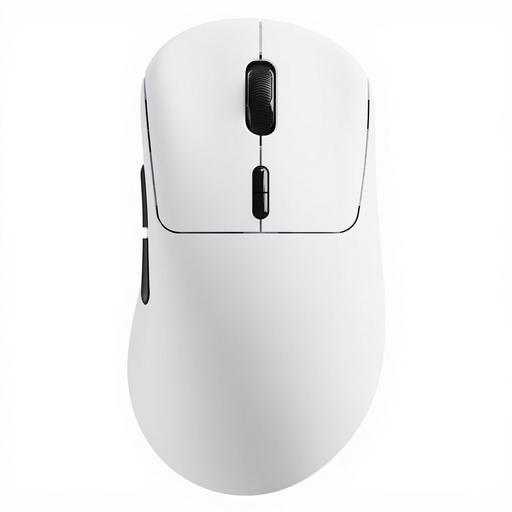
Why This Fits Their Persona: This player is looking for maximum performance to gain a competitive edge. The VT3 offers esports-grade technology like native 8K wireless transmission and an ultralight design.
The native 8K wireless technology delivers stable, extremely low latency. The 53g weight is achieved without compromising shell stability. Thanks to the Nordic chip, the battery life is transparent and practical even at high performance.
True 8000 Hz polling rate in both wireless and wired modes. Precise PAW3398 Sensor and 10 programmable buttons.
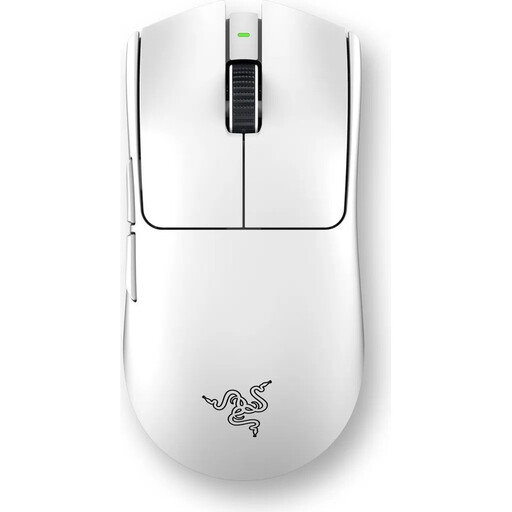
Why This Fits Their Persona: This user trusts established brands in esports and seeks a product developed in collaboration with professionals. The Viper V3 Pro represents proven tournament performance.
Razer's HyperPolling technology is an established solution for low latency. The 54g lightweight design has been optimized for professional use and is built for durability. Optical switches prevent double-clicking issues.
Focus Pro 35K Sensor for high precision. 3rd Gen Optical Switches with a manufacturer-rated lifespan of 90 million clicks.
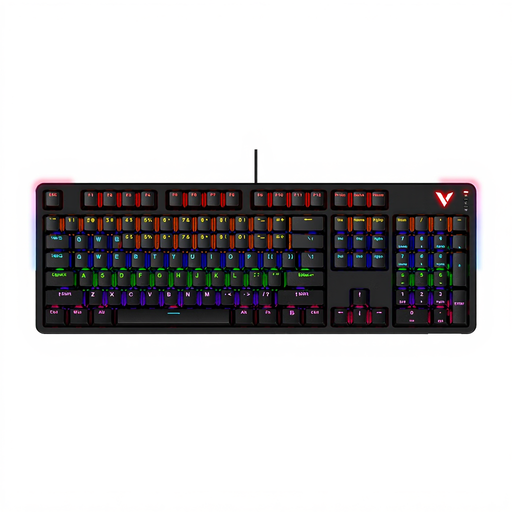
Why This Fits Their Persona: This gamer knows that a fast mouse is only half the battle. A mechanical keyboard is essential for consistent inputs. The V500PRO complements a high-performance setup.
Instead of relying on a mushy rubber-dome keyboard, the V500PRO offers mechanical switches for precise and tactile feedback. Full key anti-ghosting prevents input errors during complex command strings.
Mechanical switches for fast response, full anti-ghosting in wired mode, and a robust aluminum alloy frame.
We have compiled a complete, real-time updated list of products that fully meet these strict selection criteria and local safety regulations.
For casual gamers, the difference may not be immediately noticeable. However, for competitive players in fast-paced titles, the reduced latency and smoother rendering can provide a decisive advantage. It's an investment in maximizing your own reaction time.
An 8000 Hz polling rate requires significantly more power than the 1000 Hz standard. For the RAPOO VT3, for example, the manufacturer specifies a battery life of up to 750 hours at 1000 Hz. In 8K mode, this time will be considerably shorter but still sufficient for several intense gaming sessions before a recharge is needed. It's a trade-off between maximum performance and maximum runtime.
Yes, to unlock its full potential, driver software is required. For the RAPOO VT3, this is the "A HUB" driver. This software allows you to program the 10 buttons, create macros, adjust DPI levels, and set the lift-off distance. The settings are saved to the mouse's onboard memory, so they are retained even on other PCs without the software installed.