
Lieferung heute & morgen

Qualitätsgarantie

Willkommens-Angebote freischalten: KOSTENLOSE Lieferung | Bis zu 80 % RABATT | Kostenlose 30-Tage-JoyPlus-Testphase
App herunterladen
An 8 kg heat pump tumble dryer is suitable for many families, couples and medium-sized households. The drum typically holds one washing-machine load, while heat pump technology operates at lower temperatures than older vented or conventional condenser tumble dryers. This can reduce electricity consumption and place less thermal stress on delicate fabrics.
Even so, a machine with an attractive programme list is not automatically the right choice. Check these three common pitfalls before buying:
The current EU energy label uses a scale from A to G. Always check the combination of energy efficiency class and consumption figure. An energy-efficient heat pump tumble dryer does not need to generate all the heat from scratch for every cycle; instead, it reuses heat within the system.
As a guide based on the available product data:
Actual annual costs depend on your electricity tariff, load size, selected programme and number of drying cycles. Energy class B is not automatically the most economical choice for every household, but it should be included in your comparison if you use the dryer frequently.
A moisture sensor can end the programme as soon as the selected dryness level is reached. This is more effective at preventing unnecessarily long run times than a simple timed programme. Also look out for:
Claims about hygiene programmes should be assessed carefully. According to product information from manufacturer AEG, certain models are stated to reduce bacteria and viruses by 99.9% when using the hygiene programme. This is a product feature specific to the brand, not a general medical efficacy claim, and it does not replace washing or proper garment care.
Before buying, measure the height, width, depth and the space required when the door is open. A stackable model can be a practical choice for small utility rooms. The Beko B5T4824IF, for example, is listed as having a stackable design and a reversible door hinge. A suitable stacking kit may need to be purchased separately.
For open-plan kitchens or appliances located near bedrooms, the sound level matters. The available models have product data indicating noise levels of approximately 59 to 68 dB(A). A quiet tumble dryer is therefore not defined by a marketing name alone, but by its specific measured value.
The way condensation water is handled also affects everyday use. A tank must be emptied regularly, while a drain hose can make emptying easier. The lint filter should be cleaned after every cycle. Depending on the design, the heat exchanger and condenser also require maintenance. Automatic cleaning reduces the effort involved, but does not remove the need for checks in accordance with the instruction manual.
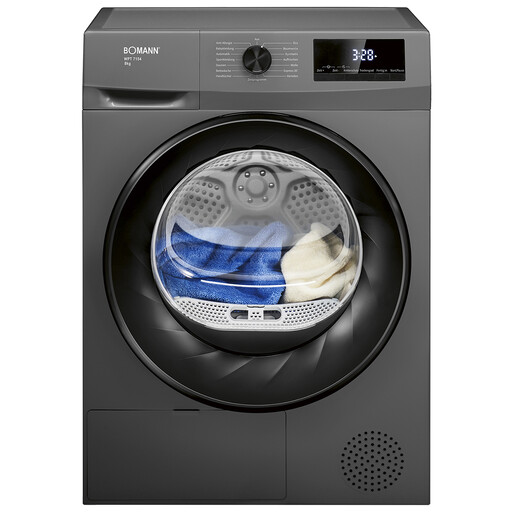
Why this product suits this profile: This model offers an 8 kg capacity, 15 programmes, a 1 to 24-hour delay timer and a drain hose supplied as standard. It is therefore well suited to households looking for essential functions and flexible installation options.
The data includes specific consumption and noise figures: 119 kWh per 100 cycles and 64 dB. This makes it easier to assess the balance between the purchase price and running costs.
15 programmes, anti-crease function, child lock and no fixed water connection required.
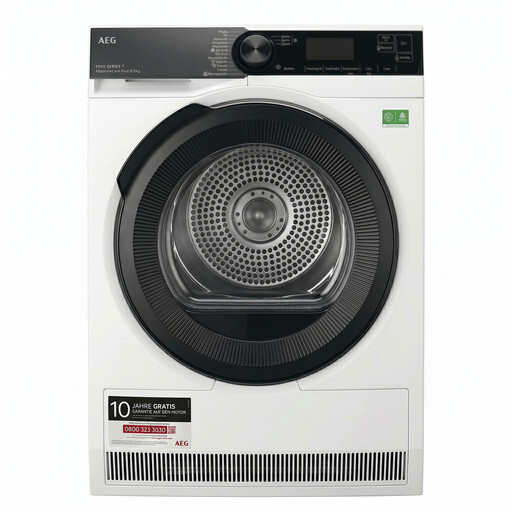
Why this product suits this profile: This appliance combines an 8 kg capacity with sensor control, MixDry, wool and silk programmes, and a stated energy efficiency class B. This provides regular family laundry loads with several specialised settings.
The selection is not based on brand features alone: the stated figures include 85 kWh per 100 cycles, 63 dB and a programme duration of 179 minutes.
3D Scan, ProSense load detection, crease protection, interior lighting and a reversible door hinge according to the product description.
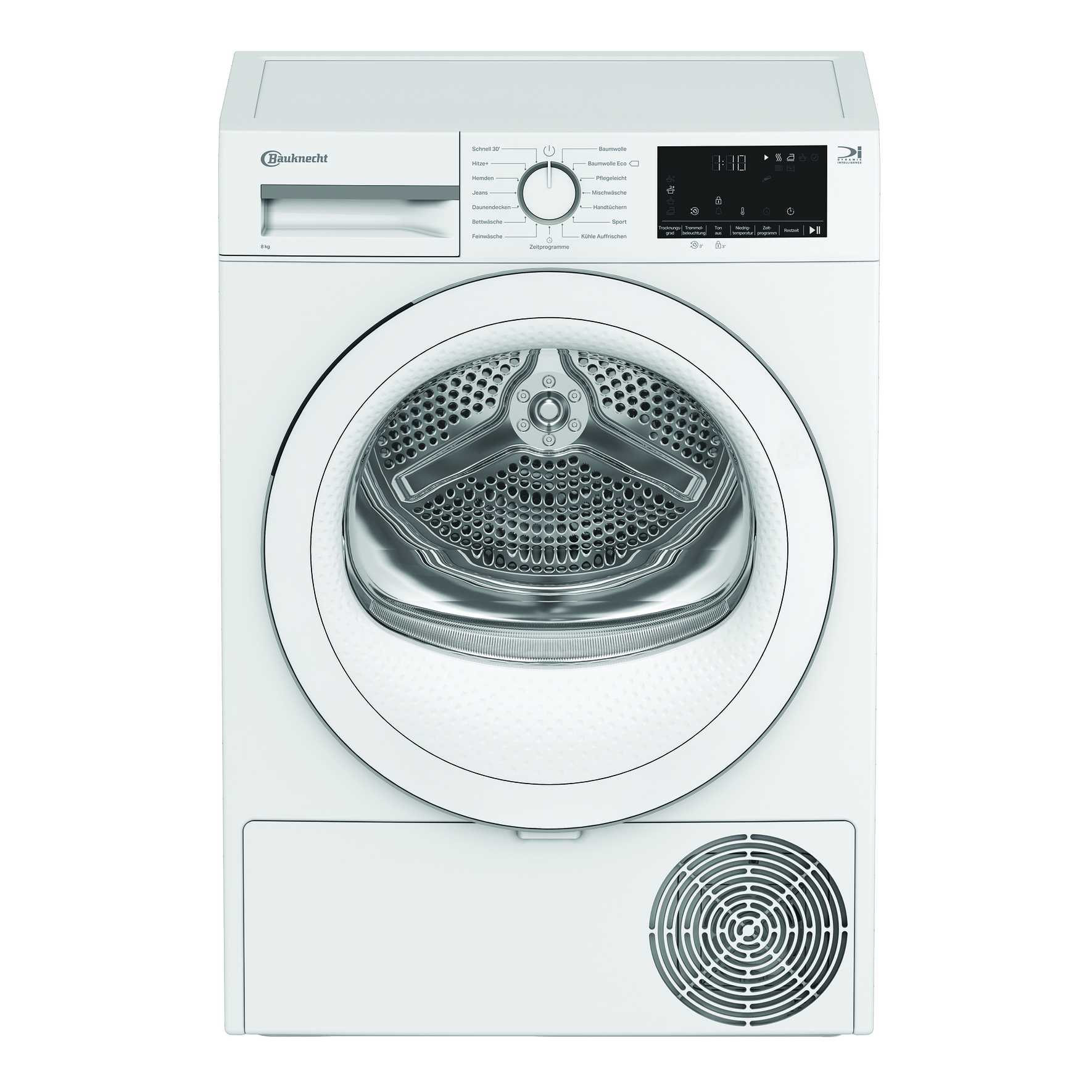
Why this product suits this profile: Its reduced depth of 54.5 cm is useful in smaller utility rooms or kitchens. Precision control, a delay-start function and child lock complement the compact design.
The space-saving design is not promoted simply as “Slim”: the product data specifies a 92-litre drum volume, 64 dB and 1.19 kWh per cycle.
8 kg capacity with a depth of 54.5 cm, R290 refrigerant, drum lighting and automatic drying control.
We have put together a complete, regularly updated list of products that fully meet these strict selection criteria and the safety regulations applicable in the EU.
Standard appliances are usually around 84 to 85 cm high and approximately 60 cm wide. Depending on the model, the depth is generally between 54.5 and 66 cm. You will also need space for opening the door, ventilation and maintenance. For a stacked installation, the washing machine, tumble dryer and stacking frame must be compatible.
It is not possible to give a fixed service life for every model. It depends on how often the appliance is used, the load size, cleaning and maintenance. Clean the lint filter after every cycle, and maintain the condensation water container and heat exchanger in accordance with the instruction manual. Overloading can put strain on drying performance and components.
Calculate the consumption per cycle using your electricity price, then multiply it by the expected number of drying cycles. Use the EU figure in kWh per 100 cycles for this calculation. Sensor programmes, suitable load sizes and a clean filter unit help prevent unnecessarily long run times.