
Lieferung heute & morgen

Qualitätsgarantie

Willkommens-Angebote freischalten: KOSTENLOSE Lieferung | Bis zu 80 % RABATT | Kostenlose 30-Tage-JoyPlus-Testphase
App herunterladen
A 90 cm A++ angled cooker hood can be a good choice for medium-sized and large kitchens where cooking regularly produces steam, grease and odours. Its sloping design gives you more headroom, while the 90 cm width can cover larger hobs. But energy rating and design aren’t the only things to consider before you buy.
A figure such as 620 m³/h usually describes the maximum airflow under specific conditions. In a real kitchen, ducting, bends, backdraught shutters and filters can all affect airflow. A long or winding duct run can reduce performance and increase operating noise.
That’s why it’s important to choose a hood that suits your installation. If you have an open-plan kitchen or often fry food, a 620 m³/h cooker hood may be a good choice. That level of performance isn’t necessarily needed in a small, enclosed kitchen.
The label quiet cooker hood, 59 dB usually refers to a specific measurement point or operating setting. The maximum noise level may be different at higher extraction speeds. Check whether the stated figure applies to the highest setting, normal operation or the intensive setting.
Installation can also affect noise levels. Vibrations caused by an unstable wall mounting or poorly routed ducting can make the hood seem louder.
An energy-efficient cooker hood rated A++ can use less electricity than less efficient models. However, running costs also depend on how long you use it, the setting you choose, the lighting and the condition of the filters. A clogged grease filter can restrict airflow and put more strain on the hood.
A 90 cm headroom cooker hood is generally suitable for hobs of a matching width. The important thing is to position the hood centrally above the hob and follow the clearances specified by the manufacturer. Minimum clearance requirements may vary for gas, electric and induction hobs.
Before ordering, compare the following measurements:
The sloping front can make it easier to move around, but it doesn’t replace correct installation height or sufficient coverage of the cooking area.
A recirculating and ducted cooker hood gives you more flexibility. In extraction mode, polluted air is carried outside through a duct. If your home allows for it, this can help with moisture and odours. In recirculation mode, the air passes through grease and activated carbon filters before being returned to the room.
Recirculation is particularly useful in homes without an existing extraction duct. The activated carbon filter needs to be checked regularly and replaced as instructed by the manufacturer. In extraction mode, make sure you use the right duct diameter, keep the route as short as possible and check that the backdraught shutter works properly.
An aluminium grease filter captures grease particles from cooking fumes. Multi-layer filters can often be removed and cleaned. Check the product description or manual to confirm whether the filter is dishwasher-safe.
A touch-control cooker hood has a smooth control panel that’s easy to wipe clean, with no protruding switches for grease and dust to collect around. Multiple power settings are useful: a 4-speed cooker hood lets you adjust extraction to suit light steam, everyday cooking and intensive frying.
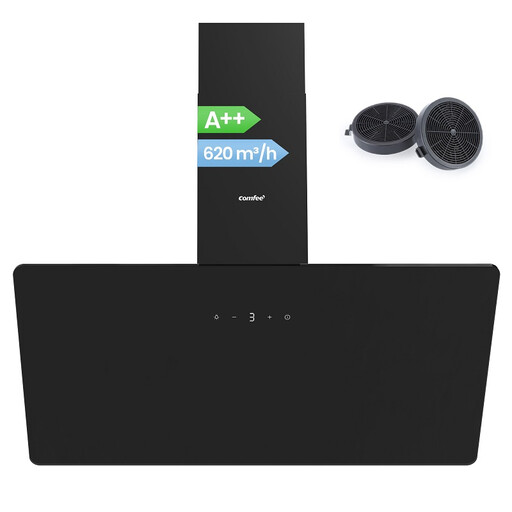
Why it suits this profile: Its 90 cm width, four power settings and stated airflow of 620 m³/h meet key needs for family kitchens and regular cooking.
The product details give specific figures for airflow, noise, energy rating and filter design, rather than focusing only on general design features.
A++ according to the product details, 59 dB according to the manufacturer, touch controls, four settings, and recirculation and extraction modes.
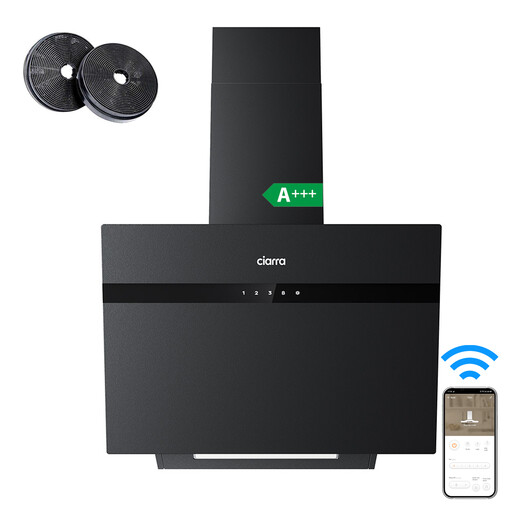
Why it suits this profile: The black glass front, SensorTouch controls and app or Wi-Fi connectivity will appeal if you’re looking for connected kitchen appliances.
Alongside the design, the product description specifies airflow, noise level, filter type and the two operating modes.
650 m³/h according to the product details, 58 dB according to the manufacturer, matt black glass front, three settings with boost function and app control.
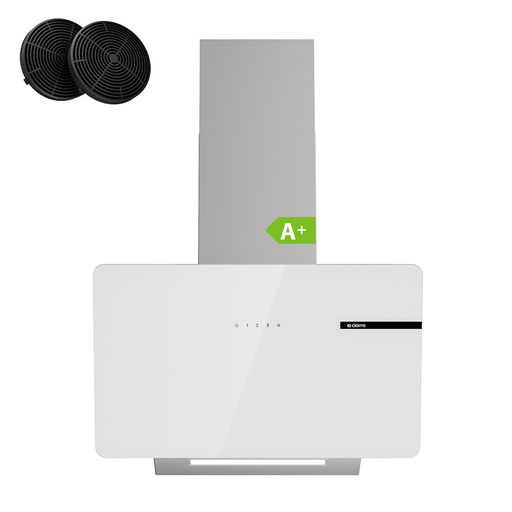
Why it suits this profile: The 60 cm design is an alternative for kitchens with a smaller hob, if a sloping front and flexible installation matter more than the target width of 90 cm.
The product details distinguish between the three power settings, recirculation and extraction modes, and the washable aluminium filter.
580 m³/h according to the product details, A+ according to the manufacturer, touch controls, LED lighting and a dishwasher-safe multi-layer filter according to the description.
We’ve put together a complete, regularly updated list of products that meet these strict selection criteria and fully comply with the safety regulations in force in the EU.
The hood should be installed according to the instructions by a suitably qualified person. Disconnect the power supply before carrying out any maintenance. Clean the grease filters regularly, depending on how often you cook. If you use recirculation mode, remember to check the activated carbon filter too.
For quiet, effective operation, make sure the air path is clear, the filters are fitted correctly and the hood is securely fixed to the wall. Avoid using naked flames directly beneath the hood. Switch it on shortly before or as soon as you start cooking.
No. The width should suit both your hob and the available wall space. A 60 cm hood may be sufficient for a much narrower hob. A 90 cm design can offer greater coverage for wide hobs and intensive cooking. Always follow the installation requirements specified by the manufacturer.
A rating of 59 dB is a stated noise level measured under specific conditions. Check which power setting the figure refers to. Keeping the duct run short, routing it correctly and cleaning the filters can help prevent extra noise during operation.
Extraction generally doesn’t need an activated carbon filter, but it does require a suitable outlet to the outside. Recirculation is more flexible in terms of installation, but the grease filter needs regular cleaning and the activated carbon filter must be replaced as instructed by the manufacturer. The best mode depends mainly on your home and kitchen layout.