
Lieferung heute & morgen

Qualitätsgarantie

Willkommens-Angebote freischalten: KOSTENLOSE Lieferung | Bis zu 80 % RABATT | Kostenlose 30-Tage-JoyPlus-Testphase
App herunterladen
A 90x200 cm slatted bed base needs to do more than simply support your mattress. It should be compatible with your bed frame and mattress, and suit your body weight. Models can also vary significantly in their slats, zones, materials, assembly and ventilation.
If you focus only on price or terms such as “ergonomic”, you can easily overlook important details. Three common buying pitfalls are particularly worth keeping in mind:
A 90x200 cm slatted bed base is a common size for a single bed. For a double bed, you could use two 90x200 cm bases or one 140x200 cm slatted bed base, for example. Before buying, measure the inside of the bed frame, the height of the support rails and the space available beneath the mattress.
A base designed for all mattresses can generally be used with different types of mattress. Even so, the gaps between the slats should be suitable for your mattress. Close, even spacing is particularly useful for mattresses made from delicate or flexible materials. The mattress manufacturer’s guidance should always take priority.
A 28-slat bed base will often distribute support more evenly than a simple design with just a few cross slats. However, the number of slats alone does not tell you how sturdy the whole base is. Spring performance, fixings and frame quality matter too.
A wooden slatted bed base can be made from different types of wood or wood-based materials. According to the product details, the BeCo Superfix NV has a beechwood frame and birchwood slats. So when comparing a beechwood slatted bed base with a birchwood slatted bed base, look beyond the type of wood and consider the construction and weight limit too.
A 7-zone slatted bed base divides the sleeping area into sections with different levels of flexibility. The models featured here include softer areas for the shoulders and pelvis. This is a feature of the design, not a claim of medical benefit.
Check the maximum weight capacity. The BeCo Superfix NV is specified for up to 130 kg per person. This limit must not be exceeded. If you’re looking at a slatted bed base rated up to 130 kg, also check whether that figure applies per person or to the entire sleeping area.
The height of the base affects how high your mattress sits and how easy it is to get into bed. A frame around 8 cm high may suit many bed frames, provided there is enough room inside the frame and on the side rails. A roll-up slatted bed base is often lower, but usually has no frame of its own.
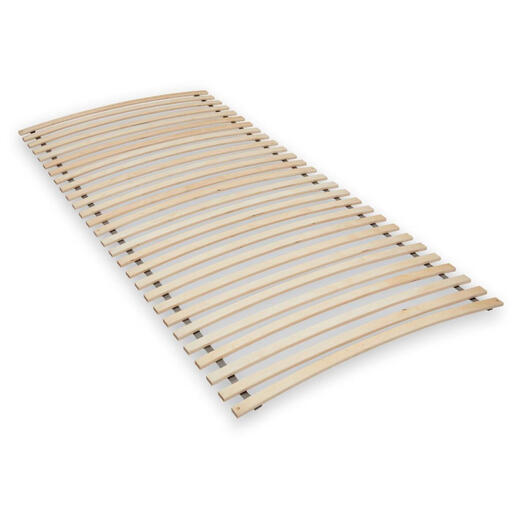
Why this product suits this type of buyer: The roll-up slatted bed base arrives pre-assembled and rolled up to save space. This makes it easier to transport and fit, provided your bed frame has continuous side support rails.
The product details clearly state that it needs to be screwed to continuous side support rails. This means you can check that your bed frame is suitable before buying, even though the base has no frame of its own.
28 birch plywood slats, 4 cm high, pre-assembled roll-up design and a weight capacity of up to 130 kg.
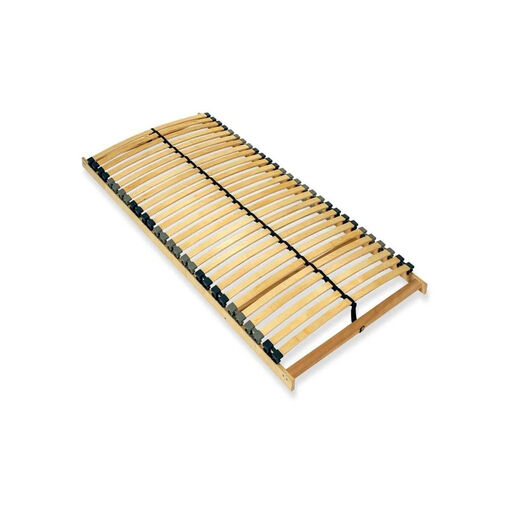
Why this product suits this type of buyer: This fixed slatted bed base combines a beechwood frame with 28 flexible birchwood slats and a specified 7-zone design for a single bed.
Its fixed frame makes it easy to distinguish from a frameless roll-up slatted bed base. The height of around 8 cm and the fact that it cannot be adjusted are also clear features to check before fitting it.
28 flexible slats, 7-zone technology, a central support strap and a weight capacity of up to 130 kg per person, according to the product details.
Why this product suits this type of buyer: The 140x200 cm size is designed for a wider bed. It’s a good option if you’re looking for a single, full-width slatted bed base with defined dimensions and zones.
The exact size, maximum weight per person and fixed design are all specified. This makes it easy to check the bed’s internal dimensions and the height you want your mattress to sit at.
140x200 cm, 28 slats, 7-zone technology, a beechwood frame and a capacity of up to 130 kg per person, according to the product description.
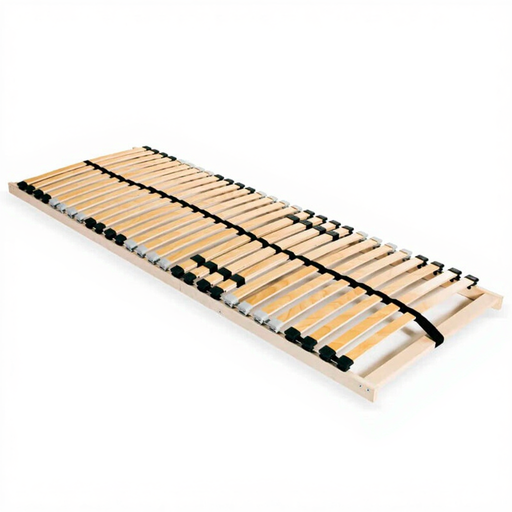
Why this product suits this type of buyer: This model measures 90x200 cm and has seven zones, plus four adjustable double slats in the central section. It’s a good choice if you want the option to tailor the support.
The adjustable double slats are clearly specified. This confirms that the design allows you to adjust the support, rather than relying on a vague marketing claim.
Beechwood frame, 28 birchwood slats, seven zones and SBS rubber caps to hold the slats in place.
We’ve put together a complete, regularly updated list of products that meet these strict selection criteria and fully comply with the safety regulations in force in the EU.
Before placing the mattress on top, make sure the slatted bed base is centred, level and fully supported. For a framed model, fit all the connecting parts according to the instructions. For a 90x200 cm roll-up slatted bed base, screw the pre-drilled ends to the continuous side support rails.
Check the fixings regularly and tighten any loose screws. Do not continue using damaged slats or frame parts. Good ventilation beneath the mattress depends on the spacing between the slats and the bed’s construction. The bed base, mattress and room conditions also affect airflow.
No. Check the internal dimensions, support rails, height and type of fixing. A roll-up slatted bed base without its own frame usually needs continuous side support rails and screw fixings.
There’s no single lifespan that applies to every slatted bed base. It depends on factors such as weight, materials, assembly and regular checks. If you notice visible cracks, broken slats or a lasting loss of stability, it’s a good idea to replace it.
The name alone doesn’t guarantee that it will be compatible with every mattress. Check the guidance from both the slatted bed base and mattress manufacturers, along with the slat spacing and the type of support you want. If the product is described as “suitable for all mattresses”, compare this claim with the specifications of your own mattress.