
Lieferung heute & morgen

Qualitätsgarantie

Willkommens-Angebote freischalten: KOSTENLOSE Lieferung | Bis zu 80 % RABATT | Kostenlose 30-Tage-JoyPlus-Testphase
App herunterladen
A 95-litre chest freezer is ideal for singles, couples and small families who need extra storage space for frozen food. A compact chest freezer can also be useful in a flat, garage, small café or shop. However, capacity is not the only factor that matters. The design, energy consumption, noise level and suitability for the intended room all determine whether the appliance remains practical in everyday use.
The litre rating describes the internal volume. It says little about how easy it is to access your food. A chest freezer with a large, open interior can hold plenty, but it needs to be organised sensibly. A removable basket creates space for frequently used products and prevents smaller packs from disappearing beneath larger supplies.
Before buying, you should also check the external dimensions and the space required when the lid is open. Particularly in small kitchens, cellars or beneath shelves, the lid height can be crucial.
A chest freezer with energy rating E is not automatically expensive to run. The stated annual consumption in kilowatt-hours is a more meaningful figure. The AUCMA model is listed at 165 kWh per year. Estimated annual electricity costs are easy to calculate:
Annual consumption in kWh × your electricity price per kWh = estimated annual running costs
Actual consumption may vary depending on room temperature, how full the freezer is, the thermostat setting and how often it is opened. Always compare the kWh figure rather than just the letter on the EU energy label.
The description quiet chest freezer is only useful for comparison when a decibel measurement is provided. An appliance rated at 38 dB may be suitable for many living areas, although perceived noise also depends on the distance from the wall, the flooring and the compressor’s operating condition.
For open-plan kitchens, living spaces or small retail areas, the decibel rating should be clearly stated in the technical specifications.
For a 95-litre chest freezer, the following dimensions are important in addition to the internal volume:
The AUCMA model measures 550 × 475 × 848 mm. The height therefore needs particularly careful consideration, as it is relatively significant for a top-opening design.
A chest freezer with fridge function, or a convertible chest freezer, can be used differently depending on the season. In freezer mode, it is suitable for meat, fish, ice cream and frozen meals. In cooling mode, it can provide extra capacity for drinks or fresh food.
Please note:
A chest freezer with a 7-setting thermostat offers several adjustment options for different loads and operating conditions. However, a higher setting does not automatically mean lower consumption. For everyday use, a medium setting is often sufficient, while freshly frozen food may temporarily require a colder setting.
A defrost drain, adjustable feet and a lid with sturdy hinge guidance are also useful. A drain can make cleaning easier, but it does not replace regular manual defrosting if the appliance does not have an automatic defrost system.

Why this product suits the profile: This compact chest freezer offers 95 litres of capacity, seven thermostat settings and switchable cooling and freezing modes. It is designed for smaller households with changing storage needs.
Annual consumption of 165 kWh and an operating noise level of 38 dB are clearly stated. The removable basket makes organising food easier.
95 litres, 7-setting thermostat, 38 dB, defrost drain and switchable operating mode.
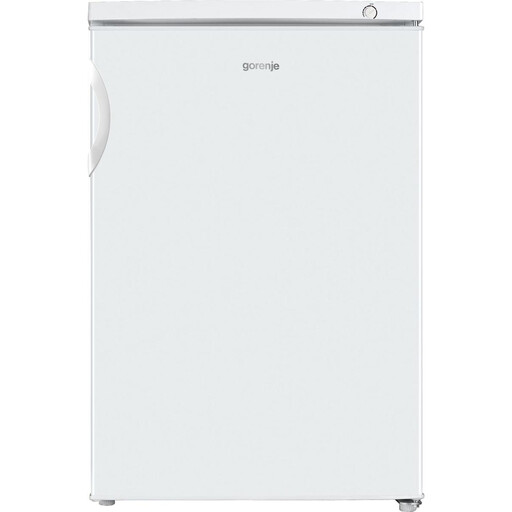
Why this product suits the profile: If you are looking for an upright appliance rather than a chest freezer, this model offers 85 litres, three transparent drawers and a reversible door for organised storage.
The drawers prevent food from being stacked in an untidy pile inside a chest freezer. Climate classes SN, N, ST and T are specified for ambient temperatures from 10 °C to 43 °C.
Energy efficiency class D, annual consumption of 131 kWh, 15 hours of storage in the event of a power cut and EcoMode.
Why this product suits the profile: The switchable function is practical for extra supplies, drinks or changing seasonal requirements. This model is described as suitable for households, flats, garages, small cafés and shops.
The operating mode can be adapted to your needs, while the basket, defrost drain and adjustable feet support everyday use. For garages, check the permitted ambient temperatures in the instruction manual.
Switchable cooling and freezing modes, 95 litres of usable capacity, 38 dB and stated annual consumption of 165 kWh.
We have put together a complete, regularly updated list of products that fully meet these strict selection criteria and the safety regulations applicable in the EU.
Place the chest freezer on a level, dry and well-ventilated surface. Maintain the clearances specified in the instruction manual and avoid direct heat sources. In a garage, the climate class is also important. Not every appliance is suitable for unheated rooms or significant temperature fluctuations.
After transport, a cooling appliance should initially be left standing upright, depending on the manufacturer’s instructions, before it is connected. The door or lid should be opened for as short a time as possible. Hot food should not be placed directly in the freezer compartment, as it can raise the internal temperature and affect electricity consumption.
Consumption depends on the model and operating conditions. The AUCMA AF-100KF is listed at 165 kWh per year. To calculate the cost, multiply this figure by your personal electricity tariff. When comparing appliances with different energy classes, always use the actual annual kWh consumption.
That depends on the specified climate class and the manufacturer’s instructions. Check the permitted ambient temperature before buying. The location must also be dry, sufficiently ventilated and protected from direct sunlight.
It is not possible to give a reliable standard lifespan. Among other things, it is affected by how intensively the appliance is used, its location, cleaning, defrosting intervals and maintenance. Keeping it level, leaving ventilation areas clear and avoiding unnecessarily long periods with the lid open can help support proper operation.