
Lieferung heute & morgen

Qualitätsgarantie

Willkommens-Angebote freischalten: KOSTENLOSE Lieferung | Bis zu 80 % RABATT | Kostenlose 30-Tage-JoyPlus-Testphase
App herunterladen
A combination appliance for washing and drying promises to be the perfect solution for many households: it saves space, reduces workload, and modernises laundry care. However, the market is flooded with appliances whose marketing promises often fall short in practice. Before you make a decision, it's crucial to understand the typical pitfalls that can lead to disappointment and unnecessary costs.
As your Joybuy Product Recommendation Officer, I'm here to help you separate the facts from the advertising hype. We'll focus on the essential features that a 9 kg washer-dryer must have to genuinely make your daily life easier.
Many advertising claims sound tempting but often conceal technical limitations. Pay close attention to these three points to avoid a bad purchase:
To make the right choice, you should focus on objective, technical data. These three criteria are crucial for the performance and efficiency of a 9 kg washer-dryer.
Always check both figures: the maximum load for washing and the one for drying. For a household that wants to fully utilise the 9 kg washing capacity, a model with a correspondingly high drying capacity (e.g., 6 kg or more) is essential. This is the only way to process larger loads in a single run without having to half-empty the drum.
The decisive value for your operating costs is the consumption for the complete wash and dry cycle. On the energy label, look for the kWh per 100 cycles figure on the right-hand side. A washer-dryer with an A energy efficiency class even in combined mode is a future-proof and cost-effective choice. Also, compare the water consumption, as it is often higher in washer-dryers than in two separate appliances.
Modern appliances offer more than just standard programmes. Features that provide real value include:
Based on these objective criteria, we have identified models that are well-suited for different user profiles.
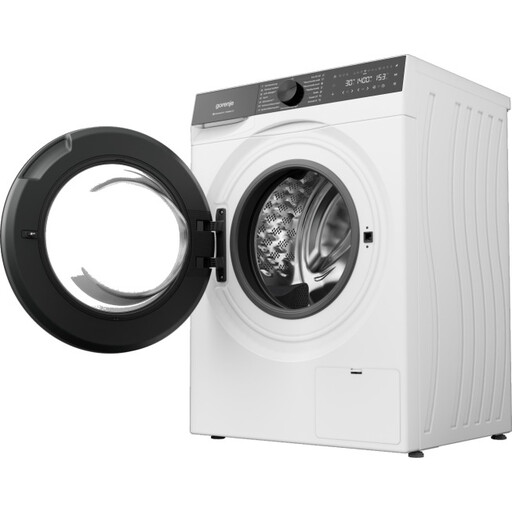
Why This Fits Their Persona: Ideal for professionals and families where time is a critical factor. This model is designed to speed up the laundry process as much as possible without compromising on capacity.
This appliance sidesteps the trap of unrealistic time claims by washing and drying a full 9 kg load in just 68 minutes, according to the manufacturer. This is a concrete, reliable figure for a complete cycle.
StainExpert Feature: Removes 21 different types of stains without pre-treatment, according to Gorenje. Total AquaStop: Provides protection against water damage.
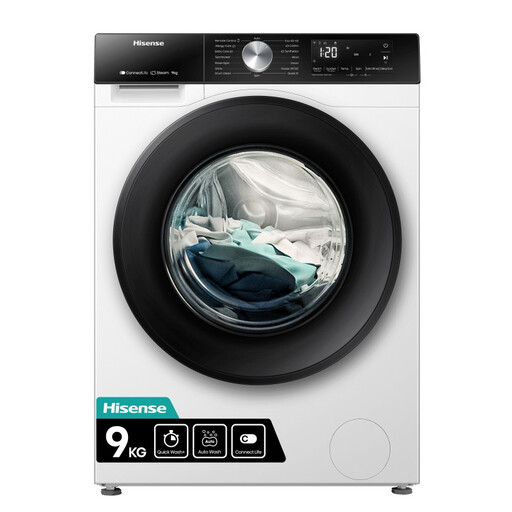
Why This Fits Their Persona: Perfect for tech-savvy users and families with high hygiene standards. The combination of app control, intelligent automatic programmes, and a steam function offers both convenience and peace of mind.
This model addresses the trap of unclear energy efficiency. It boasts an A energy efficiency class for the combined cycle, and its Smart Assist function helps optimise consumption by automatically adjusting to the load size and soil level.
Steam Wash & Hygiene Guard: Steam programme for stain removal and disinfection. Smart Assist & Wi-Fi: Intelligent programme selection and remote control via the ConnectLife app.
We have compiled a complete, up-to-date list of products that fully meet these strict selection criteria and UK safety regulations.
1. How much laundry can a 9 kg washer-dryer actually dry? This is one of the most critical points. The "9 kg" rating almost always refers only to the washing capacity. The drying capacity is lower, typically between 5 and 7 kg. Always check this value in the product data sheet. For an average laundry load, a drying capacity of at least 6 kg is recommended to avoid having to unload part of the drum.
2. Is a washer-dryer with an A energy efficiency class truly economical? Yes, but only if the A-rating applies to the combined wash and dry cycle. On the EU energy label, look at the right-hand column, which shows the consumption for the complete process. A machine that only achieves Class A for washing can consume significantly more energy and water in drying mode. Models with a consistent A-rating are the more economical choice in the long run.
3. How long does a washer-dryer last on average? The lifespan of a washer-dryer depends on the intensity of use, the quality of the appliance, and regular maintenance. Generally, an average lifespan of about 8 to 12 years is expected. Models with a brushless inverter motor are often considered more durable and quieter as they have fewer wearing parts. Regular cleaning of the lint filter and seals significantly contributes to longevity.