
Lieferung heute & morgen

Qualitätsgarantie

Willkommens-Angebote freischalten: KOSTENLOSE Lieferung | Bis zu 80 % RABATT | Kostenlose 30-Tage-JoyPlus-Testphase
App herunterladen
Investing in a new washing machine is a major decision for any household. For families or shared homes of three to five people, the question of the right model often arises. A 9 kg washing machine generally offers the right balance of capacity and efficiency. However, given the vast array of features and technical specifications, the selection process can quickly become overwhelming.
This guide is designed to help you navigate your options. We will present objective criteria relevant to your choice and showcase a selection of models that are suitable for various needs due to their specific features.
To make an informed decision, it's helpful to understand a few technical aspects and features. The following points provide a baseline for your comparison.
Since 2021, the new EU energy label has been in effect, rating household appliances on a scale from A (highest efficiency) to G (lowest efficiency). A washing machine with energy efficiency class A consumes significantly less electricity and water than models in lower classes. This not only helps the environment but also reduces your long-term running costs. In addition to the energy consumption per 100 cycles (in kWh), pay attention to the water consumption per cycle (in litres). Another important factor is the noise emission level, especially during the spin cycle. A quiet washing machine with noise emission class A (under 72 dB) is particularly advantageous if the appliance is located inside your home or near living areas.
Modern washing machines offer a range of features that simplify your laundry routine and improve fabric care.
Most models in this category are front-loader washing machines. The spin speed, measured in revolutions per minute (RPM), determines the residual moisture in the laundry. A washing machine with 1400 RPM is a good standard. It removes a large portion of the water, allowing laundry to dry faster in a tumble dryer or on the line.
Here is a selection of models that stand out for their specific features. The descriptions are based on manufacturer specifications and are intended to help you find the right appliance for your needs.
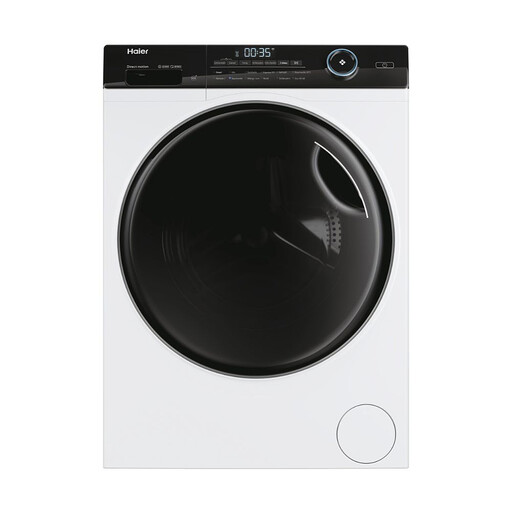
What sets this model apart
The Haier HW90-B14959U1 combines high energy efficiency with smart features. The brushless Direct Motion Motor is attached directly to the drum, reducing vibrations and noise. Connectivity with the hOn app allows for extensive customisation of wash programs. The Refresh steam function freshens up and smooths laundry.
Advantages:
Who is this model for? Ideal for tech-savvy households looking for a quiet, efficient, and flexibly controlled washing machine.
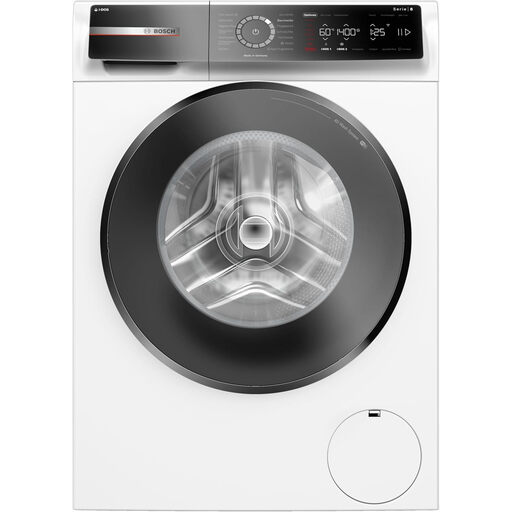
What sets this model apart
The Bosch WGB244A40 focuses on efficiency and convenience. The i-DOS system for automatic dosing ensures optimised consumption of detergent and water. According to the manufacturer, the appliance is 20% more efficient than the threshold for energy efficiency class A. The Iron Assist steam treatment reduces wrinkles in dry laundry.
Advantages:
Who is this model for? Suitable for eco-conscious families who appreciate maximum convenience through automatic dosing and smart features, and who value exceptionally quiet operation.
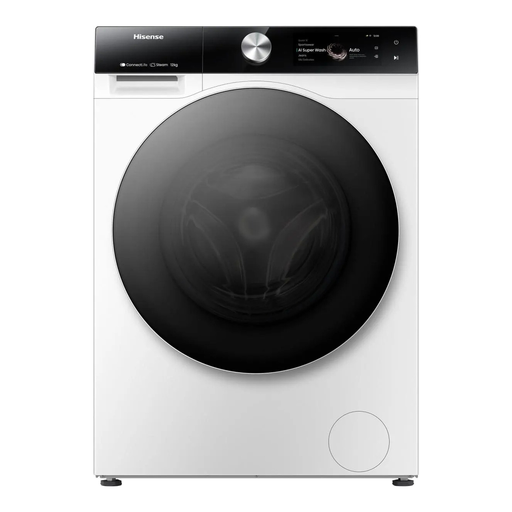
What sets this model apart
For very large households or those with high laundry volumes, a 12 kg washing machine can be a sensible alternative. The Hisense WF7S1247BW offers this large capacity combined with modern features like automatic dosing and steam programs. The inverter motor ensures durable and quiet operation.
Advantages:
Who is this model for? Perfect for large families (5+ people) or households with a lot of laundry (e.g., from sports or work) who need a machine with maximum capacity and modern convenience features.
The models presented here are just a sample of the available range. If you are looking for other features, capacities, or construction types, you can find a wide selection of other freestanding washing machines in our category.
1. How important is energy efficiency class A for a washing machine? Very important. A class A washing machine uses significantly less electricity and water compared to lower-rated models. Over the appliance's lifespan of several years, this leads to noticeable savings on utility bills and contributes to environmental protection.
2. Is a washing machine with automatic dosing worth it? In most cases, yes. Automatic dosing prevents the unnecessary overuse of detergent, which pollutes the environment and can lead to residue on clothing. At the same time, it avoids under-dosing, which results in poor washing performance. The feature ensures consistently good results and saves money and protects fabrics in the long run.
3. What does 1400 RPM mean for a washing machine? The "1400 RPM" specification refers to the maximum spin speed. A higher spin speed removes more water from the laundry, which reduces residual moisture. This is particularly beneficial if you use a tumble dryer, as it will then require less energy and time to dry. For most households, a spin speed of 1400 RPM is an excellent compromise between drying performance and fabric care.