
Lieferung heute & morgen

Qualitätsgarantie

Willkommens-Angebote freischalten: KOSTENLOSE Lieferung | Bis zu 80 % RABATT | Kostenlose 30-Tage-JoyPlus-Testphase
App herunterladen
The search for the right food for your dog can quickly become overwhelming. Especially when deciding on grain-free chicken dog food, many owners are confronted with a flood of advertising claims and complex ingredient lists. As your Joybuy Product Recommendation Officer, I'll help you identify the crucial quality markers and sidestep common marketing traps, so you can make an informed choice for your four-legged friend.
Manufacturers often use clever wording that promises more than the product delivers. Pay attention to these three points to avoid falling for empty marketing claims.
To objectively evaluate the quality of dog food without grain, you should focus on a few crucial criteria. These will help you separate the wheat from the chaff.
You can recognise a high-quality composition by its open declaration. This means all ingredients are listed individually, ideally with their percentage shares.
Chicken is an excellent and easily digestible protein source. However, the quality heavily depends on the form of processing indicated in the ingredient list.
Both grain-free chicken dry food and grain-free chicken wet food have their place. The choice depends on your dog's preferences and your practical considerations.
Based on the quality criteria mentioned, we have compiled a selection of products suitable for different needs and budgets.
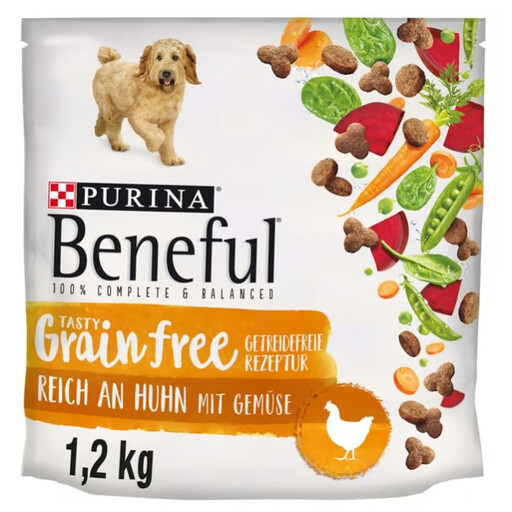
Why This Fits Their Persona: A solid and accessible option for dog owners who want to avoid grain without breaking the bank. It offers a balanced recipe from an established brand.
Although it uses a closed declaration, the chicken content within the meat category is clearly stated at 14%. It is explicitly declared as grain-free and avoids the most common types of grain.
Contains Omega-3 and Omega-6 fatty acids to support skin and coat. Free from added artificial colourants.
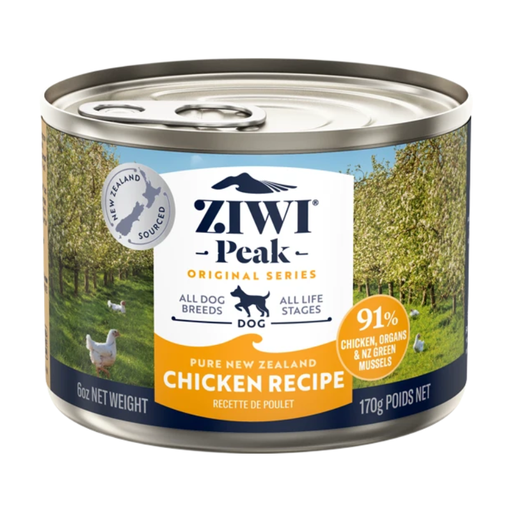
Why This Fits Their Persona: Ideal for dog owners who make no compromises on quality and seek a species-appropriate diet with maximum transparency. Especially suitable for dogs with sensitive digestion.
This food avoids the "high meat content" trap with an extremely clear, open declaration. According to the manufacturer, it consists of 91% chicken meat, organs, and bones, thus mimicking the natural prey structure.
Single-protein recipe (chicken only) reduces the risk of allergies. Free from grains, potatoes, and artificial binders like carrageenan.
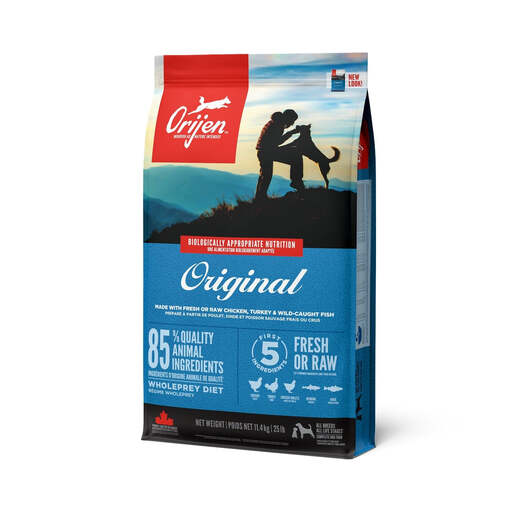
Why This Fits Their Persona: For owners who strive for a biologically appropriate diet modelled on the natural food of dogs. It combines various high-quality animal proteins for a broad spectrum of nutrients.
The food follows the WholePrey principle, processing meat, organs, and cartilage in nutrient-rich ratios. This ensures a natural supply of nutrients and bypasses the need for many synthetic additives.
High protein content from free-range chicken and turkey, as well as wild-caught fish. According to the manufacturer, the ingredients are delivered fresh or raw to preserve their nutritional value.
We have compiled a complete, up-to-date list of products that fully meet these strict selection criteria.
1. How do I switch my dog's food to grain-free chicken dog food? A food transition should always be done gradually over a period of about 7 to 10 days. Start by mixing a small amount of the new food with the usual food. Gradually increase the proportion of the new food while reducing the amount of the old food. This allows your dog's digestive system to get used to the new recipe.
2. Is a dog food with high meat content always the better choice? Not necessarily. The quality of the meat and the transparency of the declaration are more important than the mere percentage. A food with a moderate but clearly declared share of high-quality muscle meat and organs can be more nutritious than a food with an ill-defined, high share of "animal by-products."
3. How can I tell if my dog is not tolerating their new food? Signs of intolerance can be varied. Look for digestive problems such as gas, soft stools, or diarrhoea. Skin problems like itching, redness, or a dull coat can also indicate a food intolerance. If symptoms persist, it is advisable to consult a veterinarian.