
Lieferung heute & morgen

Qualitätsgarantie

Willkommens-Angebote freischalten: KOSTENLOSE Lieferung | Bis zu 80 % RABATT | Kostenlose 30-Tage-JoyPlus-Testphase
App herunterladen
The freedom of a cordless vacuum is undeniably convenient. No tangled cords, no searching for outlets—just grab it and go. But the market for cordless vacuums is flooded with marketing promises that often create more confusion than clarity. Before you make a decision you'll later regret, it's crucial to understand the typical pitfalls that can lead to a bad purchase.
As your Joybuy Product Recommendation Officer, I've analyzed the most common issues buyers face. Here are the three most frequent marketing traps and how you can sidestep them.
To find a powerful and durable cordless vacuum, you should focus on verifiable technical specifications rather than exaggerated advertising claims.
A vacuum with strong suction power needs a balanced ratio of static pressure (Pa) and airflow (L/s). A more helpful, though less commonly cited, metric is Airwatts (AW). This unit combines suction pressure and airflow, providing a more practical indicator of the device's actual ability to lift dirt from the floor. A value over 150 AW indicates very high cleaning performance, suitable even for deep-seated dirt in carpets. If no AW rating is provided, look for a high motor power (Watts) in combination with a high Pa value.
Battery runtime is crucial. Ask yourself: Is the runtime in standard mode sufficient to clean my entire home? A lightweight vacuum with a short runtime is only of limited use. Some models offer a key advantage here: a swappable battery. This allows you to double your cleaning time by simply inserting a second, fully charged battery. This is an important feature, especially for larger households or for intensive use, such as with pets.
A good bagless vacuum cleaner should do more than just suck. A multi-stage filtration system with a HEPA filter is essential to filter fine dust, pollen, and allergens from the exhaust air. This is particularly important for allergy sufferers and pet owners. Also, pay attention to the handling of the dustbin. Can it be emptied hygienically at the touch of a button? For maximum convenience, there are now models with a self-emptying station. This not only charges the handheld vacuum's battery but also automatically empties the dustbin—a clean and convenient solution.
Based on these objective criteria, we have identified several models that are suitable for different user profiles and their specific requirements.
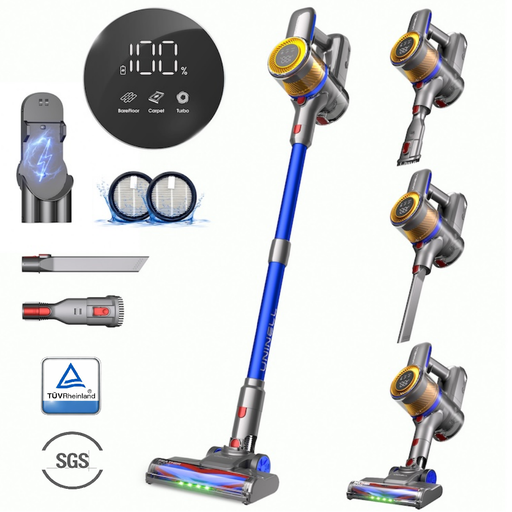
Why this model is a great fit: Offers a good balance of suction power (45,000 Pa), a stated runtime of up to 60 minutes, and useful features like an anti-tangle brush at an accessible price point. Ideal for apartments or as a flexible secondary device.
Addresses unrealistic runtime with a swappable battery and counters the hair-tangle problem with a V-shaped brush roll specifically designed for pet hair.
Lightweight design and an included wall mount for charging and storage. Green LEDs for dust detection are a useful extra in this price range.
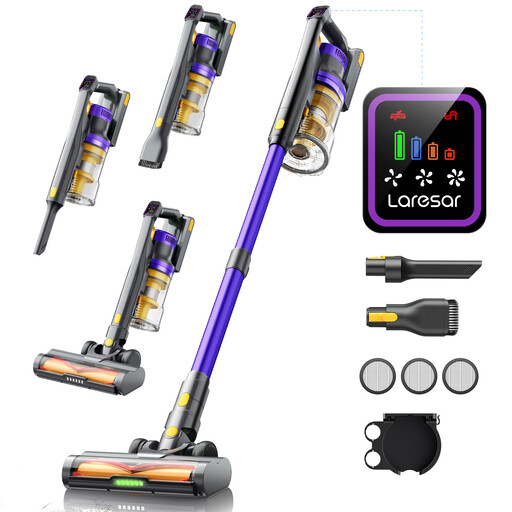
Why this model is a great fit: Combines very high suction power (55,000 Pa / 550W), a long 60-minute runtime, and an exceptionally large 2-liter dustbin. This significantly reduces the frequency of emptying, which is a major advantage in a busy household with pets.
Offers high, verifiable motor power (550W) to supplement the Pa value. The long runtime and large dustbin counteract the problem of constant interruptions when cleaning large areas.
The green LED lighting makes fine dust and pet hair visible. The 7-stage HEPA filtration system ensures clean exhaust air.
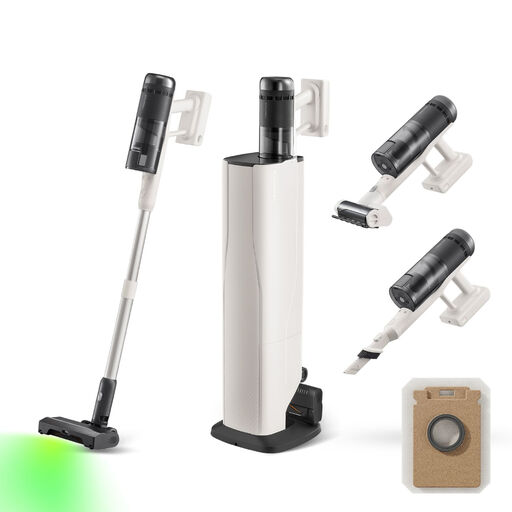
Why this model is a great fit: For users seeking maximum convenience and high performance. The automatic self-emptying station, very high suction power of 170 AW, and a long 80-minute runtime offer a complete, hassle-free package for demanding cleaning tasks.
Delivers a reliable, real-world performance metric of 170 Airwatts (AW) instead of just a Pa value. The self-emptying station completely solves the problem of manual and often unhygienic bin emptying.
The combination of an automatic self-emptying station, long runtime, and high, verifiable suction power makes cleaning both hard floors and carpets extremely efficient and convenient.
We've curated a comprehensive selection of models that meet our criteria for performance, handling, and fair value for money.
The frequency depends on usage and the filter type. Washable filters should ideally be cleaned under running water every 2 to 4 weeks and allowed to dry completely. Non-washable HEPA filters need to be replaced every 6 to 12 months, depending on the manufacturer's instructions, to maintain filtration efficiency and the device's suction power.
This heavily depends on the model. A vacuum for carpets and hard floors with high suction power (ideally over 150 AW) and a motorized brush roll with stiff bristles can achieve good results on low- to medium-pile carpets. For very high-pile or dense carpets, performance may vary. Look for models with special carpet modes or automatic suction power adjustment.
A self-standing design means that the stick vacuum can stand upright on its own without being leaned against a wall or placed in a holder. This is a very practical feature if you need to pause cleaning briefly, as the device won't fall over.