
Lieferung heute & morgen

Qualitätsgarantie

Willkommens-Angebote freischalten: KOSTENLOSE Lieferung | Bis zu 80 % RABATT | Kostenlose 30-Tage-JoyPlus-Testphase
App herunterladen
Choosing the right baby bottle can be a challenge for expectant and new parents. The market is flooded with options, but not every bottle delivers on its promise. The right choice is especially critical when combining breastfeeding and bottle-feeding, or for babies prone to colic. Many parents invest in products that later prove to be impractical or unsuitable for their child.
Before making a decision, it's important to understand the common pitfalls that often lead to the wrong purchase:
To make an informed decision, you should focus on a few critical features. These will determine if a bottle is right for your baby and your daily routine.
For a seamless transition between breast and bottle, a breast-like baby bottle is essential. The teat should be shaped to give the baby a natural latch and sucking sensation. The Chicco NaturalFeeling range features an angled teat that supports a comfortable feeding position, typical for newborns. The material is also crucial. High-quality, soft silicone offers a velvety finish that is well-accepted by babies. Always look for the BPA-free baby bottle label to ensure no harmful plasticisers are present in the material.
An effective anti-colic baby bottle prevents air bubbles from mixing with the milk and being swallowed by the baby. An advanced system, like the dual anti-colic valve integrated into Chicco bottles, is located directly at the base of the teat. It regulates air intake and ensures the teat stays full of milk, regardless of the bottle's angle. This is proven to reduce the risk of burping, gas, and colic.
A baby bottle for newborns requires a slow flow rate to simulate the pace of breastfeeding and prevent nipple confusion. This is especially important when used as a bottle for supplementary feeding. As the child's age and sucking strength increase, the flow rate should be adjusted. The NaturalFeeling range offers different stages: normal flow (0m+), medium flow (2m+), and fast flow (6m+), each corresponding to the appropriate bottle sizes (150 ml, 250 ml, 330 ml).
Based on these criteria, we have identified several models from the Chicco NaturalFeeling range that are suitable for specific needs.
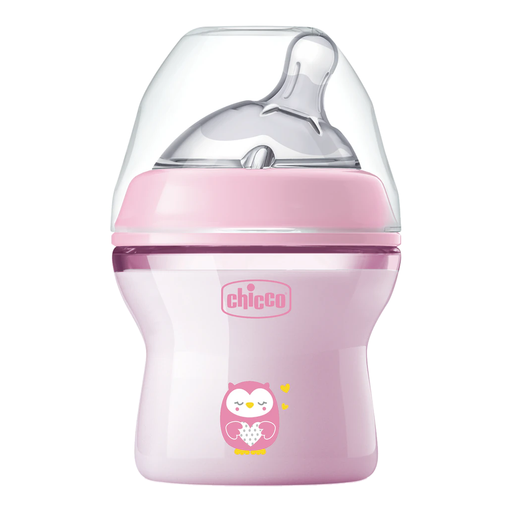
Why this model is a fit: The small 150 ml size is ideal for the smaller milk quantities of newborns. The slow, normal flow (0m+) mimics the effort of breastfeeding, making it easier to combine breast and bottle without overwhelming the baby.
This model isn't a one-size-fits-all solution; it's specifically tailored to the needs of the very youngest, avoiding the pitfall of a flow rate that is too fast.
The angled, breast-like teat supports the natural feeding position and latch, which is crucial for newborns.
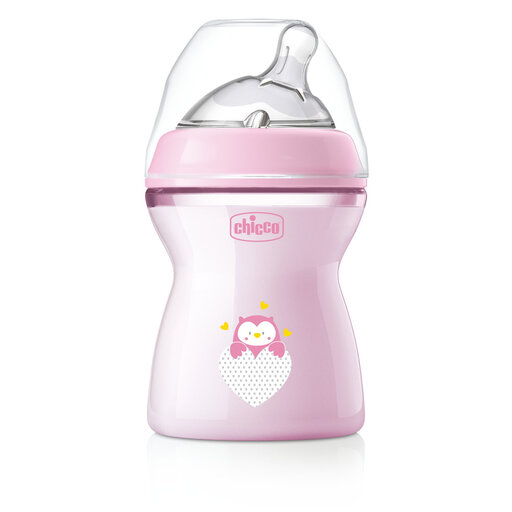
Why this model is a fit: From the second month, appetite increases. The 250 ml bottle with a medium flow adapts to a faster drinking speed. The Chicco bottle in pink is a popular choice.
Instead of a vague marketing promise, this bottle offers a verifiable dual anti-colic valve that actively reduces air intake, thus serving a concrete function.
The dual valve is a clear technical feature that offers parents a reliable solution for reducing colic and discomfort.
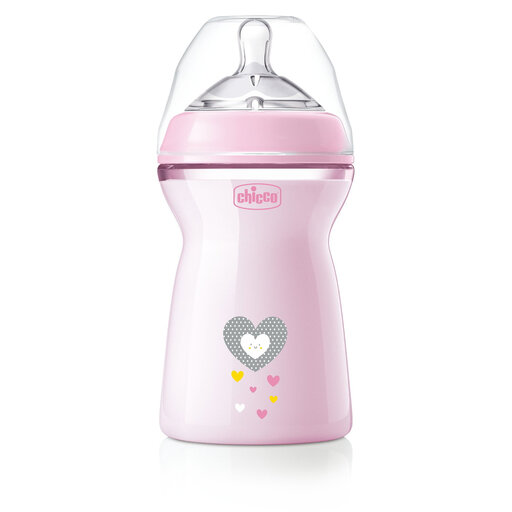
Why this model is a fit: For babies from 6 months who need larger meals and have developed stronger sucking power. The large 330 ml capacity and fast flow ensure a quick and satisfying feed.
This model acknowledges that a baby's needs change. It provides an age-appropriate solution instead of trying to use a single bottle for the entire first year of life.
The combination of large volume and fast flow is optimally matched to the nutritional needs of older infants and prevents frustration during feeding.
We have compiled a complete, up-to-date list of products that fully meet these strict selection criteria and German safety regulations.
The bottles are dishwasher-safe for easy handling. For a thorough cleaning, it is recommended to disassemble all parts – the bottle body, screw ring, teat, and valve. Wash them by hand with a bottle brush and mild detergent, or place them in the top rack of the dishwasher. Regular sterilisation by boiling or using a steam steriliser is also important.
For hygiene and safety reasons, a teat should be replaced every 1 to 2 months. However, replace it immediately if you notice any signs of wear, such as cracks, stickiness, or changes in shape. It is also advisable to adapt the flow rate to your baby's development, for example, by switching from a normal flow teat to a medium flow one.
Yes, the range was specifically designed for this purpose. The angled and breast-like teat is intended to mimic the natural latch and sucking action of breastfeeding. According to the manufacturer, this can help reduce nipple confusion and ease the transition between breast and bottle for both baby and mother.