
Lieferung heute & morgen

Qualitätsgarantie

Willkommens-Angebote freischalten: KOSTENLOSE Lieferung | Bis zu 80 % RABATT | Kostenlose 30-Tage-JoyPlus-Testphase
App herunterladen
The search for a new gaming TV can quickly become overwhelming. Manufacturers advertise a flood of technical terms, but not every specification delivers on its promise in practice. The "144Hz" claim, in particular, has pitfalls that can lead to an unsatisfying gaming experience. Before you make a decision, it's crucial to distinguish marketing promises from the performance features that actually matter.
This guide will help you understand the decisive criteria and avoid common purchasing errors. We focus on the technical facts that truly count for smooth, responsive gaming on consoles like the PS5, Xbox Series X, or a PC.
Many devices on the market seem ideal on paper, but in practice, they often reveal weaknesses that unnecessarily strain your budget. Here are two common problems:
To avoid these traps, you should focus on a few crucial technical parameters. These define a TV's true performance for gaming and high-end home cinema.
A true 144Hz gaming TV has a panel that can natively display 144 frames per second. This is the foundation for extremely fluid motion, which is especially relevant for PC gamers. For console gamers (PS5, Xbox Series X), 120Hz is the current standard. A 144Hz panel offers future-proofing in this regard.
Equally important is support for VRR (Variable Refresh Rate). Technologies like AMD FreeSync or Nvidia G-Sync dynamically synchronise the TV's refresh rate with the frame rate output by the console or PC. This effectively prevents "screen tearing" and ensures a consistently smooth, stutter-free gaming experience.
A TV with HDMI 2.1 is a fundamental requirement for modern gaming. However, make sure the port offers the full range of features. These include:
Check how many of the HDMI ports support the full 2.1 standard. For users with multiple devices (e.g., a TV for PS5 and Xbox Series X as well as a PC), several full-featured ports are practical.
The display technology is a key determinant of contrast, colour reproduction, and brightness.
Here are some models that represent a considered choice for different user profiles based on their objective specifications.
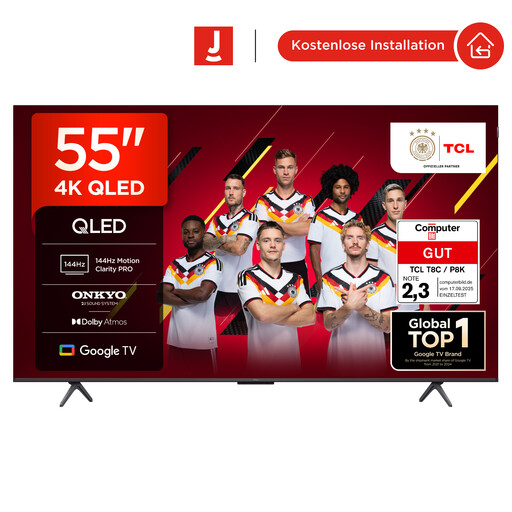
Why This Fits Their Persona: This model offers essential gaming features without breaking the bank. It's a solid choice for anyone looking for a responsive entry into the world of high-frame-rate 4K gaming while also wanting a versatile smart TV system.
The device features a native 144Hz panel and full-featured HDMI 2.1 ports with VRR and ALLM. This bypasses the software-only interpolation trap and ensures low latency.
Comprehensive gaming features (Game Master, FreeSync) and the intuitive Smart TV with Google TV operating system as a central entertainment hub.
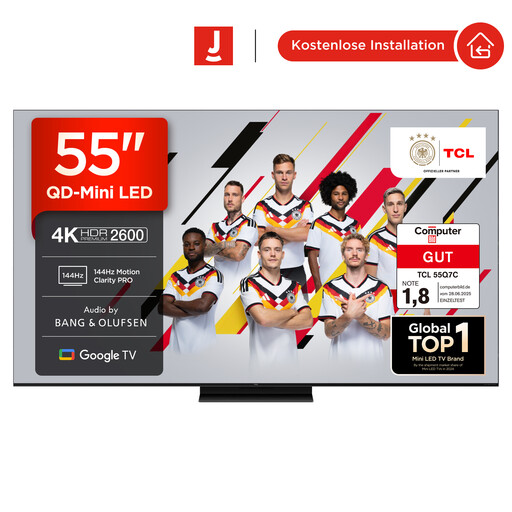
Why This Fits Their Persona: For users who demand high picture and sound quality for movies and series in addition to top-tier gaming performance. The combination of Mini-LED technology and a high-quality sound system makes it a powerful centrepiece for any living room.
The QD-Mini LED technology with precise local dimming and high peak brightness (up to 2600 nits, according to the manufacturer) avoids the trap of weak HDR performance. Formats like Dolby Vision IQ are rendered impressively.
Superb picture quality thanks to Mini-LED and an integrated 6.2.2 Bang & Olufsen sound system, which can make a separate soundbar redundant.
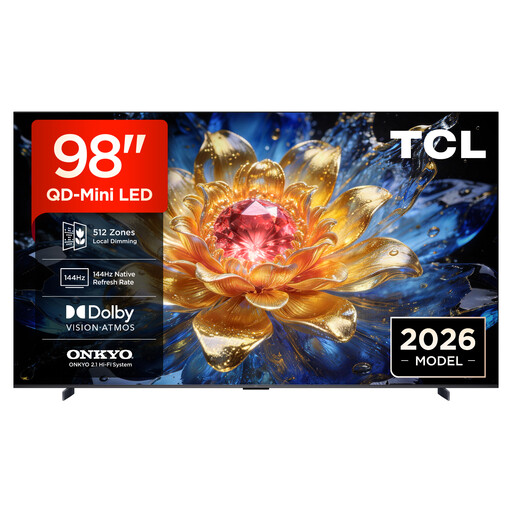
Why This Fits Their Persona: For those seeking an uncompromising, large-format home cinema and gaming experience. This model is designed for dedicated rooms where maximum immersion is the top priority.
This model combines all relevant technologies: a native 144Hz panel, advanced QD-Mini LED with 512 dimming zones, and full HDMI 2.1 functionality. It avoids all common pitfalls by using high-end components across the board.
The immense 98-inch screen size creates a truly cinematic feel. The AiPQ Pro Processor optimises the picture in real-time for a stunning visual presentation.
We've compiled a complete, real-time updated list of products that fully meet these strict selection criteria and UK safety regulations.
Yes, to utilise the full bandwidth for 4K resolution at 120Hz or 144Hz, an "Ultra High Speed" certified HDMI 2.1 cable is required. Older cable generations cannot transmit the necessary data rate, which can lead to signal dropouts or reduced picture quality.
Current consoles like the PlayStation 5 and Xbox Series X output games at a maximum of 120Hz. A 120Hz TV is therefore sufficient for them. The higher 144Hz refresh rate is primarily beneficial for PC gamers whose graphics cards are capable of generating such high frame rates. However, a 144Hz TV offers a degree of future-proofing in case future consoles also support this standard.
Each technology has specific pros and cons for gamers: