
Lieferung heute & morgen

Qualitätsgarantie

Willkommens-Angebote freischalten: KOSTENLOSE Lieferung | Bis zu 80 % RABATT | Kostenlose 30-Tage-JoyPlus-Testphase
App herunterladen
If you're looking to buy Manuka honey, you're often faced with a wealth of information: MGO ratings, UMF seals, and significant price differences can make the choice complicated. This guide is designed to help you understand the crucial quality markers and find a product that meets your needs. We focus on objective facts and certifications so you can make an informed decision.
To assess the quality and authenticity of Manuka honey, several key metrics and characteristics are essential.
The two most common systems for evaluating the properties of Manuka honey are MGO and UMF.
MGO (Methylglyoxal): This value indicates the concentration of methylglyoxal in milligrams per kilogram of honey. MGO is one of the key components found in significant quantities in Manuka honey. A higher MGO value indicates a higher concentration of this specific compound. Common strengths include MGO 100+, MGO 250+, MGO 400+, or Manuka Honey MGO 550.
UMF (Unique Manuka Factor): This is a comprehensive quality seal awarded by the UMF Honey Association in New Zealand. A certified Manuka honey with a UMF seal has been tested for several characteristic compounds, including MGO, Leptosperin, and DHA. The UMF system guarantees that the honey is authentic, monofloral, and was produced and packed in New Zealand. A Manuka Honey UMF 15+ is roughly equivalent to an MGO content of 514+.
Genuine, pure Manuka honey comes exclusively from New Zealand, as the Manuka plant (Leptospermum scoparium) is native there. When making a purchase, look for the following:
The choice of the right strength depends on your intended use. Without going into any specific Manuka honey effects, its application can be categorised by concentration:
Based on the quality criteria mentioned, we have compiled a selection of Manuka honeys that stand out for their certifications and clearly declared ingredients.
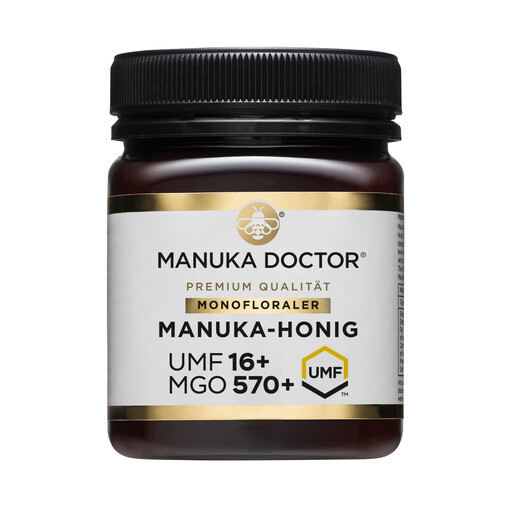
What makes it stand out: This honey from Manuka Doctor is certified for both UMF and MGO, offering dual assurance of its quality and authenticity. The guaranteed MGO content of at least 570 mg/kg places it in the upper-mid range.
Benefits:
Who it's for: Users looking for a potent and reliably certified Manuka honey to support their daily well-being.
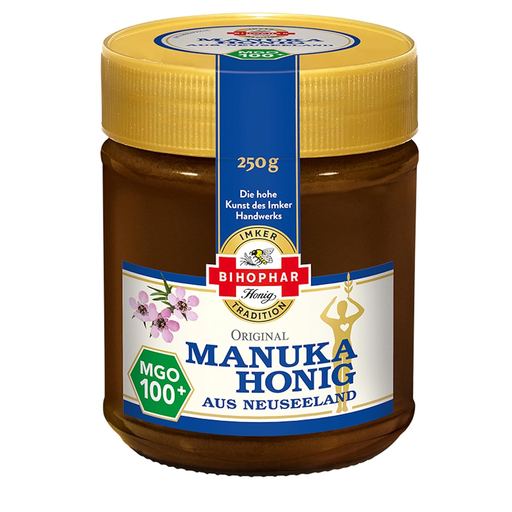
What makes it stand out: The BIHOPHAR Manuka Honey offers a guaranteed MGO content of 100+, making it a solid choice for beginners or for daily use as a high-quality food. It is pure, unadulterated, and tested for its MGO content.
Benefits:
Who it's for: Beginners and users who want to use Manuka honey as a daily spread, for sweetening tea and yoghurt, or as a natural source of energy.
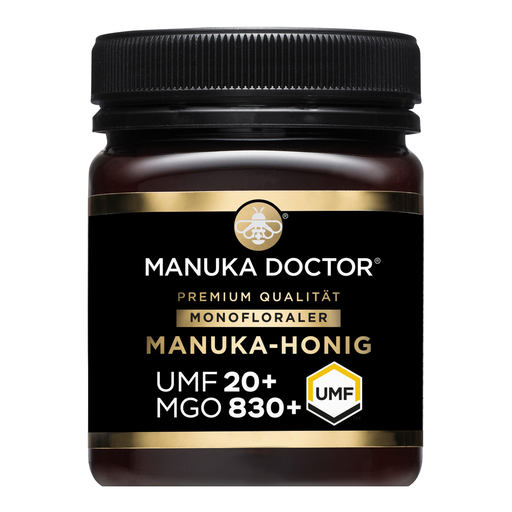
What makes it stand out: With a UMF certification of 20+ and an MGO content of over 830 mg/kg, this honey is among the most potent on the market. It comes from an apiary with a long tradition and offers full traceability via a QR code.
Benefits:
Who it's for: Experienced users specifically seeking a Manuka honey with one of the highest available concentrations of compounds for specific purposes.
Haven't found the right product yet, or are you interested in other types of honey? Discover our entire range of high-quality honey and find the perfect addition to your kitchen and well-being.
MGO (Methylglyoxal) is a measure of the concentration of a single, key compound. UMF (Unique Manuka Factor) is a comprehensive quality seal from New Zealand that, in addition to MGO, also tests for other authenticity markers like Leptosperin and guarantees the honey's origin.
Manuka honey can be used in many ways. It is common to take 1-2 teaspoons per day, either pure, stirred into lukewarm tea or water, on toast, or in muesli. It can also be applied topically to the skin. Please note that honey, in general, is not suitable for infants under 12 months of age.
Look for the "Product of New Zealand" label, an official UMF logo, or a clear MGO content rating that is backed by a certificate. A batch number for traceability is another sign of a reputable manufacturer and a certified Manuka honey.