
Lieferung heute & morgen

Qualitätsgarantie

Willkommens-Angebote freischalten: KOSTENLOSE Lieferung | Bis zu 80 % RABATT | Kostenlose 30-Tage-JoyPlus-Testphase
App herunterladen
An A4 wall file for documents can keep letters, bills, files and magazines neatly organised without taking up valuable desk space. However, it’s not just the number of compartments that matters. Often, unsuitable dimensions, weak fixings or an impractical layout mean a wall organiser for documents rarely gets used day to day.
“Suitable for A4” doesn’t automatically mean that A4 ring binders, plastic sleeves or bulky folders will fit comfortably. An A4 sheet measures 21 × 29.7 cm. For documents in a sleeve or envelope, the internal dimensions need a bit of extra room. So check the internal width, pocket depth and pocket height rather than just the external size.
With a slim wall letter tray, individual letters and loose papers usually work well. For ring binders, files or several magazines, a deeper pocket may be needed.
A multi-tier wall file does create extra sorting options, but it also needs enough wall height. Models with five to ten tiers can be around 42 cm to over 80 cm tall, depending on the design. In small hallways or above a desk, this can make access awkward.
Before you buy, think about which categories you actually need, for example:
A metal wall file is fairly sturdy on its own, but once filled with paper it can become noticeably heavier. The screws supplied aren’t equally suitable for every wall type. For plasterboard, old walls or porous surfaces, you may need the right wall plugs or cavity fixings.
Before fitting, you should check the wall material, weight load, screw spacing and available wall area. The file must sit level and not tip forward when fully loaded.
Metal provides a solid frame structure for a wall-mounted document holder. With the mesh models shown here, the metal is given a powder coating. According to the product details, this coating is designed to protect the surface from everyday wear and oxidation. However, it doesn’t replace proper installation or protection from prolonged moisture.
A mesh wall file can usually be cleaned with a soft, dry cloth. In damp rooms, the surface should be kept dry afterwards.
For just a few document categories, a single pocket or a three-tier wall letter sorter is enough. Five or six tiers offer more sorting options but need more height. Eight- and ten-tier systems are aimed at workplaces or households with a regular flow of documents.
Also pay attention to the pocket height. On some five-tier models, the stated slot height is around 7 cm, while six- or ten-tier versions sometimes have smaller pockets. That’s handy for individual sheets of paper, but can be limiting with thick folders.
Built-in label holders or supplied adhesive labels make sorting easier. An arched opening can make it simpler to reach letters, while fully enclosed pockets offer more protection for the contents. For an A4 filing system for the office, it’s a good idea to label the compartments before fitting and place the most important categories at eye level.
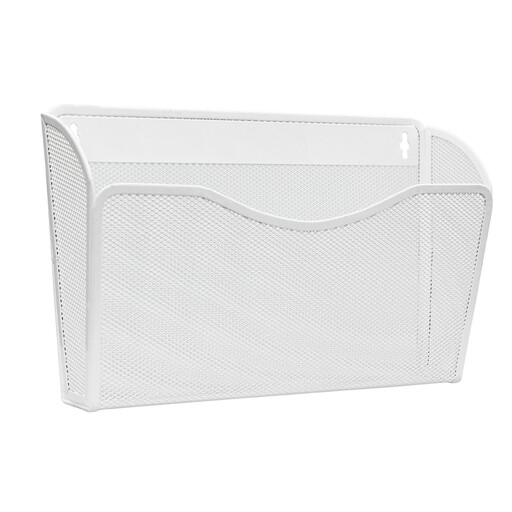
Why this product suits the profile: The single A4 pocket is ideal for a clearly defined purpose, such as incoming post, current bills or school papers. At 35 × 9 × 21.5 cm, the file remains relatively compact.
The clear single-pocket design prevents an oversized file when you only need one document category within easy reach.
Metal construction with powder coating, label holder and supplied mounting screws.
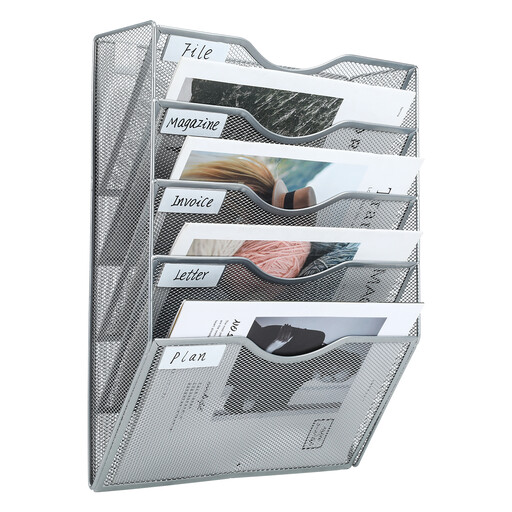
Why this product suits the profile: Five tiers with a stated internal width of 31.5 cm allow for structured storage of A4 documents, letters, magazines and forms.
The compartment layout reduces the risk of gathering all your papers in a single, hard-to-navigate pocket.
Five tiers, labels, metal frame with powder coating and a stated overall height of 42 cm.
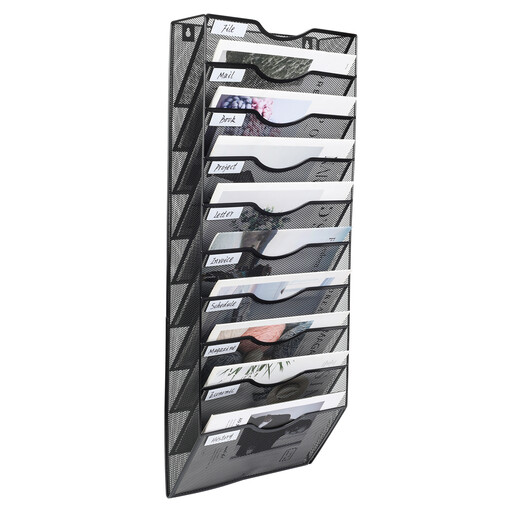
Why this product suits the profile: Ten compartments are designed for offices, schools or households with a high volume of post and documents. The stated height of 81.5 cm should be factored in before installation.
The large number of compartments makes categories visible, rather than stacking many documents on top of each other in a shallow file.
Ten label-able tiers, arched openings for access and a stated internal width of 31.5 cm.
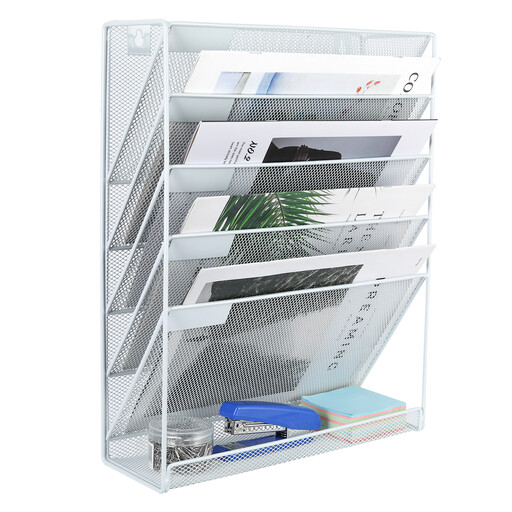
Why this product suits the profile: According to the product details, this model can be wall-mounted or used freestanding on a desk, making it suitable for changing workspaces.
The alternative placement option means the file doesn’t rely solely on a permanently suitable wall location.
Six compartments, stated dimensions of 32.5 × 10.5 × 40.5 cm and an extra pocket for smaller items.
We’ve put together a full, regularly updated list of products that fully meet these strict selection criteria and the safety regulations in force in the EU.
Solid walls made of concrete, brick or load-bearing masonry generally provide a suitable base. For plasterboard, use appropriate cavity wall plugs and take the weight limit into account. What matters most is the combination of wall material, plug type and the weight of the loaded file.
For a single document stream, one compartment is enough. Three to five tiers are suitable for typical categories in a home office or household. Eight to ten compartments make sense if you regularly need to separate post, bills, project papers, magazines and files.
The lifespan depends on installation, loading and the environment. A powder coating can protect the surface against everyday wear. Overloading, loose fixings and prolonged moisture can shorten its life. So check the wall mounting regularly and stick to the stated weight limit.