
Lieferung heute & morgen

Qualitätsgarantie

Willkommens-Angebote freischalten: KOSTENLOSE Lieferung | Bis zu 80 % RABATT | Kostenlose 30-Tage-JoyPlus-Testphase
App herunterladen
A notebook needs to suit your day-to-day life. A5 gives you plenty of room for notes, planning and journalling, while an A6 notebook is easier to slip into a bag, rucksack or jacket pocket. But if you choose based only on the cover colour or design, you could overlook some important differences.
Three common problems come up time and again when buying a notebook:
A5 measures approximately 148 × 210 mm under the DIN standard. It gives you room for detailed notes, project planning, sketches and lecture notes. An A5 spiral notebook can be a good choice if you want it to lie flat or occasionally need to remove pages.
A6 measures approximately 105 × 148 mm. An A6 pocket notebook is ideal for quick notes, shopping lists, ideas or information you jot down while you’re out and about. Even so, check the product details before buying: the cover, binding and fastening can affect the outer dimensions.
A lined notebook is well suited to continuous writing and traditional note-taking. Squared paper is handy for figures, diagrams and technical sketches, while plain pages are better for drawing or free-form layouts.
Paper weight is given in grams per square metre (g/m²). You’ll often find 70 g/m² paper in basic pads, while many bound notebooks use 90 or 100 g/m² paper. Heavier paper may feel more substantial, but it doesn’t guarantee that ink won’t show through. If you use a fountain pen, rollerball or felt-tip pen, check the manufacturer’s guidance where possible.
Also check whether the product information refers to pages or sheets. 80 sheets usually means 160 pages if you can write on both sides.
A hardback notebook offers better protection for the pages when you’re carrying it around and can double as a firm writing surface. It is usually less flexible, though, and takes up a little more room. A softcover notebook is lighter and easier to slip into a bag.
Spiral binding makes it easy to open a notebook fully. If the pages are perforated, you can remove them neatly. Consider whether you need this feature: a thread-bound notebook may be more practical for a journal you want to keep intact, while a work notebook with removable pages gives you more flexibility.
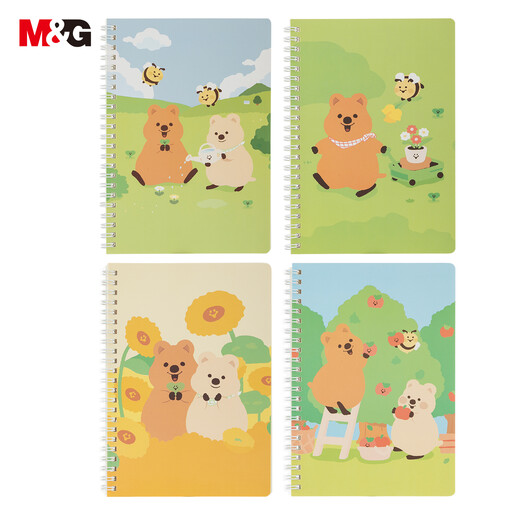
Why it suits this shopper: The four A5 notebooks have lined pages, so you can use them separately for different school subjects, projects or personal notes.
The spiral binding makes it easy to turn the pages and lets the notebook lie flat. The ruling is clearly stated before you buy.
A5 format, lined pages, spiral binding and a pack of four notebooks.
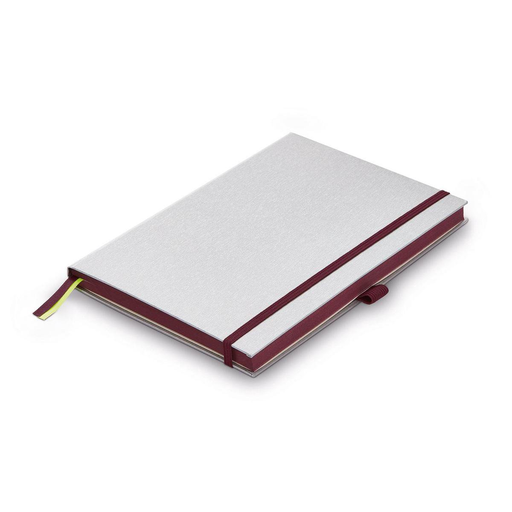
Why it suits this shopper: This A6 notebook combines a hardback cover with 192 pages of 90 g/m² paper and extra features for when you’re out and about.
The product details clearly specify the page count, paper weight, thread binding, elastic band, pen loop and two bookmarks.
A6 hardback, 192 pages, acid-free paper according to the product description, a storage pocket and eight removable sheets.
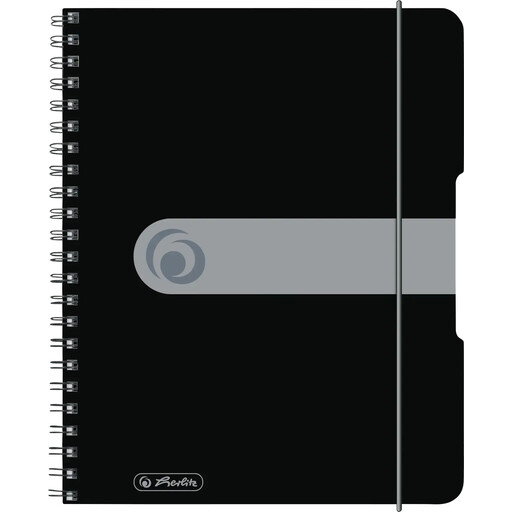
Why it suits this shopper: For school, work and extensive note-taking, this set offers two A5 pads with squared pages and practical features.
The product description specifies 80 g/m² paper, micro-perforation, six-hole punching and spiral binding that lets the pad lie flat.
Two notepads, specialist squared ruling, removable pages and the option to file them in a binder.
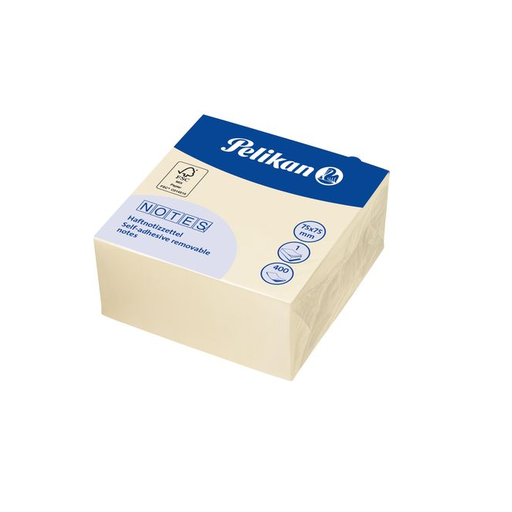
Why it suits this shopper: Sticky notes or memo slips are more practical than a bound journal for quick reminders, to-do lists and messages by your monitor.
The square size is specified, and the sticky notes can be removed from clean, dry surfaces when you no longer need the temporary reminder.
75 × 75 mm, 400 sheets, yellow paper and suitable for use with pencils, ballpoint pens, fountain pens or fibre-tip pens according to the product details.
We’ve put together a complete, regularly updated list of products that meet these strict selection criteria and fully comply with the safety regulations in force in the EU.
Before buying an A5 or A6 notebook, ask yourself:
It depends on how much you’ll carry it and how much you need to write. A6 is well suited to quick notes and use on the go. A5 gives you more room for notes, daily planning, sketches and longer journalling entries.
Paper weighing 90 or 100 g/m² is often considered more substantial than very lightweight paper. However, whether ink shows through also depends on the ink, nib and writing pressure. Check the manufacturer’s information for the product and, if you’re unsure, try a test page.
How long it lasts depends on the page count, binding, how often you carry it and exposure to moisture. A hardback can offer extra protection when you’re on the move, while a softcover is more flexible and lighter. Store it in a dry place, avoid bending it excessively and don’t put unnecessary strain on elastic bands or spiral bindings to help it last longer.