
Lieferung heute & morgen

Qualitätsgarantie

Willkommens-Angebote freischalten: KOSTENLOSE Lieferung | Bis zu 80 % RABATT | Kostenlose 30-Tage-JoyPlus-Testphase
App herunterladen
An A5 hardcover notebook is ideal for lecture notes, work notes, journalling, sketches and creative drafts. Measuring approximately 14.8 × 21 cm, it offers more writing space than a pocket notebook while remaining easy to carry in a rucksack, work bag or keep on your desk.
However, certain common marketing claims can lead to poor purchasing decisions. A decorative cover, for example, says little about the strength of the binding. Likewise, the phrase “many pages” is ambiguous if the number of sheets and number of pages are not clearly distinguished. If you regularly write with a fountain pen or ink, you should look beyond the cover and pay particular attention to the paper weight and quality.
A product with 96 sheets will normally have 192 writable pages. This distinction is important when assessing the actual capacity. A notebook described as having many pages may therefore be thicker and heavier than expected.
A hard cover generally protects the contents better from pressure and scuffing than a soft cover. However, the type of binding, the construction of the spine and whether the notebook can be opened flat are also important. A thread-sewn binding may be more practical for regular writing than a basic glued binding.
Cream-coloured paper slightly reduces the visual contrast and is often used in journals with a traditional design. For fountain pens, gel pens and markers, however, the paper weight in grams per square metre also matters. 90 or 100 g/m² are useful reference values, although show-through also depends on the ink, nib width and writing pressure. Claims such as “ink-proof” or “resists ink bleed” should be understood as product specifications from the individual brand, not as a blanket guarantee for every type of ink.
A5 is suitable for longer daily notes, lectures, meeting minutes and a high-quality A5 journal. If you only want to record brief reminders while out and about, A6 can save space and weight. For sketches, mind maps and larger overviews, however, A5 provides considerably more room.
Before buying, check the following:
Lined paper supports structured note-taking and daily lists. Blank pages are more flexible for drawings, diagrams, mind maps and free-form journalling. According to its product description, the LAMY B7 A5 Hardcover Notebook has completely blank pages, making it better suited to creative layouts than conventional school notes.
According to the product details, the Jubiluu A5 models use 100 g/m² offset paper or wood-free, ivory-coloured paper. Before ordering, check the individual product page for the ruling, number of sheets and paper colour, as similar design ranges may have different features.
A notebook with a ribbon marker makes it easier to quickly find the last page you used. An elastic band keeps the book closed and can secure loose sheets inside. With a hardcover notebook with an elastic band, the band should not stretch excessively or permanently deform the cover.
Other useful features include:
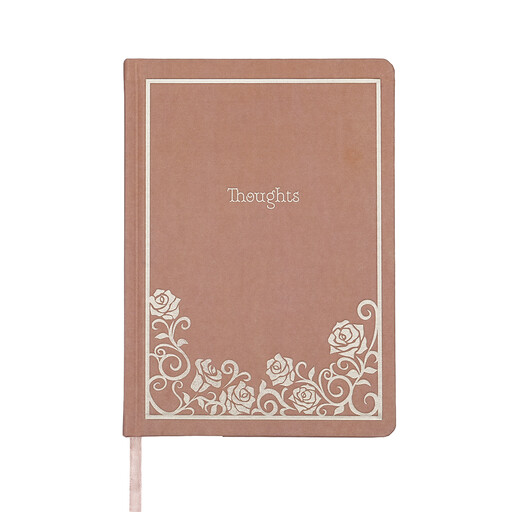
Why this product suits this profile: The A5 format, 96 sheets and ruling are suitable for daily notes, school, the office and journalling. A ribbon marker and elastic band are included.
The product details explicitly state the format, number of sheets, paper weight and the two closure and page-marking features. This makes it easy to check the key specifications before buying.
100-g/m² offset paper, 192 pages, A5 format, a ribbon marker and an elastic closure band.
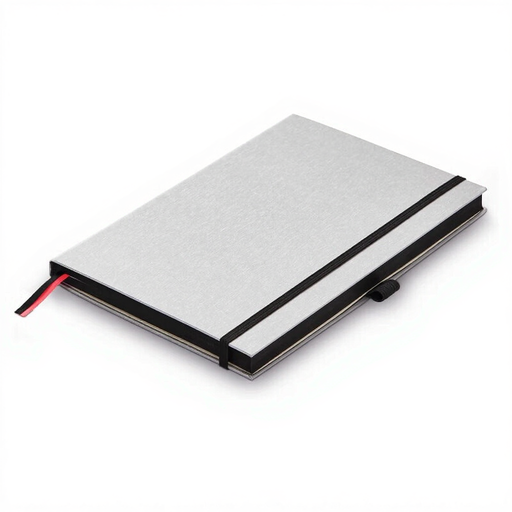
Why this product suits this profile: This blank A5 notebook is designed for people who want to combine writing, drawing, mind maps and creative drafts in one book.
The product description explicitly states that the pages are unruled. If you need blank pages, this means you will not accidentally buy a lined journal.
According to the product details, approx. 90 g/m² cream-coloured, acid-free paper, thread-sewn binding and a hardcover made from wipe-clean synthetic material.
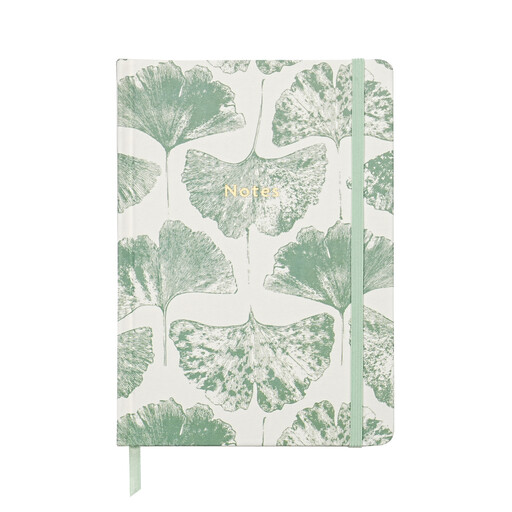
Why this product suits this profile: This floral notebook combines a decorative fabric cover with classic ruling, making it suitable for regular journalling, creative writing or as a notebook gift.
The details list 96 sheets, 192 pages, 100 g/m² paper, a ribbon marker and an elastic band. This makes it easier to choose than journals described purely in decorative terms.
A5 format, lined ivory-coloured paper, fabric hardcover and decorative foil or embossed elements according to the product description.
We have put together a complete, regularly updated list of products that fully meet these strict selection criteria and the safety regulations applicable in the EU.
A hardcover notebook should be stored in a dry place and protected from direct sunlight. With suitable synthetic or PU covers, dirt can generally be removed with a soft, slightly damp cloth. Do not fold the book fully back through 360 degrees, as this can put strain on the spine and binding.
When using a fountain pen or markers, allow the ink to dry completely before closing the notebook. Moisture, intense heat and naked flames can damage the paper, adhesives, elastic bands and cover material. Small components such as ribbon markers, elastic bands and pen loops are not suitable for children under three years of age.
Yes. The format provides enough space for longer entries, daily reflections, lists and sketches, while still being easy to carry. For very short notes, A6 may be more practical.
An A5 lined notebook is ideal for orderly notes, minutes and lists. For drawings, mind maps and free writing, blank pages offer greater flexibility. Before buying, check that the product description clearly states whether the pages are “lined” or “blank”.
There is no single standard service life. It depends on the paper thickness, binding, how it is transported, writing pressure and exposure to moisture. Handling the notebook carefully, storing it in a dry place and avoiding folding the cover backwards can extend its useful life.