
Lieferung heute & morgen

Qualitätsgarantie

Willkommens-Angebote freischalten: KOSTENLOSE Lieferung | Bis zu 80 % RABATT | Kostenlose 30-Tage-JoyPlus-Testphase
App herunterladen
Finding the right notebook can be a challenge given the vast selection available. Whether for university, the office, or personal notes, the requirements for an A5 lined notebook are often highly specific. This article serves as a guide, introducing various models to help you make an informed decision. We focus on objective features like binding, paper quality, and functional details.
Before you make a decision, several key features should be considered. These criteria will help you find the notebook that best suits your needs.
The type of binding significantly affects the notebook's usability.
Paper weight, measured in grams per square metre (g/m?), is a crucial factor for the writing experience. Standard copy paper is typically 80 g/m?. Higher-quality notebooks often use paper that is 100 g/m? or more. This thicker paper reduces ink ghosting and bleed-through, which is particularly advantageous when using fountain pens or fineliners. For a journaling notebook, where various pens and colours are often used, higher paper quality is recommended.
While the A5 format (148 × 210 mm) offers a great balance between writing space and portability, a smaller A6 notebook can be more practical for on-the-go notes. Useful extra features significantly increase its practical value:
Here is a selection of notebooks that stand out for their specific features and use cases.
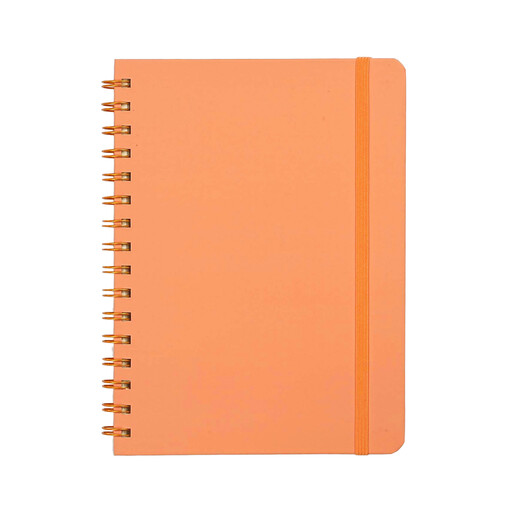
Why It Stands Out: This model combines the sturdiness of a hardcover with the flexibility of a spiral binding. The cream-coloured 100g offset paper provides a smooth writing surface and minimises ink ghosting.
Pros:
Who It's For: Ideal for students and professionals who need a durable and functional notebook for daily use in the office or lectures.
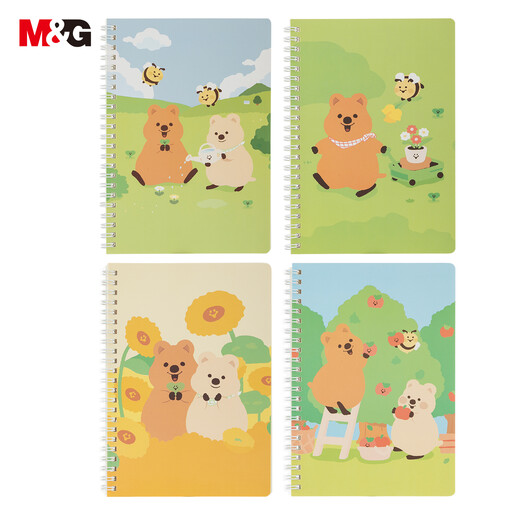
Why It Stands Out: This notebook set, with its four individual books, offers a practical solution for organising different subjects or projects. The charming quokka designs on the covers add a personal touch.
Pros:
Who It's For: An excellent choice for school and university students who need separate notebooks for different courses, or for anyone looking to keep their projects neatly organised.
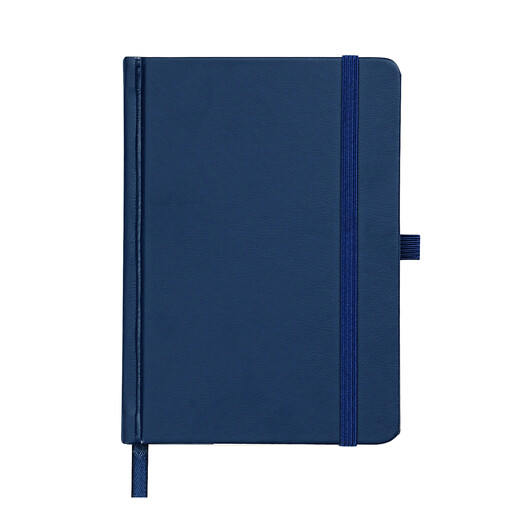
Why It Stands Out: With its compact A6 notebook format and leather-look cover (PU leather), this model is specifically designed for on-the-go use. It combines a premium feel with thoughtful features.
Pros:
Who It's For: Perfect for individuals who want a stylish and handy notebook for quick notes, as a diary, or as a journaling notebook for on the go.
If the models featured don't quite match what you're looking for, or if you need a different type of book, such as one to capture special memories, you can find a wider selection of specialised books in our Memory Book category.
The "100g" refers to the paper weight of 100 grams per square metre (g/m?). Paper of this thickness is more robust than standard paper (approx. 80 g/m?). The main advantage is that ink, especially from fountain pens or felt-tip pens, is less prone to ghosting or bleeding through to the other side. This ensures clean writing on both sides of the page.
The choice depends on personal preference. A spiral notebook is practical because it lies flat on a desk or can be completely folded back, which is an advantage in crowded lecture halls with small desks. A hardcover notebook, on the other hand, offers more protection for your notes and a sturdier writing surface when you're writing without a desk. Many students use spiral notebooks for taking notes and hardcover books for summaries or as a kind of study journal.
Most pen types are suitable for a standard lined notebook. Ballpoint pens are hassle-free and dry quickly. Gel pens offer a smooth writing experience and vibrant colours. Fineliners allow for precise, fine lines, which is ideal for neat notes. If you're using a fountain pen, it's advisable to choose a higher paper quality (e.g., 100 g/m?) to prevent ink bleed-through.