
Lieferung heute & morgen

Qualitätsgarantie

Willkommens-Angebote freischalten: KOSTENLOSE Lieferung | Bis zu 80 % RABATT | Kostenlose 30-Tage-JoyPlus-Testphase
App herunterladen
Finding the right notebook can be a deeply personal decision. Whether it's for professional minutes, academic notes, or a creative journal, the quality of the paper, the type of cover, and the functional details are key to the writing and user experience. A subpar notebook can disrupt your flow of thought, while a high-quality one fosters creativity and organisation.
This article serves as your guide. It presents a selection of A5 notebooks and highlights the objective features that are relevant to your purchasing decision. Our goal is to provide you with a solid foundation to find the perfect model for your needs.
The selection of notebooks is vast. To make an informed decision, a few technical criteria are essential.
Paper is the heart of any notebook. A key metric here is the paper weight, measured in grams per square meter (GSM). A notebook with 100g paper (or 100 GSM) provides a solid foundation for most writing instruments. Compared to thinner standard paper (often 70-80 GSM), it is less prone to ink ghosting or bleeding. This is especially relevant if you use fountain pens or rollerballs. The colour of the paper—whether pure white, ivory, or cream—also affects readability and aesthetic appeal.
The cover not only protects the pages but also defines the notebook's feel and longevity. A hardcover notebook is robust and durable, making it an excellent choice for frequent transport and long-term archiving.
The binding affects how the book lies on a desk.
Small extras can significantly enhance a notebook's usability. A notebook with an elastic band keeps the pages securely closed and prevents dog-eared pages during transport. One or more ribbon markers help you quickly find important pages. An integrated pen loop ensures your writing instrument is always at hand. Such features are particularly beneficial in professional settings for an office notebook or for use as a structured A5 journal.
Based on the criteria mentioned, here is a selection of notebooks that stand out for their quality of materials and craftsmanship.
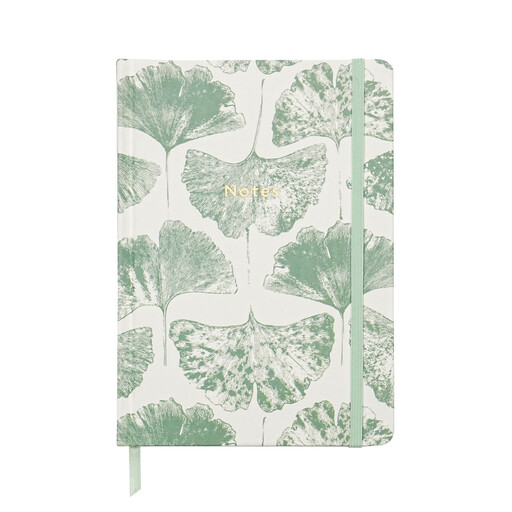
Why It Stands Out This model is distinguished by its premium fabric cover, which is finished with a subtle foil stamp. The design, such as the ginkgo motif, gives the notebook a unique tactile feel and a sophisticated look.
Advantages
Who Is It For? This model is an excellent choice for those looking for an elegant notebook for capturing thoughts, a lined A5 diary, or a stylish notebook as a gift.
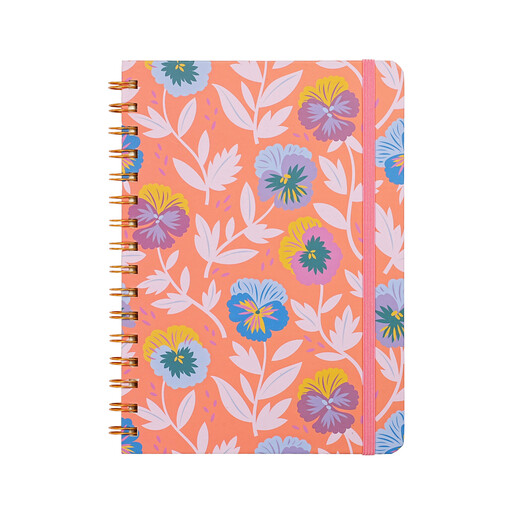
Why It Stands Out The sturdy twin-wire binding is the key feature of this notebook. It allows the notebook to open completely flat and even fold back 360 degrees, offering maximum flexibility while writing.
Advantages
Who Is It For? Ideal for students, creatives, and professionals who need a functional A5 spiral notebook for notes, brainstorming, or project planning and who value straightforward handling.
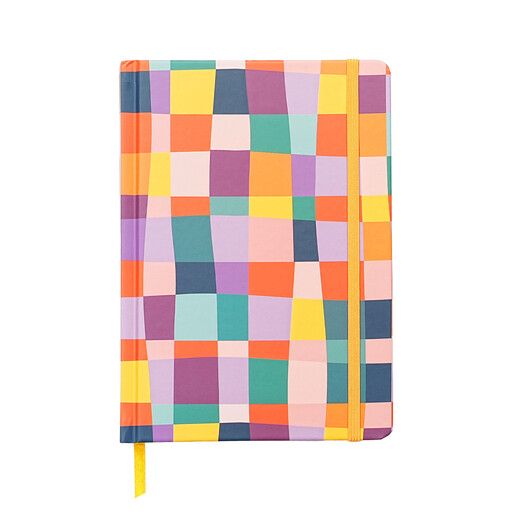
Why It Stands Out This journal combines classic aesthetics with high functionality. The PU leather cover is durable and easy to clean, while integrated details like the pen loop and elastic band streamline daily use.
Advantages
Who Is It For? A versatile companion for anyone looking for a reliable notebook for the office and on the go. Its thoughtful features make it a practical tool for daily organisation.
If this selection doesn't include the perfect model for your specific needs, there are many other variations to discover. Different rulings, colours, and designs offer a wide range for every taste.
Discover Our Entire Collection of Classic Cream Notebooks
A high-quality notebook is defined by a combination of three factors:
Yes, paper with a weight of 100 GSM is generally well-suited for fountain pens. Compared to thinner paper (70-80 GSM), it is thicker and denser, which significantly minimises ink bleed-through and ghosting on the reverse side. However, the writing result can vary depending on the ink and nib size.
Care depends on the material. Fabric or PU leather covers should be protected from excessive moisture and direct sunlight. Light smudges on a PU leather cover can often be removed with a soft, slightly damp cloth. For fabric covers, cleaning with a dry, soft cloth is recommended to preserve its texture and colour.