
Lieferung heute & morgen

Qualitätsgarantie

Willkommens-Angebote freischalten: KOSTENLOSE Lieferung | Bis zu 80 % RABATT | Kostenlose 30-Tage-JoyPlus-Testphase
App herunterladen
An A5 lined notebook may seem straightforward at first: a handy size, neat lines and enough pages for your notes. In practice, though, notebooks can vary considerably in paper weight, cover and features. If you buy based only on the cover or product name, it’s easy to overlook important details.
The most common buying mistakes come down to three things:
Paper weight is an important consideration if you’re choosing a notebook for daily notes, a diary, a journal or longer pieces of writing. 100 g/m² paper is thicker than standard 70 or 80 g/m² writing paper, so it may feel more substantial under a ballpoint pen or fountain pen. Whether ink shows through also depends on the pen you use and how much ink it lays down.
Some Jubiluu models use 100 g/m² offset paper in a cream or ivory shade. This may appeal if you prefer something other than a bright white page. If you often write with markers or very free-flowing ink, check the product details and, where available, customer photos before buying.
A notebook with 96 sheets has 192 pages when printed on both sides. That gives you plenty of space for regular entries, class notes, meetings or an ongoing collection of ideas. A smaller A5 notebook may be enough for a single project; if you need separate books for different subjects or topics, a multipack such as the M&G set may be more practical.
Also check that the notebook is specifically described as lined. A squared notebook can be useful for tables, calculations and sketches, but it won’t serve the same purpose as a lined journal.
A hardcover notebook protects the pages in your rucksack and gives you a firm surface to write on when you’re out and about. A fabric notebook with a decorative finish can also be a personal accessory or a gift for someone who loves writing. If you choose a decorative cover, check the care instructions: moisture and direct sunlight can affect the paper and cover finish.
A notebook with an elastic closure stays shut in your bag. An integrated bookmark makes it easier to find your place, while a pen loop is useful if you want to keep your notebook and pen together. Spiral binding lets the notebook lie flat; thread binding often has a more understated look that works well in a formal setting.
The selection below matches specific features to different everyday situations. It focuses on details you can check, such as size, paper, page count and features.
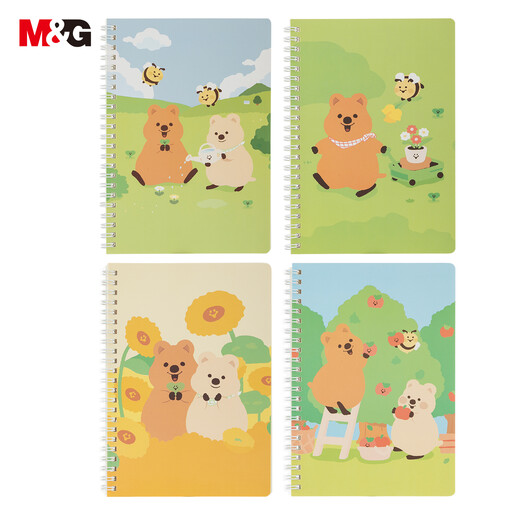
Why it suits this profile: Four A5 notebooks with lined paper make it easy to keep school subjects, projects, work and personal notes separate.
The specified ruling helps avoid confusing these notebooks with squared exercise books. Spiral binding makes pages easy to turn and lets the notebook lie flat.
Four individual notebooks, A5 size, 60 sheets or 120 pages per notebook, with lined pages.
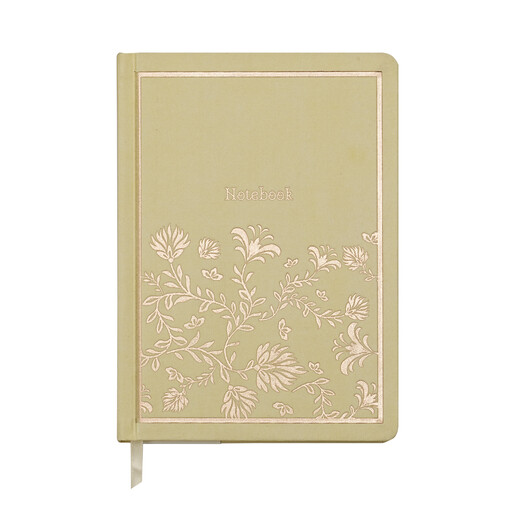
Why it suits this profile: The fabric-covered hardcover, with floral or nature-inspired designs, is a good choice if you want your notebook to combine everyday note-taking with a polished look.
The specifications are clearly listed: 96 sheets, 192 pages, 100 g/m² ivory paper, a bookmark and an elastic closure.
Fabric hardcover, lined 100 g/m² paper and decorative finishes such as foil stamping or embossing.
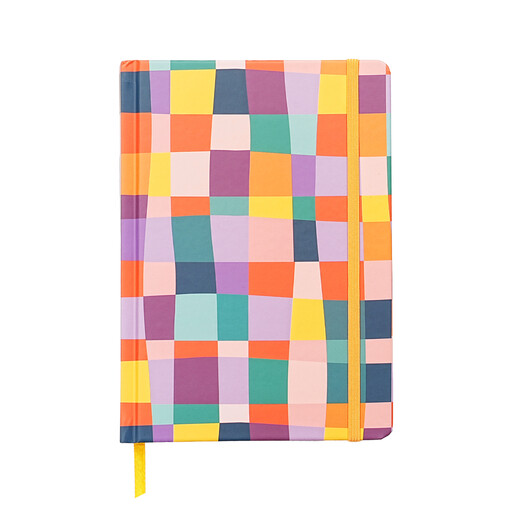
Why it suits this profile: For journalling, daily planning and longer writing projects, it combines a practical A5 size with several useful features.
As well as the ruling, the paper weight and page count are clearly stated. That makes it less likely you’ll choose a decorative notebook with too little usable writing space.
96 sheets, 100 g/m² offset paper, a bookmark, elastic closure and pen loop; available in several colours.
We’ve put together a complete, regularly updated list of products that meet these strict selection criteria and fully comply with the safety regulations in force in the EU.
For school pupils and university students, it makes sense to keep a separate notebook for each subject. A multipack makes them easy to organise, while a hardcover notebook offers extra protection for the daily commute. If you’re working, you can use a notebook for meetings, to-do lists or project ideas. For a journal or diary, a clear page layout with the date, topic and, if useful, page markers can help keep everything organised.
Before you buy, check the following:
96 sheets give you 192 pages when used on both sides. How much space you can actually use depends on whether you remove any pages and how much room you need for each entry.
100 g/m² is a heavier paper grade than 80 g/m². Whether it suits a particular fountain pen depends on the nib width and ink flow. If you use very wet ink, it may be worth testing it on a spare page first.
How long it lasts depends on how much you write, how often you carry it around and how you store it. A hardcover, a well-protected binding and dry storage can all help extend its useful life. Keep decorative fabric or PU covers away from moisture and direct sunlight.