
Lieferung heute & morgen

Qualitätsgarantie

Willkommens-Angebote freischalten: KOSTENLOSE Lieferung | Bis zu 80 % RABATT | Kostenlose 30-Tage-JoyPlus-Testphase
App herunterladen
An A5 lined notebook is compact enough for a rucksack, work bag or desk, while still offering plenty of space for notes, daily planning and journalling. However, many models differ considerably in terms of paper quality, binding and everyday practicality. A decorative cover alone says little about whether the notebook will suit your writing habits in the long term.
Before buying, you should check three common pitfalls in particular:
Paper weight is stated in g/m². An A5 notebook with 100 g/m² paper is a heavier-weight option than one with 80 or 90 g/m² paper. This may appeal to people who write with ink or pens that lay down a lot of ink. However, paper weight alone cannot guarantee that ink will not show through.
Clear ruling is well suited to traditional note-taking. A lined journal should provide enough space between the lines to keep longer passages easy to read. If you also want to add sketches or headings, look for generous margins and ruling that is not too dominant.
A hardcover notebook offers better protection against bent pages during transport. PU leather, coated card and fabric are different materials, each with its own feel and care requirements. A fabric cover with foil stamping or embossing can look decorative, but should be protected from moisture and direct sunlight.
A flexible softcover is often lighter and easier to slip into smaller bags. For daily use in the office, at university or on the move, a hardcover can nevertheless be practical if the notebook is frequently carried between different locations.
The A5 format measures approximately 14.8 × 21 cm. It provides more writing space than A6 while remaining easier to handle than an A4 exercise book. An A5 notebook with an elastic closure can be kept shut, protecting loose pages or tucked-in notes. A notebook with a bookmark makes it easier to quickly find your current page again.
An integrated pen loop is particularly useful in everyday life. It should be designed for standard-sized pens; very wide writing instruments may not fit. If you use the notebook as an A5 diary, you should also consider the page count and the strength of the binding.
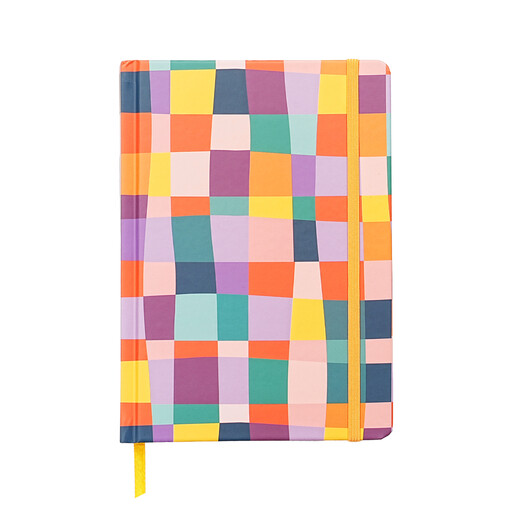
Why this product suits this profile: This A5 model is designed for people looking for a structured notebook for school and the office with practical essential features. It contains 96 sheets of 100 g/m² cream-coloured lined paper, along with a hardcover, bookmark, elastic closure and pen loop.
The sheet count, paper weight and accessories are clearly specified. This makes it easier to compare the features with your actual requirements.
100 g/m² offset paper, a hardcover and three integrated features: bookmark, elastic closure and pen loop.
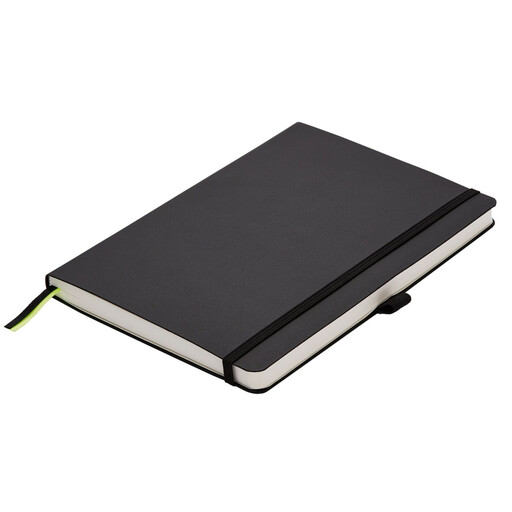
Why this product suits this profile: This A5 softcover is designed for professionals, students and anyone who takes regular notes. It offers 192 pages of 90 g/m² ivory-coloured paper with college ruling, two page markers, a pen loop, back pocket and elastic closure.
The product details specify the paper weight, page count, ruling and binding. The flexible cover also reduces the weight compared with a comparable hardcover.
192 pages, two page markers, a back pocket and thread stitching according to the product description.
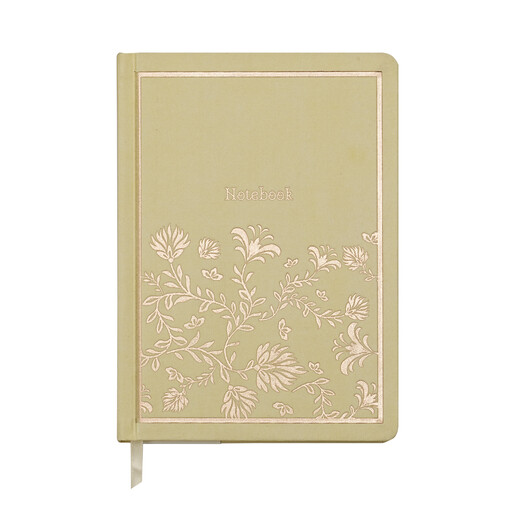
Why this product suits this profile: This floral notebook combines a fabric hardcover with 96 sheets, or 192 pages, of 100 g/m² lined paper. It is suitable for journalling, creative ideas or as a gift notebook.
The design clearly specifies the material, paper weight and accessories. The decorative surface should be protected from moisture and direct sunlight.
100 g/m² ivory-coloured paper, floral fabric cover, bookmark and elastic closure.
We have put together a complete, regularly updated list of products that fully meet these strict selection criteria and the safety regulations applicable in the EU.
Before buying an A5 lined notebook, a quick checklist can help:
For occasional notes, 80 to 100 sheets are often enough. If you use the book as a journal, study companion or daily work notebook, 96 sheets or 192 pages may be more suitable. It is important to distinguish between pages and sheets.
A hardcover can protect the pages during transport and provide a stable writing surface. A softcover, on the other hand, is more flexible and often lighter. The right choice therefore depends on your bag, journey and preferred handling.
100 g/m² paper is a heavier paper grade than that used in many basic exercise books. Whether ink shows through also depends on the ink flow, nib width and writing pressure. For a definitive decision, you should check the manufacturer’s specific information about the paper.