
Lieferung heute & morgen

Qualitätsgarantie

Willkommens-Angebote freischalten: KOSTENLOSE Lieferung | Bis zu 80 % RABATT | Kostenlose 30-Tage-JoyPlus-Testphase
App herunterladen
An A5 notebook fits into many rucksacks, work bags and briefcases while still offering enough space for notes, journalling or sketches. However, product claims such as “premium paper”, “particularly robust” or “suitable for all pens” do not automatically lead to the right purchase. What matters are verifiable details about format, paper weight, ruling and features.
The term “high-quality notebook” alone says very little. Details such as paper weight, paper colour and paper type are more informative. The models featured here, for example, have values of 90 g/m² or 100 g/m². Paper weight is not the only proof of quality, but it makes it easier to assess the paper’s stability and writing feel.
If you write with a fountain pen, gel pen or markers, you should also look for specific information about ink absorption. Paper weight alone cannot guarantee suitability for every type of pen.
A DIN A5 notebook nominally measures 148 × 210 mm. Depending on the cover, binding and rounded corners, the external dimensions may vary. With a hardcover notebook, the thickness of the material also needs to be taken into account. If you plan to use it in a bag or organiser, check the actual product dimensions.
An A6 model, at approximately 105 × 148 mm, is considerably more compact. It is suitable for short notes on the go, but offers less writing space for detailed reports or study notes.
A notebook with an elastic closure, bookmark or pen loop can be practical in everyday use. However, these features do not solve every problem. An elastic closure keeps loose pages secure and the book closed, while a pen loop requires a pen with a suitable diameter. A bookmark is helpful when frequently switching between pages, but it is not the same as a contents structure or a calendar.
Before buying, you should therefore be clear about whether you need a lined notebook, a writing book with blank pages, an A5 journal or an office notebook.
A5 offers a practical balance between writing space and portability. A hardcover notebook protects the pages better in a full bag and can serve as a firm writing surface. A softcover notebook is generally more flexible and easier to store.
For school and university, detachable pages, punched holes or a spiral binding may be useful. For journalling and personal notes, a firmly sewn spine, a bookmark and a closable cover are often more helpful.
A lined notebook supports note-taking, lists and reports. Blank pages are suitable for sketches, mind maps and free writing. A special grid or mixed ruling may be useful for technical notes, tables and drawings.
Also check whether the specification refers to “pages” or “sheets”. 96 sheets equal 192 pages when both the front and back are counted. This distinction prevents false expectations about the available capacity.
Paper weighing 90 g/m² is a common choice for everyday use in many notebooks. 100 g/m² paper may feel slightly sturdier. However, the specific paper quality and the writing instrument being used remain the deciding factors.
Useful features include:
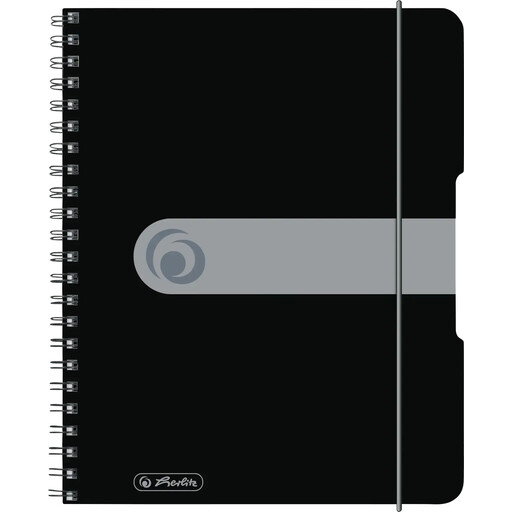
Why this product suits this profile: Two A5 notepads with squared pages offer a practical solution for school, university, bills and everyday tasks.
The product details specify the format, number of sheets, ruling, micro-perforation and six-hole punching instead of relying only on general quality claims.
Twin-wire binding, lies flat, elastic closure and detachable pages; two notebooks are included.
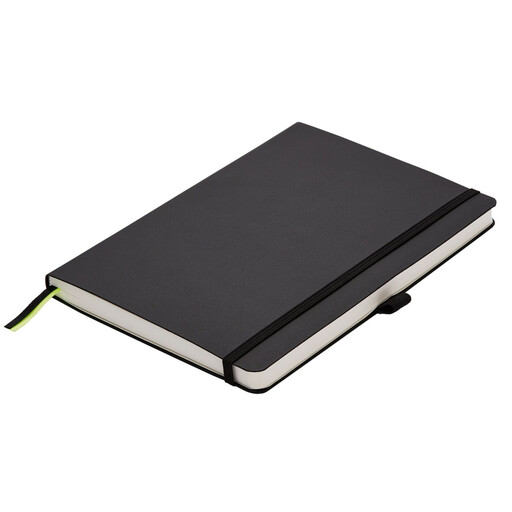
Why this product suits this profile: The black softcover, measuring 145 × 210 mm, is designed for organised office and meeting notes with a discreet appearance.
The description specifies 192 pages, 90 g/m² paper, sewn binding and clearly defined features including a pen loop, elastic closure and paper pocket.
Two bookmark ribbons, pen loop, back pocket and, according to the product description, ivory-coloured paper suitable for various writing instruments.
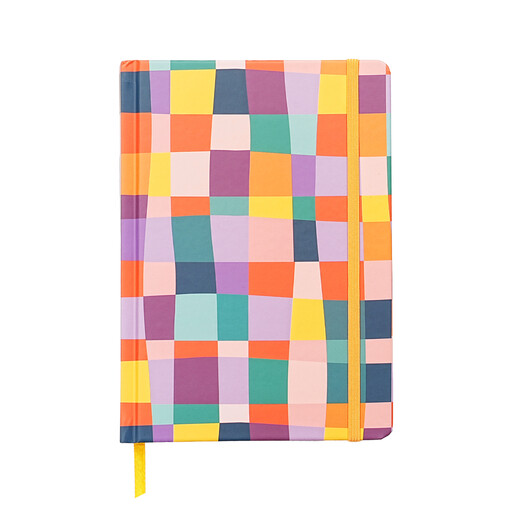
Why this product suits this profile: This A5 journal with a textured PU leather cover is aimed at users who want to combine personal notes, journalling and creative writing.
The features are clearly specified: 96 sheets or 192 pages, 100 g/m² paper, bookmark, elastic closure and pen loop.
A5 format, lined ivory-coloured offset paper and three integrated features for everyday access.
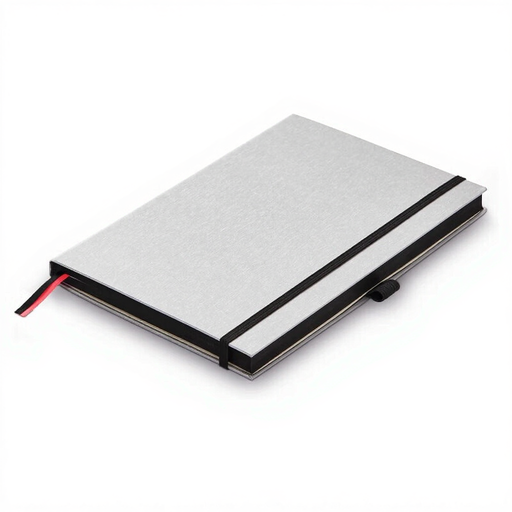
Why this product suits this profile: Blank pages and a protective hardcover make this model an interesting choice for sketches, mind maps and free writing.
The product description explicitly states that it has blank rather than lined pages, as well as sewn binding and an A5 format.
Blank, ivory-coloured paper weighing approximately 90 g/m² and a hardcover made from wipe-clean synthetic material.
We have put together a complete, regularly updated list of products that fully meet these strict selection criteria and the safety regulations applicable in the EU.
Paper and the cover will remain usable for longer if the book is stored in a dry place away from direct sunlight. Liquids can cause paper to buckle and damage adhesives or bindings. For a hardcover, a soft, slightly damp cloth is usually sufficient for cleaning. A softcover should not be sharply bent or folded fully backwards.
If the model contains small parts such as an elastic band, bookmark or pen loop, it should, according to the relevant product information, be kept away from children under three years of age. Check the specific safety information for your chosen product before use.
For note-taking, summaries and lectures, a lined notebook is usually the obvious choice. Squared paper is also suitable for tables, calculations and technical sketches. If you create mind maps or drawings, you may prefer a blank writing book.
It depends on how you intend to use it. A hardcover protects the pages better and provides a firm writing surface. A softcover is more flexible and can adapt more easily to a bag. The weight of the entire notebook is also relevant if you carry it frequently.
For regular journalling, 192 pages or 96 sheets is a common capacity. A thinner pad may be sufficient for short projects or notes for individual school subjects. For long-term planning, check whether an undated model with monthly and weekly overviews would be a better fit.