
Lieferung heute & morgen

Qualitätsgarantie

Willkommens-Angebote freischalten: KOSTENLOSE Lieferung | Bis zu 80 % RABATT | Kostenlose 30-Tage-JoyPlus-Testphase
App herunterladen
An A5 notebook fits into many rucksacks, work bags and drawers, while offering considerably more writing space than an A6 model. This combination makes the format appealing to school pupils, students, professionals and creative users alike. However, many products look more similar at first glance than they really are.
If you choose based solely on the cover colour or a low price, you can easily overlook important details. A decorative notebook, for example, may be less practical for everyday use, while a simple model with the right paper quality can be more comfortable to use over a longer period.
A seller may state “192 pages” or “96 Sheets”. In many cases, this means 96 sheets with two pages each, not 192 individual sheets. The sheet count is therefore the key figure when estimating how long the notebook will last. With a lined A5 notebook, you should also check whether all the pages are actually lined, or whether the product includes calendar, planning or blank pages as well.
Paper weight is often given in g/m². 70 g/m² is lightweight and suitable for short notes. 90 to 100 g/m² offers greater material stability and may feel more pleasant depending on the ink used. However, a higher paper weight does not automatically guarantee that every fountain pen ink will not show through. If you regularly write with a fountain pen, fineliner or marker, treat descriptions such as “acid-free” or “ink-proof” as specific product properties rather than drawing general conclusions from the paper weight alone.
An A5 notebook with an elastic closure, notebook with a bookmark or notebook with a pen loop is often easier to organise in everyday use. However, these features should be explicitly mentioned in the product description. With decorative designs, it is also important to check whether the notebook has a robust hardcover, a flexible softcover or simply a printed paper cover.
The standard A5 size is approximately 14.8 × 21 cm. Depending on the cover and binding, the actual external dimensions may vary slightly. A hardcover notebook protects the pages better in a bag and is suitable for longer-term storage. A softcover notebook is usually more flexible and easier to carry.
A thread-sewn binding can make the notebook easier to open and strengthen the binding. Spiral bindings often lie flat on a desk, but require a little more space at the side. For sketches and quick notes, an A5 spiral notebook can be a practical choice.
A lined A5 notebook is ideal for conventional note-taking. A blank A5 journal, on the other hand, offers more freedom for sketches, mind maps and creative layouts. An A5 diary often benefits from opaque paper and a binding that opens comfortably.
Pay attention to:
An elastic closure keeps loose pages and the closed notebook together. One or more ribbon bookmarks make it easier to quickly find important sections. A pen loop means you do not have to search separately for a suitable ballpoint pen or fountain pen. A rear paper pocket can be useful for storing loose notes.
Paper and covers should be stored in a dry place. Moisture, direct sunlight and high temperatures can affect the appearance and binding, particularly with fabric, paper or PU surfaces. For products with ribbons, elastic cords or small accessories, follow the relevant safety information provided by the manufacturer.
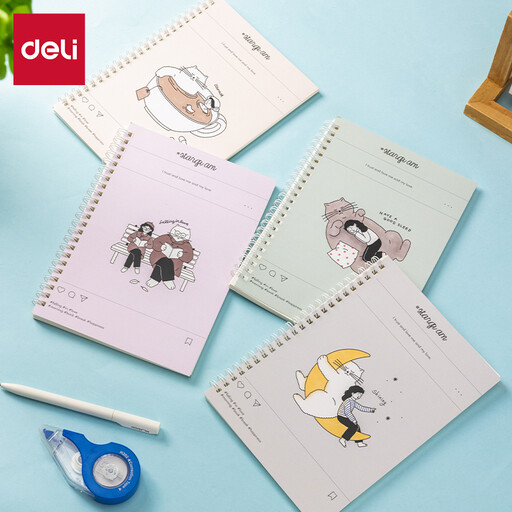
Why this product suits the profile: The set contains four A5 spiral notebooks, each with 60 sheets, making it ideal for keeping school subjects, projects or personal notes separate.
The pack quantity is clearly stated. This makes it easier to assess the price per notebook than with a single product whose sheet count is unclear.
A5 format, spiral binding and four notebooks with themed designs.
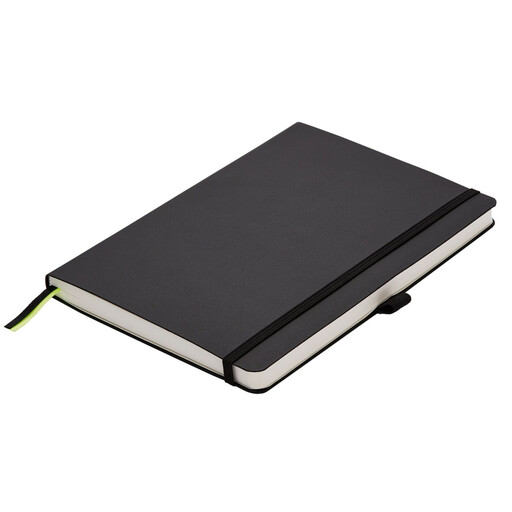
Why this product suits the profile: The LAMY notebook combines a flexible softcover with 192 pages of ivory paper, making it suitable for university, the office and everyday note-taking.
The product details explicitly state the format, page count, 90 g/m² paper, thread-sewn binding and features.
Pen loop, two ribbon bookmarks, elastic closure and rear paper pocket.
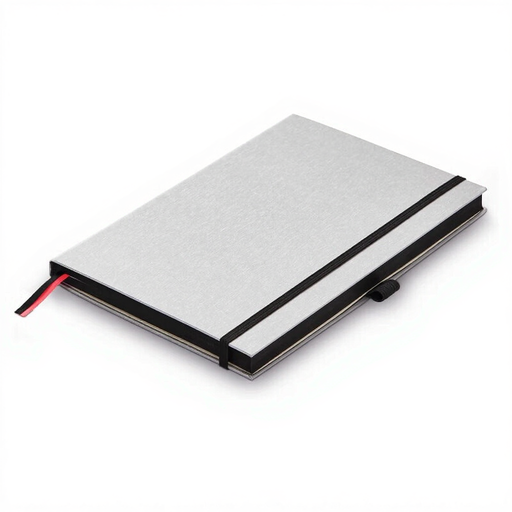
Why this product suits the profile: The blank pages are designed for sketches, mind maps, creative planning and free-form journalling. The hardcover is suitable for regular transport.
The product is explicitly described as blank. This avoids creating the wrong expectations about the ruling.
A5 format, hardcover, thread-sewn binding and, according to the product description, acid-free paper of approximately 90 g/m².
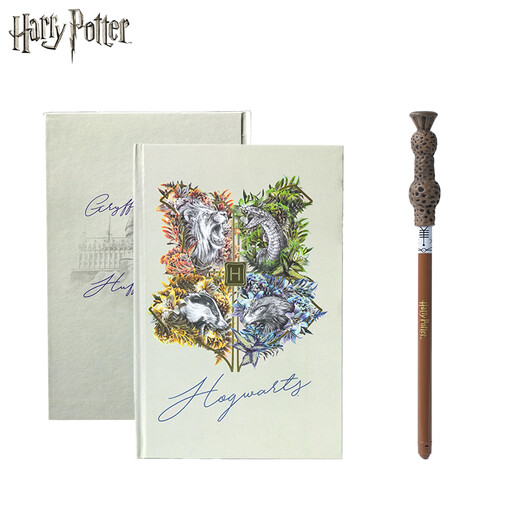
Why this product suits the profile: This officially licensed set combines two themed notebooks with a wand pen. It is aimed at fans and shoppers looking for a decorative notebook as a gift.
The contents are clearly identified as a set. Nevertheless, you should check the exact page count and ruling on the product page before buying.
Two notebooks, themed designs and a matching pen in one gift set.
We have put together a complete, regularly updated list of products that fully meet these strict selection criteria and the safety regulations applicable in the EU.
The standardised A5 paper format measures 148 × 210 millimetres. A bound notebook may be slightly larger because of its cover, spine and elastic closure. You should therefore check the stated external dimensions to make sure it will fit in your bag.
For ordinary ballpoint pens and pencils, paper weighing 70 g/m² is often sufficient. If you regularly write with a fountain pen, ink or fineliners, you may prefer 90 or 100 g/m². The specific paper construction remains the decisive factor, as paper weight alone does not provide a complete indication of show-through.
Its lifespan depends on the binding, cover, paper and how it is used. A hardcover protects the pages better against pressure and friction. An elastic closure can keep the notebook closed, but should not be overstretched for extended periods. Storing the notebook in a dry place and handling the binding carefully will help keep it usable for longer.