
Lieferung heute & morgen

Qualitätsgarantie

Willkommens-Angebote freischalten: KOSTENLOSE Lieferung | Bis zu 80 % RABATT | Kostenlose 30-Tage-JoyPlus-Testphase
App herunterladen
An A5 notebook fits into most rucksacks, work bags and larger handbags. The size of approximately 14.8 × 21 cm offers plenty of space for notes, to-do lists, sketches or a personal journal, without being as bulky as an A4 exercise book. However, before you buy, it's worth taking a closer look at the actual product specifications. A decorative cover alone tells you little about writing comfort, durability or everyday practicality.
With notebooks, sheets and pages are often listed differently. A book with 96 sheets usually has 192 writable pages. So when planning how much space you actually need, it's crucial to know whether the seller is counting sheets or pages.
If you take extensive notes every day, you'll need a different kind of notebook than someone who only jots down thoughts occasionally. A slim journal can be lighter, whereas a more substantial book will need replacing less often.
Claims like "smooth paper" or "suitable for many pens" are hard to evaluate without technical details. The paper grammage in g/m² gives you a concrete point of comparison:
Grammage doesn't automatically guarantee that ink won't show through. The type of ink, writing pressure and drying time also play a part. If you use fountain pens or markers, the paper should be explicitly described as ink-resistant.
A hardcover notebook protects the contents better in a bag and provides a firm writing surface when you're on the go. A softcover is usually more flexible and can mould more comfortably against your body or a full bag.
A spiral notebook lies flat when open and is ideal for taking notes, doing calculations and frequent page-turning. However, the spiral binding can take up more room in tight bags. If you need removable pages, micro-perforation and hole-punching are also important, as they allow you to file the pages in a ring binder later.
A5 is a standard size for school, university and the office in Germany. Still, check the exact external dimensions, because a hardcover, spiral binding or rounded corners can affect the overall size. For daily appointments, an A5 planner with monthly and weekly overviews is more practical than a blank book. For free writing, a classic journal without pre-printed date fields is a better choice.
A lined notebook supports structured text and note-taking. Squared pages are handy for tables, technical sketches and calculations. Blank pages offer more freedom for drawings, mind maps and creative entries.
Also pay attention to the usable area: a wide margin, a header or pre-printed fields can reduce the available writing space. For a journal you'll write in, a clean, subtle layout is often more practical than a heavily divided page.
A notebook with an elastic band stays closed in a bag and stops loose sheets from falling out. An integrated bookmark makes it easy to find your current page quickly. A pen loop means you won't have to hunt for a matching ballpoint pen separately.
These details are useful, but they don't replace a solid binding. Check whether the book lies flat, whether the spine feels sturdy enough, and whether the elastic band is easy to use for everyday purposes.
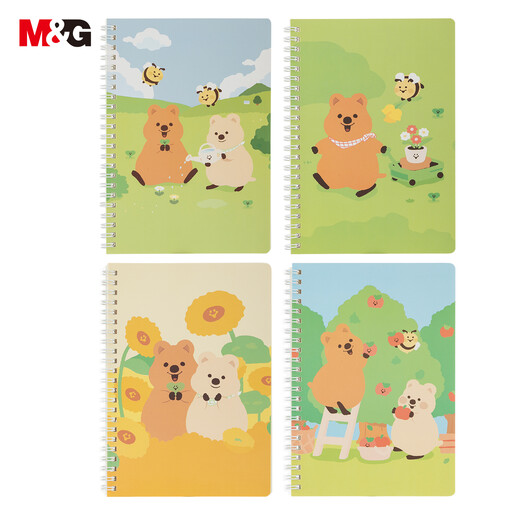
Why this product suits the profile: Four A5 notebooks allow you to use them separately for lessons, study, work or personal notes.
The specifications state the size, ruling and number of pages per notebook, so you don't have to judge the set by the cover design alone.
A5 size, lined pages, spiral binding and four separate notebooks.
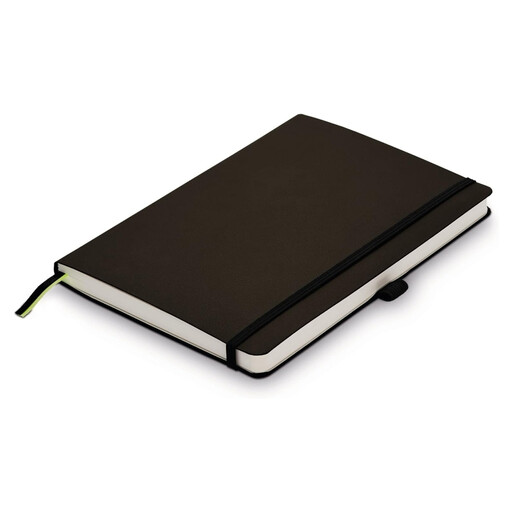
Why this product suits the profile: For professionals and students who prefer a structured notebook with a larger page count.
The product details specify 90 g/m² paper, college ruling and ink-resistant properties instead of vague quality promises.
192 pages, 90 g/m² paper, elastic band and pen loop in an A5 softcover.
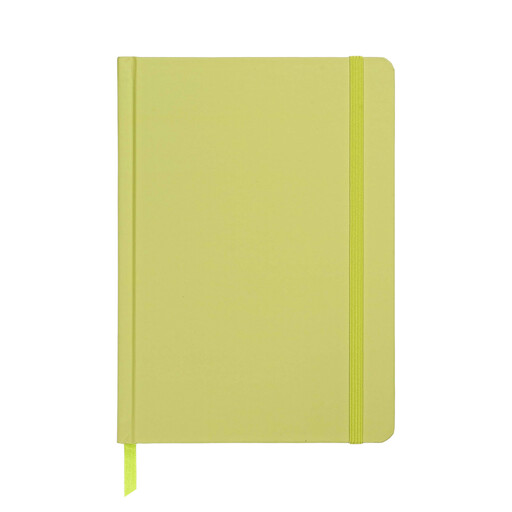
Why this product suits the profile: For users who want to combine planning, goal tracking and free notes in one undated A5 planner.
The undated layout prevents unused calendar pages from becoming useless if you start late or take breaks.
224 pages, 100 g/m² paper, hardcover, monthly and weekly overviews plus note sections.
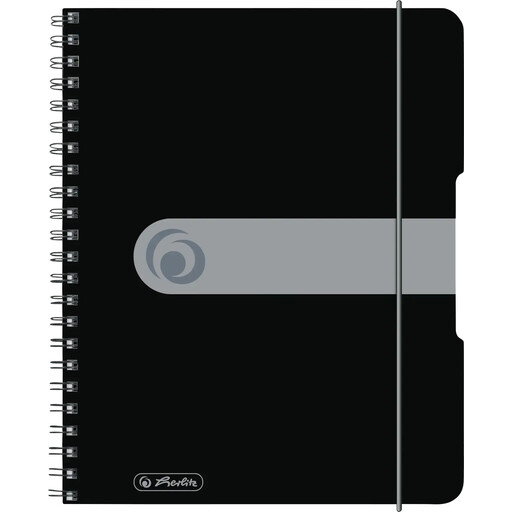
Why this product suits the profile: Suitable for learners and office workers who want to file, remove or collect pages in a ring binder.
The product description specifically mentions micro-perforation, six-hole punching and squared pages.
Two notepads, each with 80 sheets, 80 g/m² paper, twin-wire binding and elastic closure.
We've put together a complete, regularly updated list of products that fully meet these strict selection criteria and the safety regulations in force in the EU.
For continuous text, lesson notes and minutes, a lined notebook is usually the right choice. Squared pages support tables, formulas and technical drawings. Blank pages are ideal for sketches, mind maps and creative writing. So the deciding factor is how you plan to use it, not just the cover design.
The lifespan depends on the paper, binding, frequency of use and storage. A hardcover protects the contents during daily transport. An elastic band stops the book from opening in your bag, while a spiral binding allows it to lie flat when writing. Moisture, heat and bending the book back too far can damage the paper and spine.
The price depends on factors including paper grammage, page count, cover material, binding and accessories. A pack of four can be economical for multiple subjects; a single book with 192 or 224 pages can be worth it if you write regularly. So compare the price not just per product, but also based on the number of pages and your intended use.