
Lieferung heute & morgen

Qualitätsgarantie

Willkommens-Angebote freischalten: KOSTENLOSE Lieferung | Bis zu 80 % RABATT | Kostenlose 30-Tage-JoyPlus-Testphase
App herunterladen
An A5 notebook is large enough for detailed notes while remaining easy to carry. That is why it is often used as a notebook for school and the office, an A5 journal, diary or writing book. The choice ranges from a hardcover notebook and flexible softcover models to spiral-bound notebooks.
However, the product description alone does not always tell you whether a model suits your everyday needs. Three common buying misconceptions particularly often lead to the wrong choice:
The classic A5 format measures approximately 14.8 × 21 cm. It provides enough space for lecture notes, minutes, lists and journalling, while still fitting into many rucksacks and work bags.
An A6 notebook, at approximately 10.5 × 14.8 cm, is significantly smaller. It is suitable for short to-do lists, shopping notes or capturing ideas on the go. If you regularly fill entire pages, an A5 notebook is generally the more practical choice.
Before buying, you should also check that the notebook is genuinely listed as A5. In some product descriptions, the external dimensions, paper format and binding thickness may differ from one another.
A lined notebook supports structured note-taking and longer texts. For sketches, mind maps or free writing, a blank notebook is more suitable. According to the product description, the LAMY B7 Hardcover A5 has completely unlined pages, making it more suitable for creative uses.
Paper weight is specified in grams per square metre (g/m²):
When using fountain pens, fineliners or markers, you should not consider paper weight alone. The paper surface, amount of ink and drying time also affect the appearance of your writing. Statements such as “suitable for fountain pens” should ideally come directly from the manufacturer.
A hardcover notebook offers better protection for the pages in a bag and can provide a firm writing surface when you are writing on the go. A softcover notebook is more flexible and often lighter. For taking notes at a desk or in a lecture theatre, spiral binding can be useful because the pages open wide and can lie flat.
Practical features include:
The combination of features is what matters when choosing a notebook. A decorative cover is not automatically durable, and a high page count does not necessarily mean the notebook will lie flat.
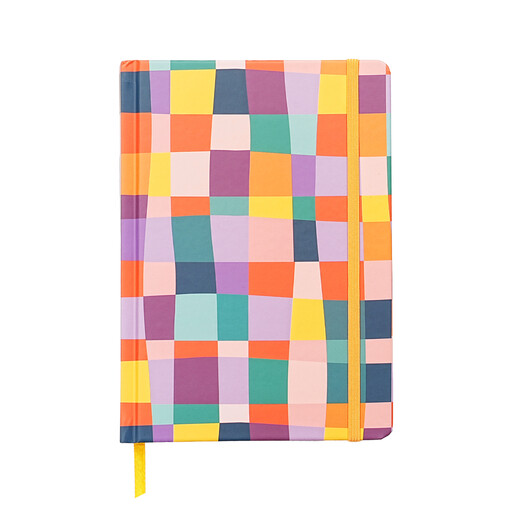
Why this product suits this profile: The lined A5 format is suitable for school, the office, journalling and everyday notes. The PU cover provides a firm outer surface.
The product details specify 96 sheets or 192 pages, as well as 100-g/m² paper. This makes it easier to assess the page count and paper weight accurately.
Lined, cream-coloured paper, hardcover, bookmark, elastic closure and pen loop according to the product description.
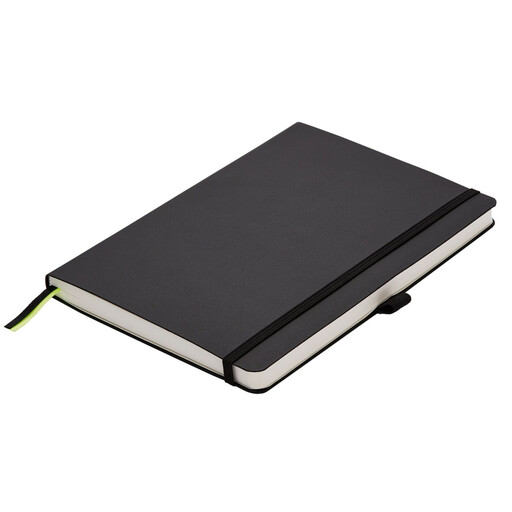
Why this product suits this profile: The LAMY notebook combines a flexible softcover with 192 pages and is designed for regular note-taking at university, in the office or in everyday life.
The product data clearly specifies the format, paper weight and accessories: A5, 90 g/m², two ribbon bookmarks, a pen loop, elastic closure and paper pocket.
Thread-sewn binding, 192 ivory-coloured pages and eight detachable sheets according to the manufacturer’s information.
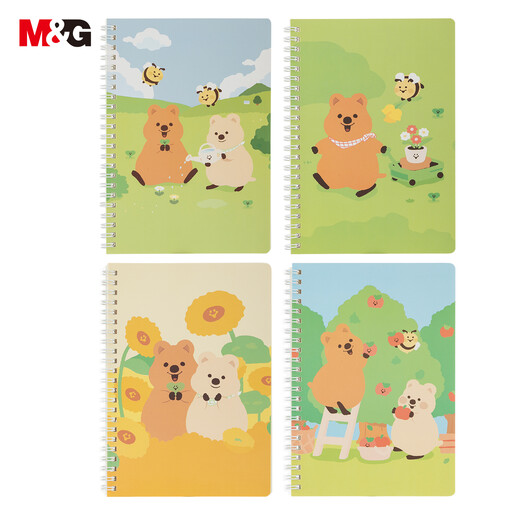
Why this product suits this profile: Four separate A5 notebooks make it easy to organise notes by subject, project or personal topic. The spiral binding is ideal for frequent page-turning.
The quantity is clearly stated: the set contains four notebooks, each with 60 sheets and lined pages.
Four A5 notebooks, spiral binding and lined pages for school, work and organisation.
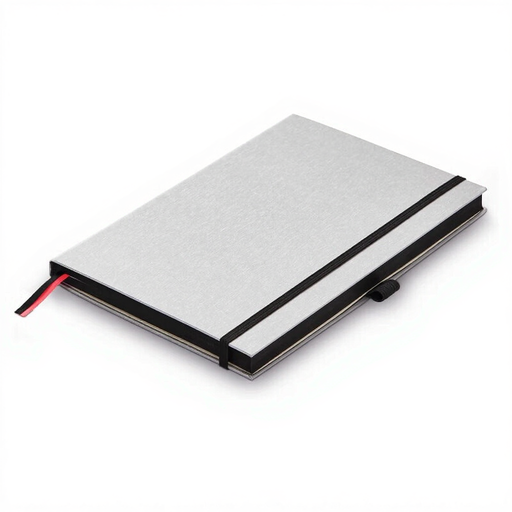
Why this product suits this profile: Blank pages provide space for sketches, mind maps, diagrams and a free-form A5 journal. The hardcover is designed to withstand being carried around.
If you do not need ruled pages, choosing blank pages helps you avoid buying the wrong lined model. The product description specifies approximately 90 g/m² paper and thread-sewn binding.
A5 format, blank pages, hardcover and thread-sewn binding according to the product details.
We have put together a complete, regularly updated list of products that fully meet these strict selection criteria and the safety regulations applicable in the EU.
A5 is the practical choice for longer texts, lectures, meetings and a detailed A5 diary. The page area allows you to combine headings, margin notes and sketches on a single page.
A6 is ideal for short entries and mobile use. A LAMY B2 Hardcover Notebook A6 or the LAMY B4 Softcover A6 can easily be carried in a smaller bag. However, if you collect a lot of documents, look for a back pocket or a larger format.
For occasional notes, 60 to 100 sheets is sufficient. If you want to keep notes for a term, project or longer journal, compare the page count with the amount of writing you expect to do. It is important to distinguish between sheets and pages.
A hardcover protects the contents better and provides a firm writing surface when you are out and about. A softcover is more flexible and may fit more comfortably into a bag. For everyday carrying, the main considerations are therefore the level of stability and the weight you prefer.
Paper from around 90 g/m² can provide a suitable surface for many writing instruments. However, this alone does not guarantee that ink will not bleed through. You should also consider specific manufacturer information about ink compatibility, the paper surface and the ink being used.