
Lieferung heute & morgen

Qualitätsgarantie

Willkommens-Angebote freischalten: KOSTENLOSE Lieferung | Bis zu 80 % RABATT | Kostenlose 30-Tage-JoyPlus-Testphase
App herunterladen
An A5 notebook is compact enough for a rucksack or work bag, while offering more writing space than a small pocket format. Whether you need it for notes, journalling, sketches or to-do lists, the choice may seem straightforward at first. However, a few details determine whether the notebook is genuinely suitable for everyday use.
A paper weight of 100 g/m² can provide a pleasant writing experience, but on its own it does not tell you everything about the paper. The surface, shade and writing tools used are also important. Fountain pens, rollerball pens and markers may show through thinner paper more noticeably than ballpoint pens or pencils.
If you regularly write with a fountain pen, pay close attention to the paper description and, where possible, check individual product images or customer comments. With a lined A5 notebook, it is also important to check whether the lines are sufficiently clear without being distracting.
An eye-catching cover, foil embossing or fabric details may look appealing. For everyday use, however, the spine, page attachment and how easily the notebook opens matter too. A book that will not lie flat can become uncomfortable during longer writing sessions. Spiral binding, on the other hand, makes it easier to turn the pages fully, although it does require a little more space at the side.
Manufacturers and retailers may state either the number of sheets or the number of pages. A book with 96 sheets will generally contain 192 writable pages. This information should be compared with the actual extent of the notebook. An A5 journal for daily entries may benefit from a larger capacity, while a thinner writing pad is often sufficient for individual school or office projects.
The classic A5 size is approximately 14,8 × 21 cm. Depending on the cover and binding, the external dimensions may vary slightly. A hardcover offers better protection for the pages and is well suited to transport. A softcover is more flexible and can be stored more easily in a full bag.
Before buying, check:
A lined A5 notebook is suitable for taking notes and writing structured text. Squared paper is useful for tables, technical drawings, calculations and mathematical notes. Plain pages offer greater freedom for sketches, mind maps and creative projects.
A paper weight of 90 to 100 g/m² is a useful guideline for many notebooks. Even so, it is not a guarantee that the paper will suit every writing instrument. If you use ink, look for information about show-through. For sensitive documents and long-term storage, details such as acid-free or pH-neutral paper may be relevant, provided they are expressly stated by the seller.
An A5 hardcover notebook has a sturdy cover and protects the contents during everyday use. An A5 spiral notebook can usually be opened wide and laid flat on a desk. Thread-sewn binding can also help the notebook open flat, while loose sheets can be removed from some models.
Practical features include:
The features should suit the intended use. For example, a notebook with an elastic band and bookmark is useful for daily journalling, while a punched spiral version can be advantageous for lesson and project materials.
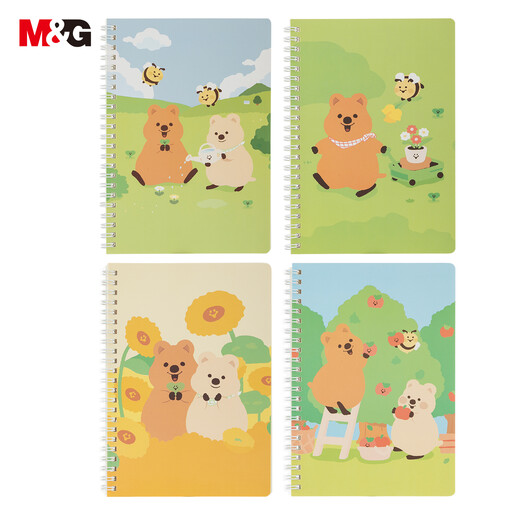
Why this product suits this profile: The four-pack with lined paper is ideal for separating school subjects, projects or personal notes. The spiral binding makes turning the pages easy.
The pack size and the stated 60 sheets per notebook make it easy to understand what is included before buying.
Four A5 spiral notebooks, lined paper and flat opening for school and office use.
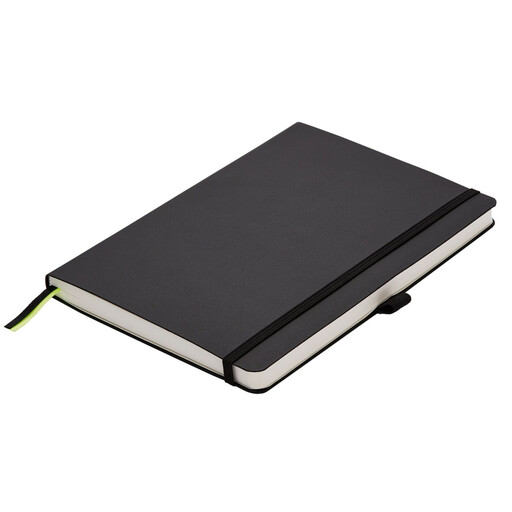
Why this product suits this profile: The black softcover has a discreet look that works well in the office. With 192 pages of 90 g/m² paper, it offers plenty of space for regular note-taking.
The product details specify the paper weight, page count, thread-sewn binding and ruling. This allows you to check the key criteria before buying.
Two ribbon markers, a pen loop, paper pocket and elastic band; according to the product description, eight sheets can be removed.
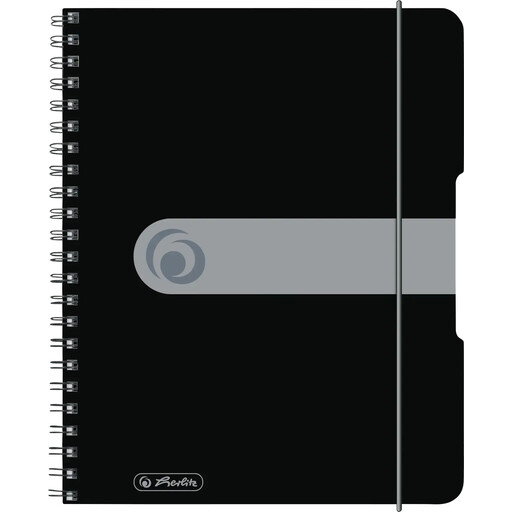
Why this product suits this profile: The special squared ruling with a white border is ideal for calculations, tables and structured work notes.
The details on spiral binding, micro-perforation and six-hole punching show how the pages can be removed and filed.
Twin-wire binding, 80 g/m² paper, micro-perforation and six holes per page; according to the product details, the set contains two pads.
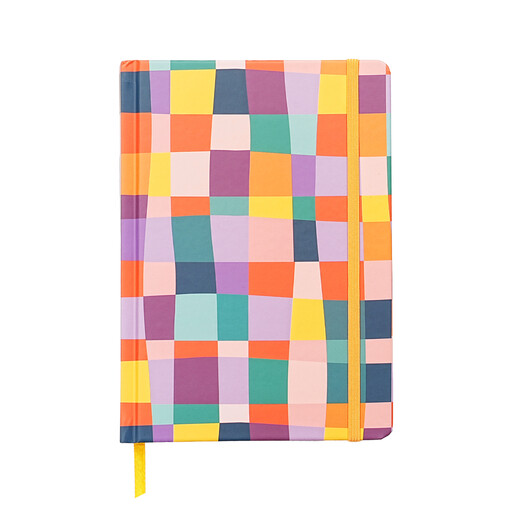
Why this product suits this profile: The textured hardcover, cream-coloured lined pages and range of colour options make it well suited to personal journalling or giving as a gift.
Alongside the design, specific practical features are listed: 96 sheets, 100 g/m² offset paper, a bookmark, elastic band and pen loop.
A5 format, 192 pages and three practical features for use on the go.
We have put together a complete, regularly updated list of products that fully meet these strict selection criteria and the safety regulations applicable in the EU.
For continuous text and note-taking, a lined A5 notebook is usually a good choice. Squared paper is useful for tables, calculations and diagrams. If you want to combine different types of content in one book, you can choose a plain A5 writing notebook or a model with several clearly separated sections.
Its lifespan depends on the paper, cover, binding and how heavily it is used each day. A hardcover protects the contents during transport. Thread-sewn or sturdy spiral binding can withstand frequent opening. Moisture, high heat and repeatedly bending the cover backwards can damage the paper and spine. Storing the notebook in a dry place and closing it with an elastic band will help keep the contents neat and protected.
The price depends on factors including paper weight, number of pages, cover material, binding and accessories. More features do not automatically make a notebook more useful. First compare the cost per notebook or per writable page, then choose the features you genuinely need.