
Lieferung heute & morgen

Qualitätsgarantie

Willkommens-Angebote freischalten: KOSTENLOSE Lieferung | Bis zu 80 % RABATT | Kostenlose 30-Tage-JoyPlus-Testphase
App herunterladen
An A5 A6 notebook should be easy to carry, offer enough space and remain practical in everyday use, depending on how you plan to use it. However, there are important differences between hardbacks, softbacks, spiral bindings, different rulings and decorative covers. The Joybuy Product Recommendation Officer selection therefore focuses on verifiable features rather than design promises alone.
A5 measures approximately 14.8 × 21 cm and provides enough room for longer notes, to-do lists or a writing journal. An A6 notebook, at around 10.5 × 14.8 cm, is considerably more compact. It is suitable for short notes, shopping lists and use on the go, but holds less text per page.
The cover, binding and rounded corners can also reduce the space that is actually available for writing. If you regularly work with an A4 folder, check whether the notebook is punched, perforated or otherwise suitable for filing.
Paper weight is given in grams per square metre (g/m²). The models featured here use, for example, 90-g/m² or 100-g/m² paper. This is a useful specification, but on its own it does not indicate how fountain pens, fineliners or markers will perform.
You should also check:
With a lined notebook, the line spacing is also important. Narrower lines may suit small handwriting, while larger lettering or sketches benefit from more room.
A notebook with an elastic closure, ribbon marker or pen loop can make everyday use easier. However, it is important to check exactly what is included. Some models have one ribbon marker, while others have two. A pen loop also cannot replace a case for several writing instruments.
Practical details include:
An A5 notebook is suitable for school pupils, students and professionals who regularly need to write down longer content. It works well for lessons, meetings, project planning and a more detailed diary.
An A6 notebook fits in many bags and can be quickly taken out when needed. The format is practical for spontaneous ideas, short meeting notes, shopping lists or a small sketchbook. However, the smaller surface requires a more compact writing style.
A hardback notebook protects the pages more effectively when it is frequently carried in a rucksack or work bag. However, it is generally less flexible and may add more weight.
A softback notebook is easier to compress and is often more comfortable to carry around. However, its flexible cover offers less protection against creasing. The right choice therefore depends on how you will transport it and on the writing experience you prefer, rather than on appearance alone.
For school and office use, perforation and punched holes can provide additional practical benefits. If you are looking for a notebook as a gift, you may instead pay more attention to the cover, colour scheme and accessories.
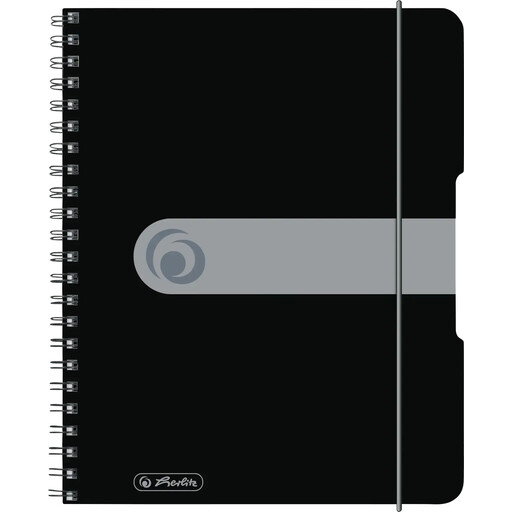
Why this product suits the profile: This A5 set contains two spiral-bound pads with squared pages, making it suitable for school, university and first office tasks.
The product details clearly state the format, paper weight, ruling, micro-perforation and six-hole punching. This makes it easier to assess how suitable it is before buying.
Two A5 notepads, 80 g/m² paper, squared special ruling, spiral binding and detachable pages.
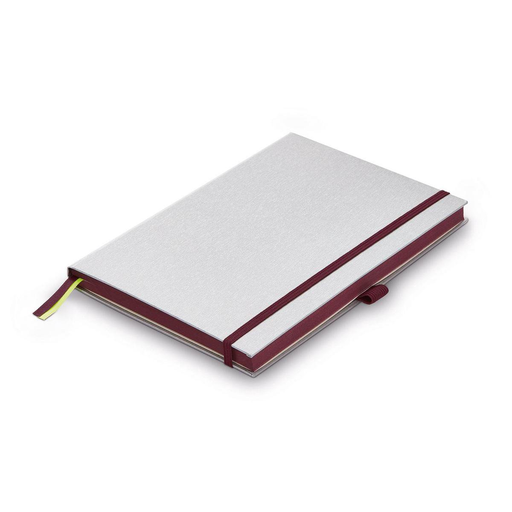
Why this product suits the profile: The compact A6 format combines a sturdy cover with several useful features for professionals and creatives who write on the go.
The specifications list 192 pages, 90 g/m² paper, a hardcover, thread binding, a pen loop, an elastic closure and two ribbon markers.
Sturdy cover, ivory paper, two ribbon markers and an expandable rear pocket.
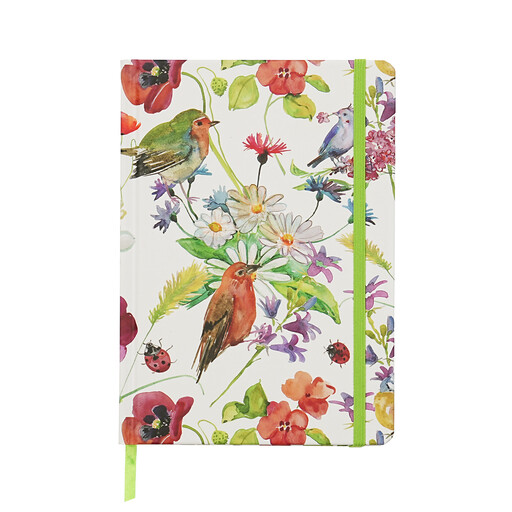
Why this product suits the profile: The decorative A5 hardback cover and classic ruling are well suited to journalling, personal writing and giving a notebook as a gift.
The product description specifies 192 pages, 100-g/m² offset paper, a ribbon marker and an elastic closure. The cover is made from printed material, not solid wood.
A5 hardback, cream 100-g/m² paper, 96 sheets, elastic closure and botanical design.
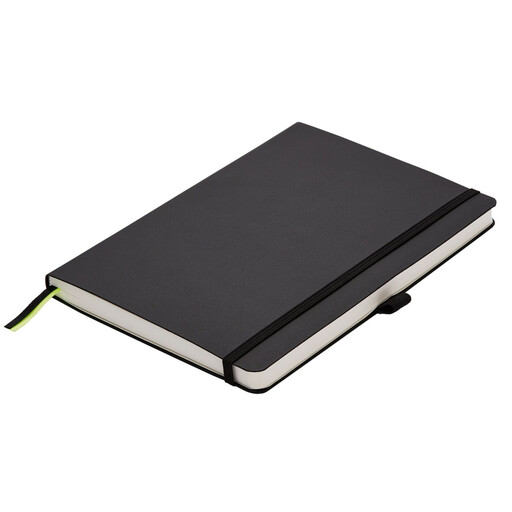
Why this product suits the profile: The A5 format offers plenty of writing space for regular note-taking, a diary, planning or longer texts.
The flexible cover is accompanied by specific details about the 192 pages, 90 g/m² paper and thread binding. The features can therefore be assessed before purchase.
A5 format, 192 ivory-coloured pages, pen loop, two ribbon markers, paper pocket and eight detachable sheets.
We have put together a complete, regularly updated list of products that fully meet these strict selection criteria and the safety regulations applicable in the EU.
Paper and covers are sensitive to moisture, intense heat and direct sunlight. Store your notebook in a dry place and, when it is not in use, secure it with the elastic closure or fastening flap provided. For a hardback, a soft, dry cloth is usually sufficient. Keep liquids away from the pages.
With spiral pads, avoid bending the cover back too far. A thread-bound notebook should ideally be opened flat, but should not be folded completely back on itself for long periods. Models with small components such as ribbons, elastic cords or pen loops are not suitable for children under three years of age.
A5 offers more room for extensive notes and homework. A6 is more portable and is better suited as an additional notebook for short reminders or use on the go. If you plan to file it in a folder, punched holes and perforation may be more important than the cover.
That depends on how you intend to use it. Models with around 160 to 192 pages are suitable for regular note-taking, journalling and planning. If you are working across different subjects or projects, a multipack containing several thinner notebooks may make it easier to stay organised.
First check the paper weight, paper type and the manufacturer’s specific information. A plain notebook offers more flexibility for sketches, while a lined notebook provides guidance when writing. A higher paper weight may be an important selection criterion, but it does not guarantee the same result with every writing instrument.