
Lieferung heute & morgen

Qualitätsgarantie

Willkommens-Angebote freischalten: KOSTENLOSE Lieferung | Bis zu 80 % RABATT | Kostenlose 30-Tage-JoyPlus-Testphase
App herunterladen
An A5 notebook offers enough room for notes, to-do lists, journaling and creative ideas, while remaining more manageable than a large writing book. The choice ranges from a simple A5 exercise book to a decorative hardcover notebook with a bookmark. However, this variety can also make it easier to choose the wrong product.
For notebooks, “96 Sheets” usually means 96 sheets or 192 writable pages. Other suppliers state the page count directly. So don’t just compare the visible number in the product title: check whether it refers to sheets or pages.
A higher paper weight may indicate a sturdier paper structure, but on its own it does not tell you how the paper will perform with a fountain pen, ink or markers. For frequent writers, paper colour, ruling and binding are also important. An A5 lined notebook with 100 g/m² paper may write differently from 90 g/m² paper with a special ruling.
An elastic closure, a bookmark or a pen loop can be useful in everyday life. What matters, however, is whether the accessories suit the intended use. A single ribbon marker may be sufficient for a journal you use regularly, while two ribbon markers can be more helpful when keeping track of several subjects. Follow the relevant safety instructions for small accessories.
The classic A5 format measures approximately 14.8 × 21 cm. It is suitable for lecture notes, meetings, shopping lists and longer journal entries. If you often jot down just a few thoughts while out and about, you may prefer an A6 notebook, measuring around 10.5 × 14.8 cm. It fits more easily into smaller bags, but offers less writing space.
Before buying, consider the following:
A lined A5 notebook supports continuous writing, minutes and lecture notes. Squared paper may be more suitable for mathematical notes, tables or technical drawings. Plain pages offer greater freedom for sketches, mind maps and creative journaling.
Look out for the following details:
A hardcover notebook protects the pages better in a rucksack or briefcase and provides a firm writing surface. A softcover notebook is generally more flexible and can fit more comfortably into confined spaces. For frequent writing across different pages, a notebook that lies flat is practical.
The features can also affect everyday use:
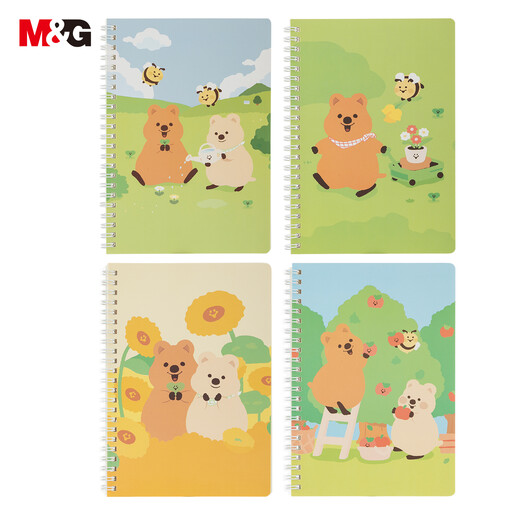
Why this product suits this profile: Four A5 exercise books make it easy to separate subjects, projects or personal notes without having to choose several individual products.
The product description clearly states that this is a pack of 4, with 60 sheets per notebook and lined pages. This makes it easier to assess the actual capacity.
Spiral binding for easier page turning and four separate A5 notebooks for school, university or the office.
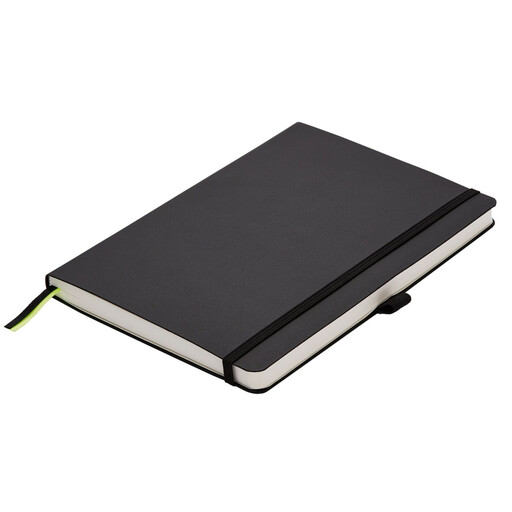
Why this product suits this profile: This A5 model combines a flexible cover with 192 pages, 90 g/m² paper and several practical features for regular note-taking.
The paper weight, page count, thread stitching and features are all listed clearly, making it easier to compare with vague claims about quality.
Pen loop, two ribbon markers, elastic closure and back pocket; according to the product information, made in Germany.
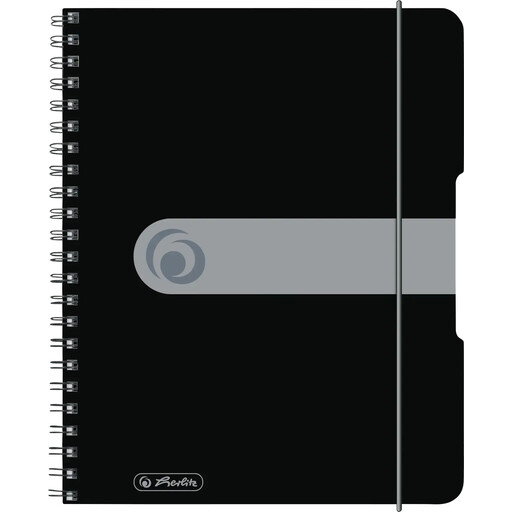
Why this product suits this profile: For notes, calculations and work documents, the squared paper provides a structured surface, while the spiral binding allows the pad to lie flat.
The product description specifies two notebooks, 80 sheets per book, micro-perforation and six-hole punching. This makes the intended use clearer than a simple design promise.
Special squared paper with a white margin, detachable pages, punched holes and an elastic closure.
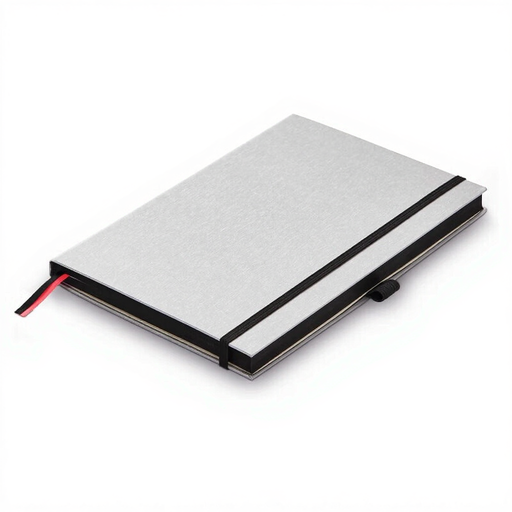
Why this product suits this profile: Plain A5 pages are ideal for sketches, mind maps, diagrams and free-form journaling without pre-printed lines.
The product description explicitly states that the pages are plain. This helps prevent buyers from accidentally choosing a lined journal when they need a creative notebook.
Hardcover, thread stitching and, according to the product information, acid-free paper with a weight of approximately 90 g/m².
We have put together a complete, regularly updated list of products that fully meet these strict selection criteria and the safety regulations applicable in the EU.
Store your notebook in a dry place and protect the paper and cover from prolonged damp, direct moisture and intense heat. A hardcover notebook should not be folded completely backwards if its binding is not designed for this. With a softcover, an elastic closure protects the pages during transport. Decorative covers can usually be cleaned with a soft, dry cloth.
A5 offers more writing space and is suitable for school, university, the office and longer journal entries. A6 is more compact and fits more easily into small bags. A5 is generally more practical for extensive notes, while A6 may be sufficient for short notes on the go.
Lined paper is suitable for text and note-taking. Squared paper is useful for tables, calculations and technical sketches. Plain pages provide a suitable foundation for drawings, mind maps and free-form journal design.
Its lifespan depends on the paper, binding, cover and how it is used. Thread stitching and a sturdy cover can be beneficial with regular use. Moisture, excessive bending and overfilling the back pocket can damage the paper and binding, regardless of the product’s age.