
Lieferung heute & morgen

Qualitätsgarantie

Willkommens-Angebote freischalten: KOSTENLOSE Lieferung | Bis zu 80 % RABATT | Kostenlose 30-Tage-JoyPlus-Testphase
App herunterladen
An A5 notebook fits in many rucksacks, work bags and desk organisers. Measuring approximately 14.8 × 21 cm, it offers more writing space than an A6 notebook while remaining more manageable than an A4 exercise book. Depending on how you plan to use it, models can vary considerably in paper weight, page count, binding and features.
If you only look at the cover or a low unit price, you can easily overlook important details. Three common buying pitfalls are:
For everyday notes, a paper weight of around 70 g/m² is often sufficient. For intensive use, fountain pens, gel pens or markers, 90 to 100 g/m² may be a more practical choice. Paper weight describes the mass per square metre; it is not a direct measure of overall writing quality.
An A5 lined notebook is suitable for notes, lists and minutes. Blank pages are more practical for mind maps, drawings and creative work. Some LAMY models use their own LAMY ruling, which, according to the product description, sits between traditional ruling and grid elements. If you are looking for a writing and sketchbook, check before buying whether the pages are actually blank, squared or lined.
Paper colour is also relevant: ivory or cream paper can look noticeably different from bright white copier paper. For longer handwritten entries, some users prefer a surface with less contrast. However, this does not allow any objective conclusions to be drawn about personal readability.
A hardcover notebook offers better protection against pressure and creasing. It is a sensible choice if the notebook will be carried regularly in a rucksack or stored for a longer period. The trade-off is that a rigid cover can add weight.
A softcover notebook is more flexible and often lighter. It is easier to slide into a bag, but offers less protection against bending. Pay attention to the type of binding: thread stitching can help the notebook open flat, while glued binding may come under greater strain if the book is bent back sharply.
An A5 spiral notebook can usually be folded back completely and laid flat on a table. This is practical for lectures, quick note-taking and changing writing positions. At the same time, the spiral can catch on narrow bags or other books. Also check whether you need punched or removable pages for your intended use.
A notebook with an elastic closure stays closed in your rucksack. A notebook with a bookmark makes it easier to find the current page. A pen loop and a rear pocket can hold loose sheets or your pen.
These details are useful, but they do not replace checking the key specifications. Compare the following before buying:
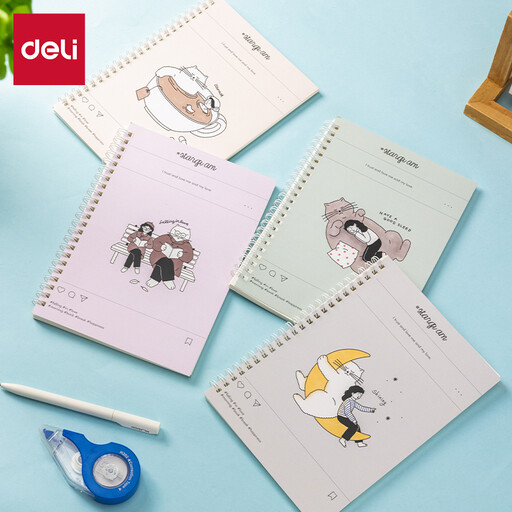
Why this product suits this profile: The four-pack is ideal for pupils and students who want to keep subjects, projects or personal notes separate. The A5 size remains easy to carry for school and everyday use.
The spiral binding supports comfortable writing on a flat surface. Before buying, take the differing specifications of 60 sheets and 160 pages in the product description into account.
A5 format, squared spiral binding and supplied as a four-pack; according to the product specification, 70 g/m² paper.
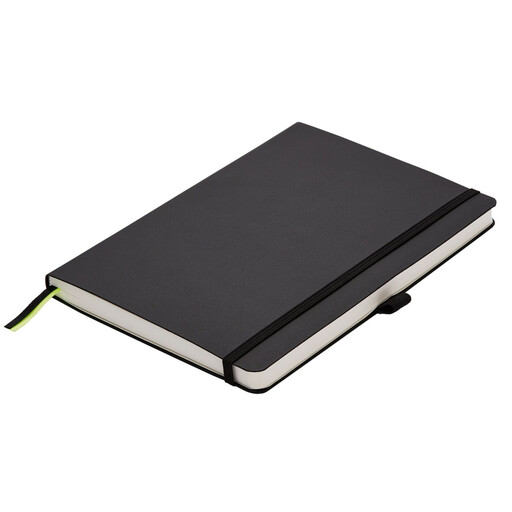
Why this product suits this profile: Professionals and journal enthusiasts get an A5 model with 192 pages for organised notes, planning and daily journaling.
The product specifications clearly state the format, paper weight, page count and binding type. This makes it easier to distinguish decorative claims from technical details.
192 pages, 90 g/m² ivory paper, thread stitching, pen loop, two bookmarks, paper pocket and elastic closure.
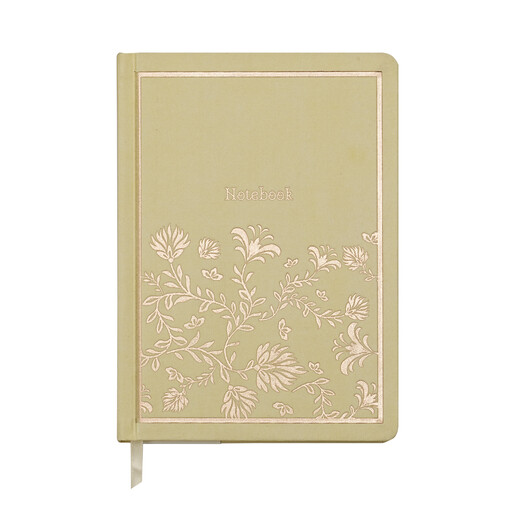
Why this product suits this profile: This model combines a decorative fabric cover with classic ruling, making it suitable for journaling, creative writing, school, the office or gifting.
The features go beyond the cover design: the product specification states that it has 192 pages, 100 g/m² paper, a bookmark and an elastic closure.
A5 fabric hardcover, cream-coloured lined paper at 100 g/m², and decorative finishes such as embossing or foil accents.
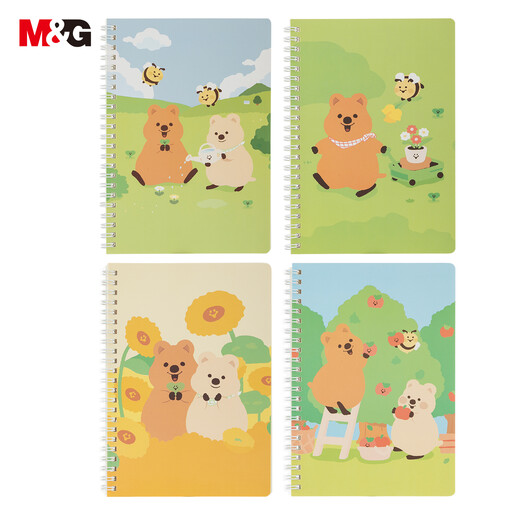
Why this product suits this profile: The four-pack helps keep lessons, projects, work and personal tasks separate. The spiral binding is designed for writing on a flat surface and frequent page-turning.
Rather than one notebook with an unclear purpose, this set offers four separate A5 notebooks for flexible use. The stated capacity is 60 sheets or 120 pages per notebook.
Four A5 spiral notebooks, lined pages and a binding that, according to the product description, allows the notebooks to lie flat.
We have put together a complete, regularly updated list of products that fully meet these strict selection criteria and the safety regulations applicable in the EU.
An A5 notebook offers considerably more space for notes, daily planning and longer texts. An A6 notebook is more compact and fits more easily into smaller bags. For school, university and office use, A5 is often more practical, while A6 is sufficient for short notes and use on the go.
That depends on how you plan to use it. For a limited project or quick notes, 60 sheets may be enough. If you want to keep an A5 journal over several weeks or months, 192 pages offer more room. Always compare the specification for “sheets” with “pages”, as the two terms do not mean the same thing.
Paper weighing 90 to 100 g/m² is a natural choice for frequent writing. However, show-through and bleeding also depend on the ink, nib width and marker. If you use writing instruments that are prone to bleeding, check the manufacturer’s specific guidance on paper use and do not choose a notebook based on paper weight alone.