
Lieferung heute & morgen

Qualitätsgarantie

Willkommens-Angebote freischalten: KOSTENLOSE Lieferung | Bis zu 80 % RABATT | Kostenlose 30-Tage-JoyPlus-Testphase
App herunterladen
An A6 notebook fits into many bags, making it suitable for school, university, the office, travel and journaling. The compact format measures approximately 10.5 × 14.8 cm. It offers enough space for short notes, to-do lists, sketches or daily reflections without taking up as much room as a larger notebook.
However, product specifications can vary considerably. An attractive appearance alone says little about how practical a notebook is for everyday use. If you are looking for a lined A6 notebook or an undated planner, it is therefore worth checking a few specific features before buying.
Terms such as “Premium”, “Luxury” or “High Quality” are difficult to assess without technical details. More informative specifications include paper weight, paper type and sheet count. A paper weight of 100 g/m² can provide a more reliable indication for handwritten notes than a purely marketing-led description. However, the writing experience also depends on the type of pen and ink used.
If you write with a fountain pen, you should also check for possible show-through. For ballpoint pens, pencils and fineliners, an 80-sheet notebook with 100 g paper is a practical size for many everyday situations.
A hardcover notebook protects the pages better against creasing and pressure than a soft cover. However, a PU cover is not made from genuine leather and, as a rule, does not guarantee waterproofing. Moisture, heat and sharp objects can damage the material.
A PU leather notebook should therefore be stored in a dry place and cleaned with a soft, slightly damp cloth when necessary. Aggressive cleaning products are not suitable for the surface.
A notebook with a bookmark, elastic band and pen loop can save time in everyday use. The bookmark marks the current page, the elastic band keeps the book closed and the pen loop keeps a suitable writing pen directly with the notebook.
Nevertheless, these elements should not be overstretched. Small accessories should be kept away from children under three years of age, as they may present a choking or entanglement hazard.
A6 is a standardised paper format, but the exact dimensions may vary slightly depending on the cover and binding. For everyday use, external dimensions of approximately 10.5 × 14.8 cm are a useful point of comparison. You should also check whether the seller distinguishes between sheets and pages: 80 sheets correspond to 160 writable pages when both sides are counted.
A lined A6 notebook is particularly suitable for taking notes, shopping lists, work notes and text-focused journaling. Squared, dotted or plain pages may be more suitable for freehand drawings or diagrams.
When it comes to paper thickness, the combination of weight and surface is what matters. 100 g offset paper is specified as cream-white, lined paper for the Jubiluu models considered here. Even so, its actual suitability should match the pen you use.
A sturdy cover protects the contents in a rucksack or handbag. An elastic band prevents the notebook from opening unintentionally among other belongings. This is especially helpful for a pocket notebook that is carried around regularly.
A ribbon bookmark is integrated into the notebook and does not require an additional sticky note. A pen loop is useful if you do not want to search for a separate pen while you are out and about.
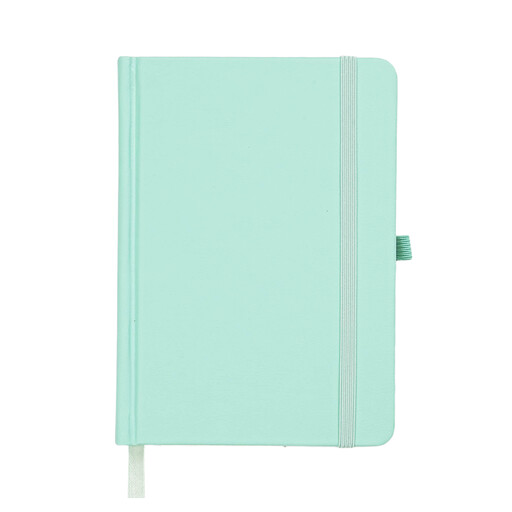
Why this product suits this profile: Its compact format combines lined pages with practical essentials for school, university and taking short notes while out and about.
The specifications clearly state the format, 80 sheets or 160 pages and 100 g offset paper, rather than relying on a vague quality claim.
The product specifications list a PU hardcover, lined cream-white pages, a bookmark, elastic band and pen loop.
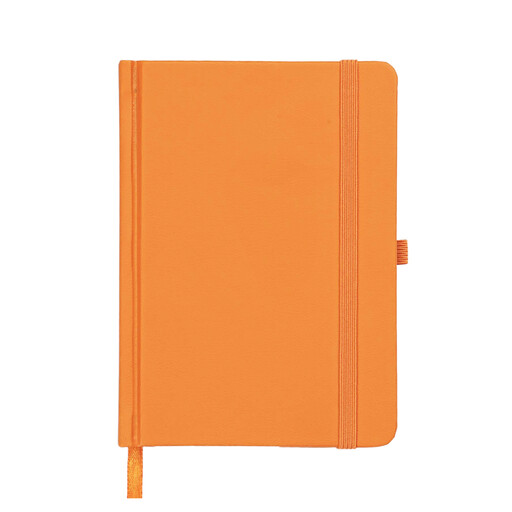
Why this product suits this profile: The sturdy PU cover and defined paper specifications appeal to users looking for a structured notebook for regular entries.
The cover is described as PU rather than being equated with genuine leather. This gives you a more realistic idea of the material and how to care for it.
100 g offset paper, 80 sheets and a hardcover are listed as specific specifications; the model is undated and flexible to use.
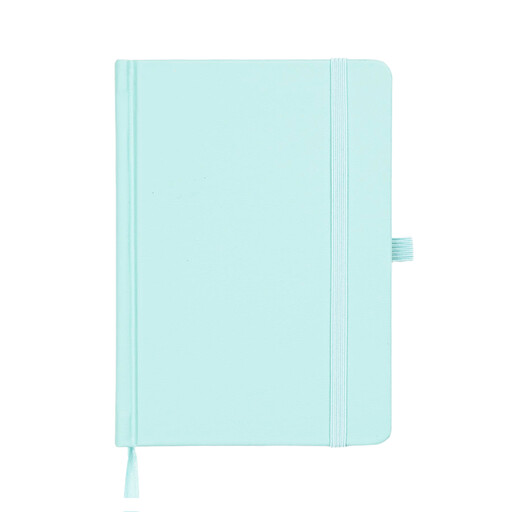
Why this product suits this profile: For journaling, collecting ideas and making recurring notes, it offers a closed cover along with several organisational features.
The bookmark, closure band and pen loop are listed as separate components. This reduces the risk of missing extras you expected only after making your purchase.
The A6 format is easy to carry; 160 pages, lined 100 g pages and the undated layout support a range of uses.
We have put together a complete, regularly updated list of products that fully meet these strict selection criteria and the safety regulations applicable in the EU.
The lifespan of an A6 notebook depends on how it is used, stored and handled. Keep it as dry as possible and avoid prolonged exposure to direct sunlight or intense heat. The PU cover can be wiped with a slightly damp cloth and then left to air-dry.
The elastic band should not be stretched unnecessarily. The bookmark should also be pulled out gently so that it does not put strain on the binding. If the pages are not torn out forcibly and the notebook is protected from water, the cover and contents can be used as intended.
The standard A6 format measures approximately 10.5 × 14.8 cm. The external dimensions may be slightly larger because of the cover, binding and additional features. It is suitable for handbags, rucksacks and larger jacket pockets.
An 80-sheet notebook normally contains 160 writable pages when both sides are used. When comparing products, therefore, check whether the listing specifies sheets or pages.
This depends on the ink, nib and the pressure you apply when writing. The models mentioned specify 100 g offset paper. If you regularly write with a fountain pen, it is also worth testing a few pages beforehand for show-through and ink bleed.